U.S.-China tech rivalry hinges on innovation, industrial power: Experts
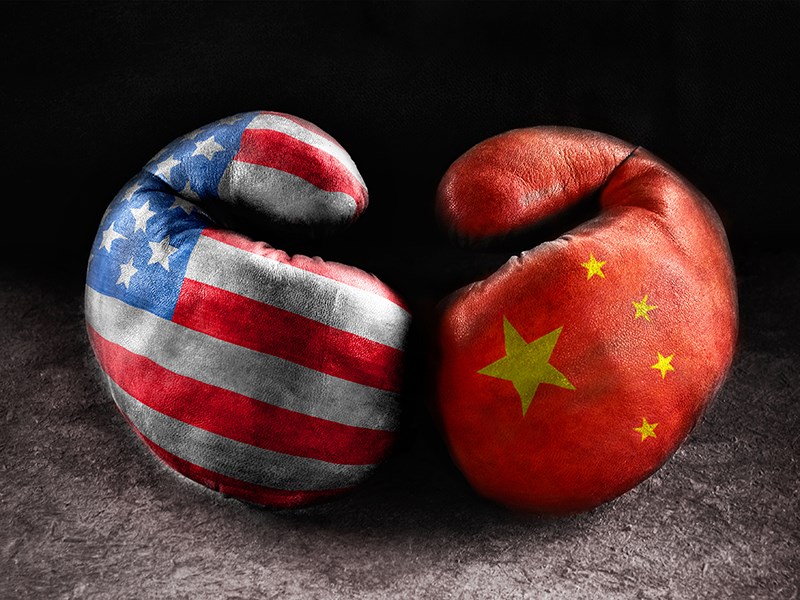
Taipei, June 6 (CNA) The outcome of the technology competition between the United States and China will depend not only on artificial intelligence development but also on the manufacturing capacity and supply chains needed to support it, experts said at a forum in Taipei on Saturday.
At an event hosted by the Taiwan-based think tank DSET, "Chip War" author Chris Miller said the U.S. and China are pursuing different "theories of power," with Washington betting on innovation and AI leadership while Beijing seeks leverage through industrial capacity and manufacturing scale.
"The US is saying, 'our innovation is going to win in the long run,' and China is saying, 'well, your innovation is great, but if it's running in our industrial system, we're going to have leverage,'" Miller said.
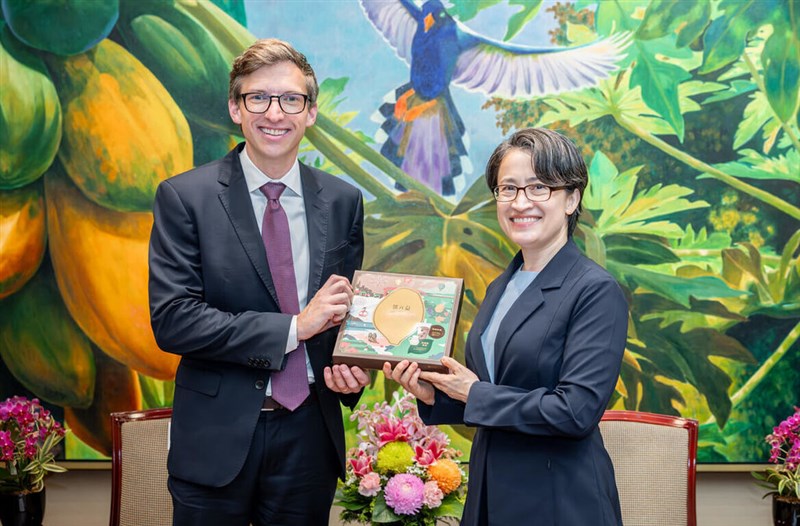
Citing developments in 2025, Miller said the U.S. continued to lead "by almost any metric in terms of capabilities," while China demonstrated its leverage in the traditional economy through restrictions on rare earth exports affecting countries including the U.S. and Japan.
Saying the U.S. and Taiwan are making a similar bet on AI-driven innovation, Miller noted that AI still depends on critical industrial inputs, an area where China continues to hold significant advantages.
The coming years will provide a real-world test of which theory of power proves more effective, he said.
Chris McGuire, a senior fellow for China and Emerging Technologies at the Council on Foreign Relations, argued that export controls remain one of the most effective tools available to "slow down China's AI economy."
Restrictions on advanced chips and semiconductor manufacturing equipment have helped preserve a significant technological advantage for the U.S. and its allies, he said, but warned that loopholes remain, including chip smuggling, cloud-based access to computing power, and remote access to AI systems.
McGuire also called for closer alignment between Taiwan and the U.S. on export-control enforcement and related regulations, arguing that the two sides share a strong interest in maintaining their lead in advanced technologies.
David Feith, a senior fellow at the Hudson Institute, said Taiwan's role in AI hardware manufacturing remains irreplaceable despite efforts to expand semiconductor production in the U.S.
While investments by Taiwan Semiconductor Manufacturing Co. (TSMC) in Arizona have exceeded expectations and strengthened supply-chain resilience, the U.S. remains heavily dependent on Taiwan's broader semiconductor ecosystem, Feith said.
Advanced chips manufactured in Arizona still rely on Taiwan for advanced packaging and other critical processes, and suggestions that the U.S. could soon eliminate its dependence on Taiwan are misplaced, he added.
- Sports
Men's archery, esports give Taiwan 2 more bronzes at Asian Games
09/30/2026 08:32 PM - Society
Cooler, wetter weather forecast in northern Taiwan next week
09/30/2026 07:25 PM - Politics
Taiwan, Belize sign agreements to enhance collaboration during FM's visit
09/30/2026 07:08 PM - Society
AGC Display Glass employees protest at MOL ahead of 10/5 strike
09/30/2026 06:53 PM - Culture
CNA to relaunch Spanish-language Focus Taiwan with AI assistance
09/30/2026 05:59 PM