'Embedded reporter' policy seeks to balance press freedom, security: Scholar
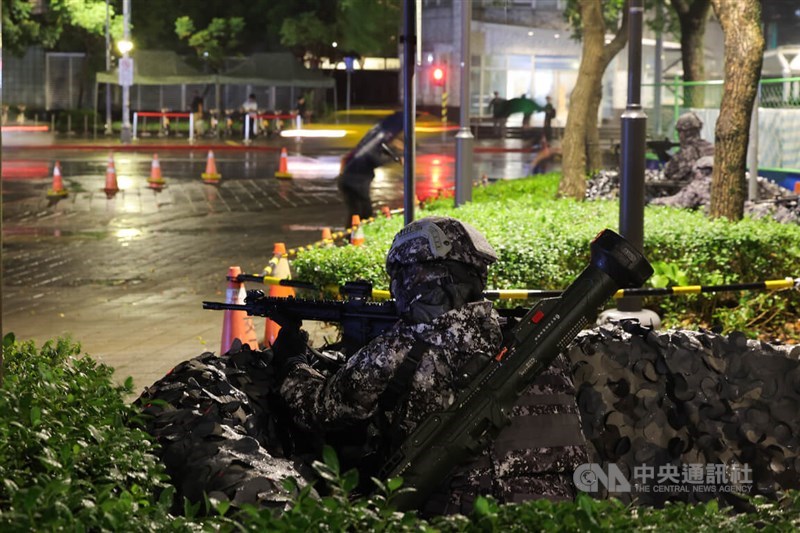
Taipei, Aug. 9 (CNA) The recent introduction of an "embedded reporter" mechanism to Taiwan's largest annual war games is part of ongoing efforts by the Ministry of National Defense (MND) to strike a balance between press freedom and operational security, a defense scholar said Sunday.
Su Tzu-yun (蘇紫雲), a research fellow at the government-funded Institute for National Defense and Security Research, made the remarks after the MND for the first time allowed reporters to embed with military units during the live-fire portion of the 2026 Han Kuang exercises, which run from Aug. 5-14.
The mechanism, widely practiced by the United States military and the North Atlantic Treaty Organization (NATO), allows civilian journalists to be officially assigned to active-duty military units to cover operations firsthand.
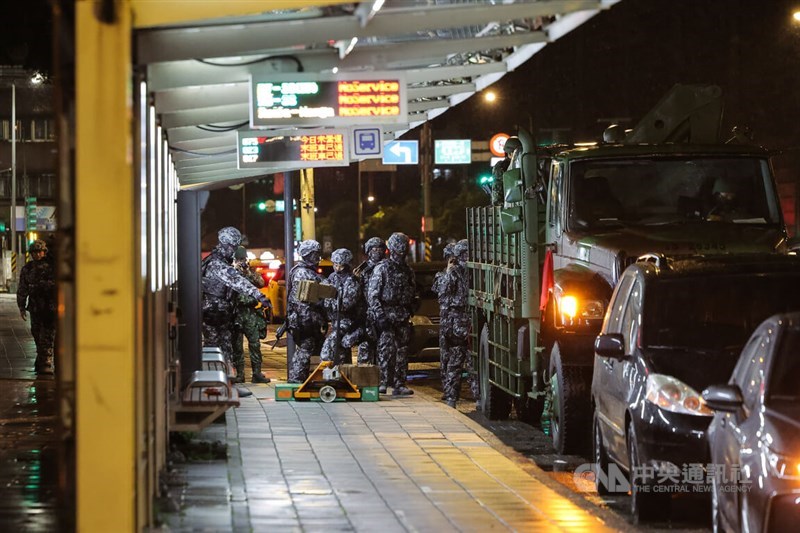
Previously, in Taiwan, only selected media outlets were allowed to cover military exercises from designated and restricted press areas.
An unnamed MND official previously told reporters in Taipei that the ministry is drawing on U.S. and NATO experience to develop its own standard operating procedures for media coverage of military drills.
The MND hopes embedded civilian journalists can provide firsthand and up-to-date coverage of Taiwan's armed forces to domestic and international audiences to counter enemy disinformation, while ensuring that confidential information related to military deployments is not compromised, the official said.
Asked to comment, Su said Sunday that the new mechanism reflects the MND's effort to balance restricted press access with operational security.
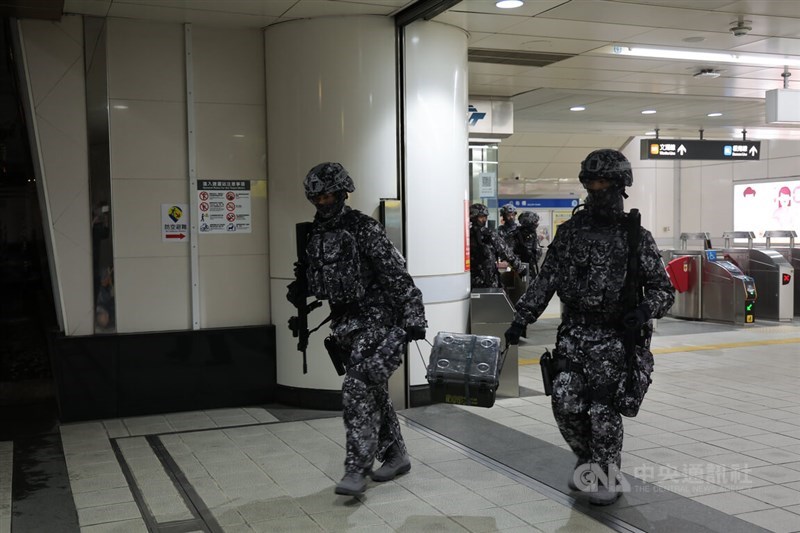
Under long-standing U.S. and NATO practices, embedded reporters are required to follow and sign operational security (OPSEC) ground rules before deployment.
Among those rules is a prohibition on disclosing the specific geographic locations of ongoing operations, with the primary aim of protecting the safety and security of both military personnel and reporters, Su said.
Violating such rules could compromise mission safety and result in the termination of a reporter's embed status.
Su compared the arrangement to journalists covering Taiwan Semiconductor Manufacturing Co. or other high-tech companies, where reporters may also be required to comply with strict non-disclosure terms.
Before news reports are transmitted or published, designated military public affairs officers may review media products to flag potential OPSEC violations, although the military must respect the fact that the final decision on publication rests with the news organization, Su added.
Su said he hopes the MND will continue to improve and fine-tune the embedded reporter system and gradually develop an institutional framework that balances national defense security with press freedom.
- Sports
Taiwan falls 5-0 to S. Korea in Asian Games baseball opener
09/21/2026 08:57 PM - Politics
Taiwan labor minister's APEC visit to China went smoothly: Labor ministry
09/21/2026 08:39 PM - Sports
Taiwan wins first Asian Games gold in soft tennis mixed doubles (update)
09/21/2026 08:29 PM - Culture
'Black Myth: Wukong' concert wraps up 2-night stint in Taipei
09/21/2026 07:01 PM - Sports
Taiwan's Johnny Sun takes silver in Asian Games wushu
09/21/2026 06:44 PM