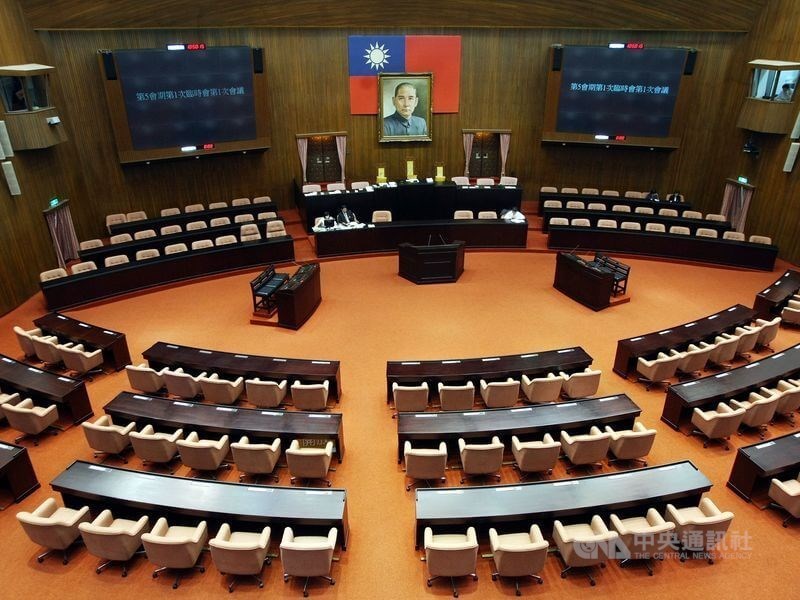
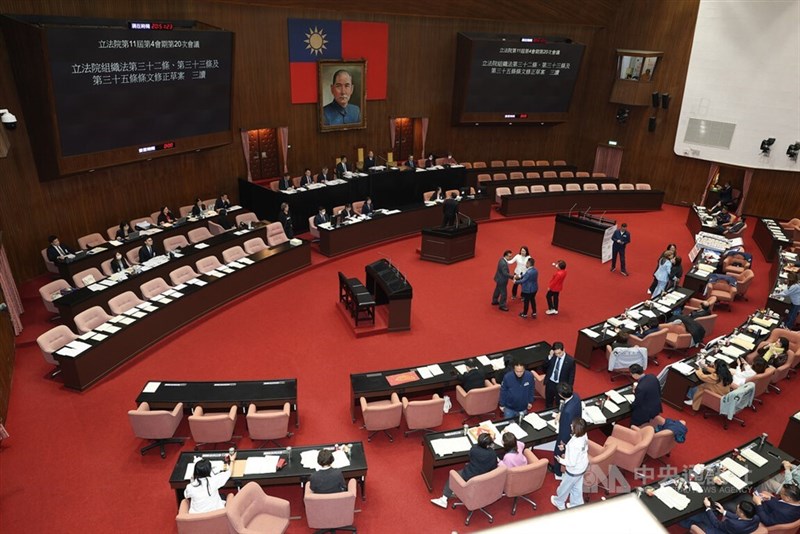
Taipei, May 17 (CNA) Taiwan's opposition-controlled Legislative Yuan will vote Tuesday in a rare but largely symbolic motion to impeach President Lai Ching-te (賴清德).
CNA has compiled the following Q&A to explain the dispute behind the motion and how Taiwan's impeachment process works.
Why does the opposition want to impeach Lai?
The opposition Kuomintang (KMT) and Taiwan People's Party (TPP) announced in December that they would try to impeach Lai after the head of his government, Premier Cho Jung-tai (卓榮泰), refused to countersign amendments to a local revenue-sharing law the Legislature passed on Nov. 14.
The bill in question would have increased allocation of public funds to local governments, a majority of which are KMT-controlled, and away from the Democratic Progressive Party (DPP)-led central government.
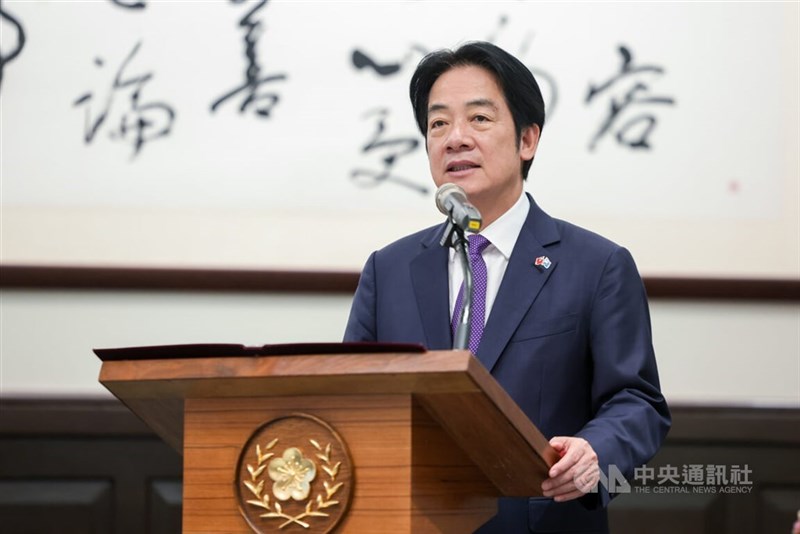
Cho's refusal to countersign legislation was unprecedented -- and constitutionally untested -- in Taiwan's history, and meant that the amendments would not be enacted by the president.
Niu Hsu-ting (牛煦庭), a KMT spokesman, has said the executive branch's refusal to enact laws passed by a democratically elected parliamentary majority had "distorted" the Constitution and undermined the rule of law.
Why did the premier refuse to countersign the legal amendments?
At a press conference on Dec. 15, Premier Cho said the Legislature's amendments to the revenue-sharing law violated the constitutional principle of separation of powers, and would cause "irreparable and serious harm" to national development.
Cho argued that because of the ongoing deadlock at the Constitutional Court, deciding not to countersign the amendments represented the executive branch's "final means" to correct what it considered legislative wrongdoing.
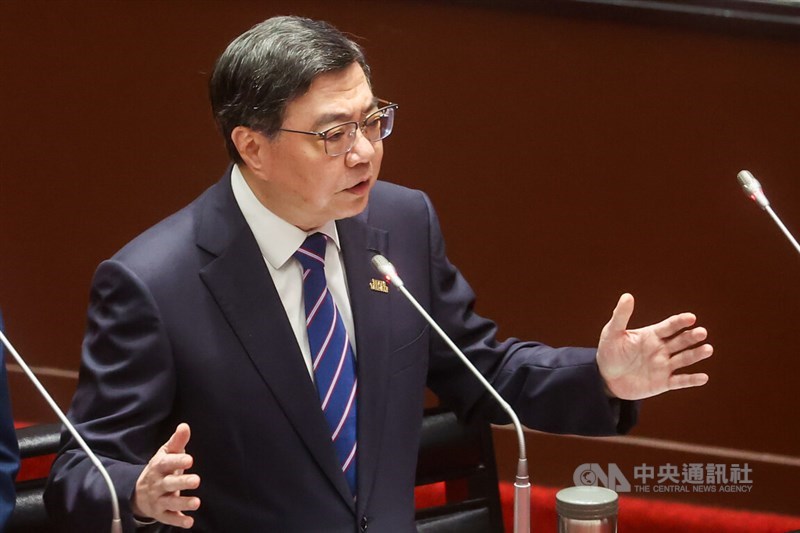
Cho claimed his decision did not amount to authoritarianism or executive overreach because the Legislature still retained a constitutional check at its disposal -- the option to initiate a no-confidence vote against the premier if it disagreed with the Cabinet's actions.
Why not let the Constitutional Court resolve the dispute?
Under normal circumstances, the Constitutional Court could be asked to rule on the constitutionality of the amendments to the local revenue-sharing law, or the premier's refusal to countersign them.
However, the court, which normally has 15 justices but currently has only eight, is below the legal threshold of 10 for adjudication, and the opposition-controlled Legislature has refused to confirm any candidates to fill the vacancies nominated by the president.
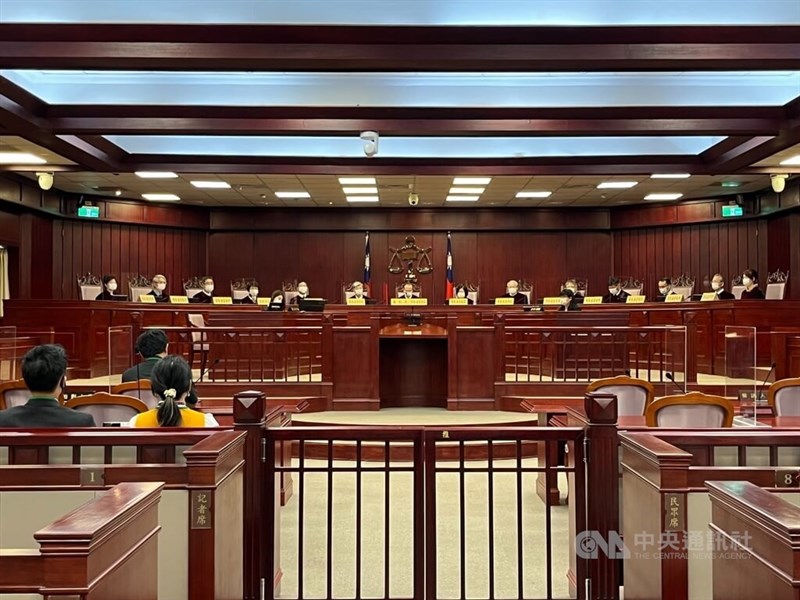
There is even a split within the court, with five of the eight current members having decided to continue issuing rulings while the remaining three refuse to on the grounds that eight judges do not meet the legal threshold for doing so.
How does the impeachment process work in Taiwan?
According to the Additional Articles of the Constitution, a motion to impeach the president or vice president can be initiated with the backing of half the total number of lawmakers.
It must then gain the approval of two-thirds of the total number of lawmakers before being forwarded to the Constitutional Court, which must also approve it with support of two-thirds of the justices.
While the KMT-led coalition and TPP hold a combined 62 seats in the Legislature, they fall short of the 76-vote (two-thirds) supermajority required to refer the case to the Constitutional Court.
Even if the motion did somehow clear the Legislature, the lack of a legal quorum of sitting Constitutional Court judges would present an additional hurdle.
Given the near-impossibility of passing the motion to impeach Lai, it is likely that the opposition sees some political benefit in putting it to a vote.
Could the Legislature try to remove Premier Cho instead?
Compared to the high threshold for impeaching the president, Taiwan's Constitution makes it relatively easy -- but politically very risky -- for the Legislature to remove the premier.
Under the Additional Articles of the Constitution, the Legislature can pass a no-confidence vote against the premier with a simple majority, forcing him or her to step down.
However, within 10 days of such a motion being passed, the president has the option to dissolve the Legislature, which would trigger new legislative elections, to be held within 60 days.
The Legislature has opted not to pursue this option.
![What to know about Taiwan's 1st mobile internet disruption drill]() What to know about Taiwan's 1st mobile internet disruption drillFor the first time, the nationwide Urban Resilience Exercises and air raid drills on Aug. 10 and 13 will include a simulation of a major slowdown in mobile internet speeds in 14 cities and counties across northern and central Taiwan.07/21/2026 03:29 PM
What to know about Taiwan's 1st mobile internet disruption drillFor the first time, the nationwide Urban Resilience Exercises and air raid drills on Aug. 10 and 13 will include a simulation of a major slowdown in mobile internet speeds in 14 cities and counties across northern and central Taiwan.07/21/2026 03:29 PM![What is Taiwan's tainted cooking oil scandal?]() What is Taiwan's tainted cooking oil scandal?Hundreds of food products have been recalled after excessive levels of the carcinogen benzo[a]pyrene (BaP) were found in cooking oil produced by Central Union Oil Corp. Here is what happened and what it means.07/14/2026 06:47 PM
What is Taiwan's tainted cooking oil scandal?Hundreds of food products have been recalled after excessive levels of the carcinogen benzo[a]pyrene (BaP) were found in cooking oil produced by Central Union Oil Corp. Here is what happened and what it means.07/14/2026 06:47 PM![Legal rights, safety resources for domestic violence survivors in Taiwan]() Legal rights, safety resources for domestic violence survivors in TaiwanFor many foreign residents in Taiwan, escaping an abusive home can feel like an impossible choice, as fears of losing residency or custody of their children weigh heavily, while the language barrier can compound the sense of isolation and uncertainty about where to seek help.05/31/2026 06:34 PM
Legal rights, safety resources for domestic violence survivors in TaiwanFor many foreign residents in Taiwan, escaping an abusive home can feel like an impossible choice, as fears of losing residency or custody of their children weigh heavily, while the language barrier can compound the sense of isolation and uncertainty about where to seek help.05/31/2026 06:34 PM



- Sports
Taiwan falls to Japan 7-3, to play China for Asian Games baseball bronze
09/26/2026 09:41 PM - Politics
Marshall Islands, Tuvalu voice support for Taiwan at U.N. assembly
09/26/2026 07:59 PM - Sports
Taiwan's Kuo wins Asian Games esports bronze in Puyo Puyo Champions
09/26/2026 07:33 PM - Business
CPC to keep domestic gasoline, diesel prices unchanged next week
09/26/2026 06:01 PM - Politics
White House fact sheet omits Taiwan in Xi-Trump talks
09/26/2026 05:53 PM