By Lee Hsin-Yin, CNA staff writer
Taiwan's three major international airlines are all aggressively expanding their fleets and route networks, with a particular focus on new openings in North America.
From the second half of 2025 to the present, China Airlines (CAL) has added Phoenix as a new destination, EVA Air has expanded into Dallas and will soon launch a new Washington, D.C. route, and newer carrier Starlux Airlines has moved into Ontario, California and Phoenix.
These routes will add around 20 direct flights per week between Taiwan and the United States, a market in which Taiwanese carriers have also worked out codeshare agreements with domestic U.S. airlines to cover hundreds more destinations.
The question is, why? One answer is the need to find new sources of customers.
Transit market: Bigger customer base
The push into North America is more than just a business strategy in search of profits; it increasingly reflects the local aviation sector's structural reliance on transit passengers, said Lin Yi-chi (林奕頎), an aviation analyst at Horizon Securities.
"It's not about whether developing transfer markets is worth it -- it's about having no choice," Lin told CNA, pointing to various obstacles local airlines face in plotting their futures.
Among them, he said, are Taiwan's aging population and demographic decline, which are bound to constrain future growth in the outbound tourism market.

That market seemed to approach saturation even before the COVID-19 pandemic, at around 17 million annual outbound trips, Lin said.
Though a surge in travel to Japan and South Korea pushed that number to nearly 19 million in 2025, it did not change the underlying trends, which are reinforcing reliance on transit traffic, Lin said, describing it as "the only way forward."
Given this reality, Taiwan's major carriers are accelerating their expansion into North America, betting that the widening network will tap into growing long-haul travel demand among Southeast Asian consumers.
Carrier dependence, strategies
This shift is reflected in the operations of Taiwan's three main international airlines.
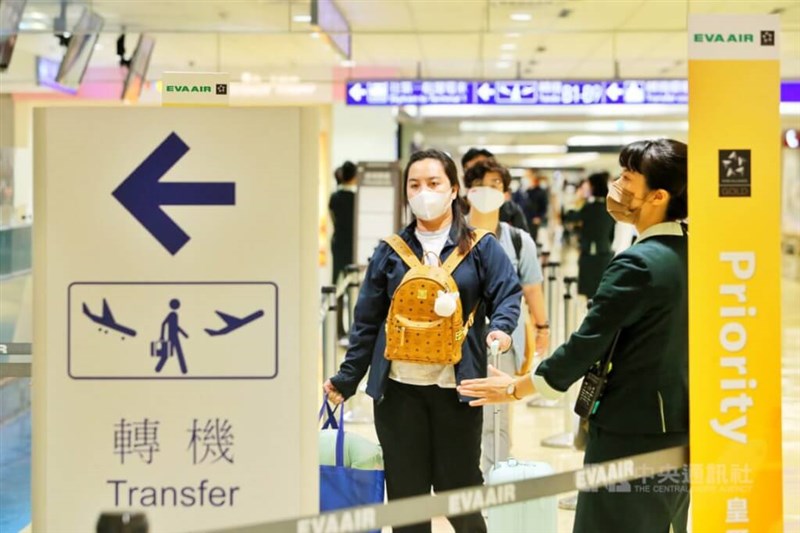
EVA Air, whose transfer passengers account for more than 65 percent of its North America traffic, said its strategy combines direct services to major U.S. gateways with partnerships extending to more than 200 destinations across the continent.
The airline said of its upcoming Washington, D.C. service, "The route will not only open a new gateway to the political and economic heart of the United States, but also strengthen Taoyuan Airport's role as a key trans-Pacific transit hub."
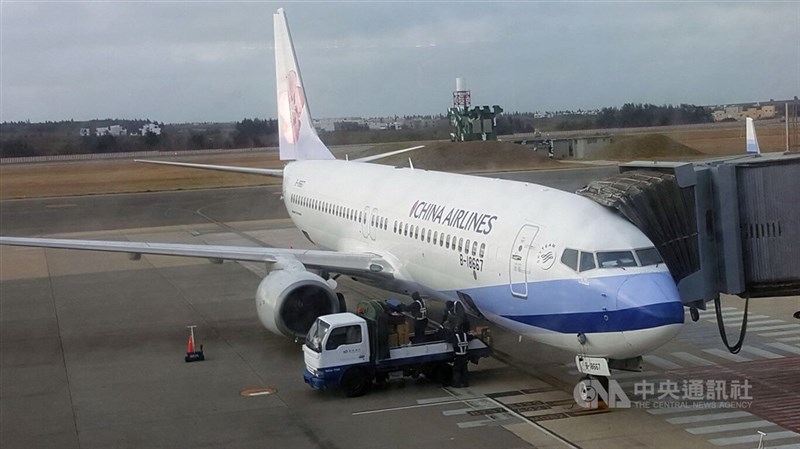
At CAL, transfer passengers account for roughly 50 to 60 percent of its North America routes and help stabilize load factors during periods of low demand for direct flights to North America. The airline believes the trendline is positive given the demographics.
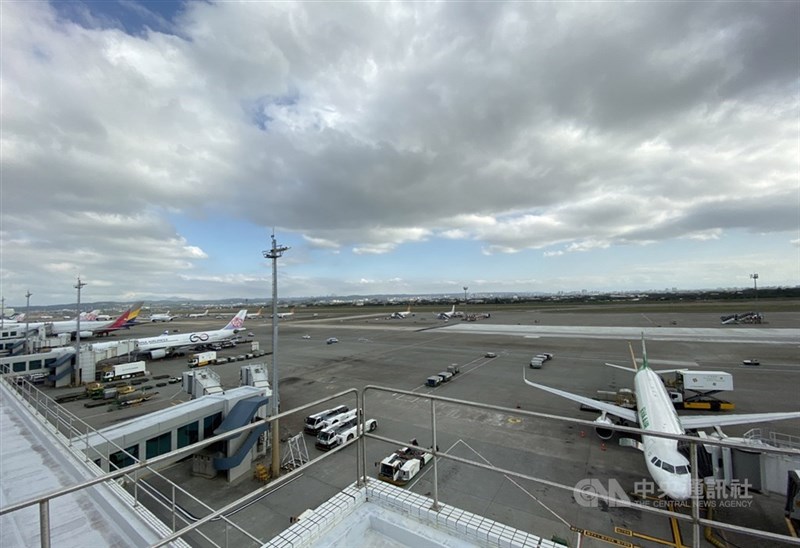
"Rapid economic growth in Southeast Asia and the expansion of the middle class have significantly increased long-haul travel demand, boosting Taiwan's transit market," said CAL, which feeds its long-haul flights with nearly 500 weekly regional flights.
Starlux Airlines' transfer passengers also account for about 50 to 60 percent of its North America traffic.
The carrier said it is targeting cities with strong industrial potential and regional characteristics beyond traditional hubs, pointing to Phoenix's emergence as a technology hub and Ontario's role as an alternative gateway to the greater Los Angeles area.
"By developing secondary airports, we can avoid over-concentration in major gateways while building a differentiated market position," Starlux spokesperson Walter Liang (梁文龍) told CNA in a written statement.
Key market dynamics
The importance of North America to Taiwan's carriers is reflected in passenger volume.
According to Taoyuan International Airport Corp. (TIAC), traffic from Taoyuan International Airport to North America recovered to 123.2 percent of pre-pandemic levels in 2025 -- the strongest performance among major long-haul markets.
Both demand and supply continue to expand, underscoring the market's strategic importance, according to Taiwan's Civil Aviation Administration (CAA).
"North America remains our largest market," said CAA Deputy Director General Fang Chih-wen (方志文).
Structural drivers
Taiwan's geographic location positions it as a natural transit hub linking North America and Southeast Asia, but the growing push for North American destinations also reflects shifting global supply chains, investment flows and geopolitics, said industry analysts like Lin.
Increased investment by Taiwanese companies in the U.S., such as contract chipmaker TSMC's expansion in Arizona, has driven a rise in business travel to Phoenix and destinations in Texas.
Also, disruptions to direct China-U.S. flights during the Russia-Ukraine war -- which have yet to fully recover -- have also redirected part of the transit flow through Taiwan, creating what analysts describe as a "transit dividend."
Yet, Taiwan's geographical advantage and industrial shifts favorable to its industrial base do not preclude competition in the transit market.
In fact, regional hubs such as Incheon International Airport, Hong Kong International Airport and Tokyo's Haneda and Narita airports, remain tough competitors, a 2024 study by Taiwan's Institute of Transportation (IOT) found.
"Taoyuan's strength primarily comes from the U.S. West Coast market, with room for improvement on the East Coast," said IOT Chief Secretary Yeh Tsu-hung (葉祖宏) late last month.
To improve Taiwan's competitiveness, Yeh said, airlines need to continue to increase direct flights to North America, develop and strengthen promising routes, increasing frequencies on high-demand services to reduce transfer times, and bolster strategic alliances with other carriers.
Outlook
Shifting geopolitical dynamics and pandemic-era disruptions have reshaped global travel patterns.
Horizon Securities' Lin cautioned, however, that patterns are never set in stone in the aviation industry, which is highly sensitive to external risks, including soaring fuel prices, geopolitical tensions, broader economic cycles and currency volatility.
While Taiwan's three major carriers are currently profitable and able to issue cash dividends, intensifying competition over the longer term could put pressure on margins, Lin warned.
Still, the broader trajectory is clear.
North America is not only a destination market, but a cornerstone of Taiwan's ambition to establish itself as a regional aviation hub to overcome its small domestic market and capitalize on changing transit flows, global supply chain shifts and evolving geopolitical dynamics.
Enditem/ls
!['Umpire strikes back': Taiwanese ump sets U.S. pro baseball milestone]() 'Umpire strikes back': Taiwanese ump sets U.S. pro baseball milestoneIn her younger days, Sophiyah Liu (劉柏君) was a spiritual medium, serving as a bridge between the mortal plane and that of the unknown.09/18/2026 04:44 PM
'Umpire strikes back': Taiwanese ump sets U.S. pro baseball milestoneIn her younger days, Sophiyah Liu (劉柏君) was a spiritual medium, serving as a bridge between the mortal plane and that of the unknown.09/18/2026 04:44 PM![Made in Taiwan, sovereign in Europe: France's different chip strategy]() Made in Taiwan, sovereign in Europe: France's different chip strategyDuring a May visit to a high-performance computing center operated by the French Alternative Energies and Atomic Energy Commission (CEA) in Bruyères-le-Châtel, south of Paris, French President Emmanuel Macron was photographed holding a sample of Rhea1.09/05/2026 05:27 PM
Made in Taiwan, sovereign in Europe: France's different chip strategyDuring a May visit to a high-performance computing center operated by the French Alternative Energies and Atomic Energy Commission (CEA) in Bruyères-le-Châtel, south of Paris, French President Emmanuel Macron was photographed holding a sample of Rhea1.09/05/2026 05:27 PM![Beyond labels: How immigrant families reshape NCCU's Southeast Asia department]() Beyond labels: How immigrant families reshape NCCU's Southeast Asia department[Editor's Note: This is part two of a two-part series on a university department in Taiwan dedicated to Southeast Asian languages and regional studies, and the people behind it.]08/12/2026 12:12 PM
Beyond labels: How immigrant families reshape NCCU's Southeast Asia department[Editor's Note: This is part two of a two-part series on a university department in Taiwan dedicated to Southeast Asian languages and regional studies, and the people behind it.]08/12/2026 12:12 PM



- Sports
Taiwan bags silver medals in men's, women's team soft tennis
09/20/2026 07:57 PM - Politics
Labor minister heads to China for APEC meeting
09/20/2026 07:56 PM - Society
Favorable weather to allow Mid-Autumn Festival moon gazing: CWA
09/20/2026 07:40 PM - Culture
Lai outlines 4 priorities for Taiwan's cultural future at congress
09/20/2026 07:20 PM - Society
Over 21,000 swimmers participate in annual Sun Moon Lake swim fest
09/20/2026 04:56 PM