FEATURE/Made in Taiwan, sovereign in Europe: France's different chip strategy
By Chao Yen-hsiang, CNA staff reporter
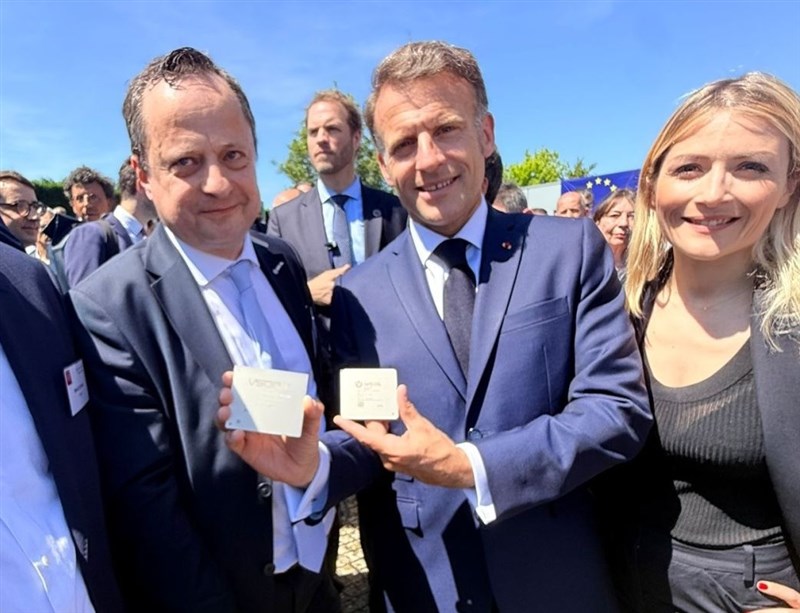
During a May visit to a high-performance computing center operated by the French Alternative Energies and Atomic Energy Commission (CEA) in Bruyères-le-Châtel, south of Paris, French President Emmanuel Macron was photographed holding a sample of Rhea1.
Developed by French semiconductor company SiPearl, the processor was manufactured in Taiwan by Taiwan Semiconductor Manufacturing Co. (TSMC).
Macron's message, SiPearl CEO Philippe Notton recalled, was that Europe needed the processor -- and that it came from Taiwan.
Three years earlier, hearing "this chip is coming from Taiwan" from a French president would have been "almost impossible," Notton said at a France-Taiwan semiconductor industry event in Taipei on Tuesday, a day before SEMICON Taiwan 2026 opened.
Publicly acknowledging that a Taiwan-made chip was needed for applications such as nuclear simulations would have been regarded at the political level as "a complete failure," he said. "Now it's part of it."
The shift comes as the United States seeks to reduce its reliance on Taiwan-based chip production by drawing more Taiwanese investment and manufacturing capacity onto U.S. soil.
The French model presented at the Taipei event instead emphasizes retaining research, design and other strategic capabilities at home while drawing on Taiwan's manufacturing strengths.
Karen Yu (余宛如), president of Taiwan's Innovation and Technology Investment Corporation, described such cooperation as an ecosystem built on complementary strengths and trusted partnerships.
"No single country can control the entire semiconductor value chain," Yu said.
A French startup's Taiwan bet
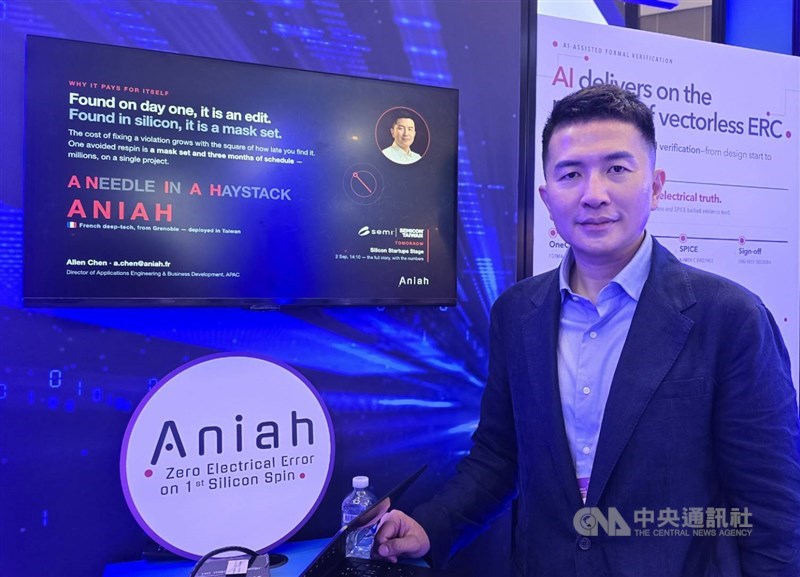
French electronic design automation startup Aniah keeps its core algorithms and research and development in France while using its Taiwan operation to work with chip designers and relay their requirements to its French engineers, said Allen Chen (陳韋廷), the company's director of application engineering.
Aniah's software helps engineers identify leakage, device overstress and other electrical reliability problems early in the chip-design process.
"The customer's voice is the first priority," Chen said, explaining that feedback gathered in Taiwan helps the company's French R&D team improve its core algorithms.
Chen, a Taiwanese engineer who joined Aniah three years ago as its first employee outside France, currently runs its Taiwan operation alone. The company plans to recruit around five employees within a year and is considering upgrading its representative office into a subsidiary, he said.
Aniah's annual budget for Taiwan operations is expected to increase from its current NT$6 million-NT$7 million (US$189,000-US$221,000) to approximately NT$20 million, according to Chen.
Taiwanese customers currently generate around 10 percent of Aniah's revenue. Chen estimated, however, that Taiwan already influences more than 60 percent of its business because many of its U.S. customers have design teams or software users in Taiwan.
"Although the revenue is not large, many of our U.S. customers have design teams in Taiwan," he said, adding that both Taiwan's direct contribution and its wider influence are expected to grow.
Aniah is also considering an initial public offering in Taiwan if its business achieves stable growth and profitability. Although there is no timetable, Chen said any listing would be at least five years away and Taiwan could become the company's first listing venue.
A trust-based partnership
Michael Tchagaspanian, executive vice president for technology strategic partnerships at CEA-Leti, said semiconductor development and production could be divided between French and Taiwanese organizations rather than concentrated in one place because Taiwanese partners were among those CEA-Leti trusted most.
"Trust is very important, and partners in Taiwan are part of our highest level of trust," Tchagaspanian told CNA.
He cited a multiyear partnership signed in April between Taiwan's Powerchip Semiconductor Manufacturing Corp. (PSMC) and CEA-Leti and CEA-List, two institutes under the French Alternative Energies and Atomic Energy Commission, as an example of that approach.
The agreement combines CEA-Leti's silicon photonics and microLED expertise and CEA-List's RISC-V capabilities with PSMC's 3D stacking and interposer platforms to develop technologies for next-generation AI systems.
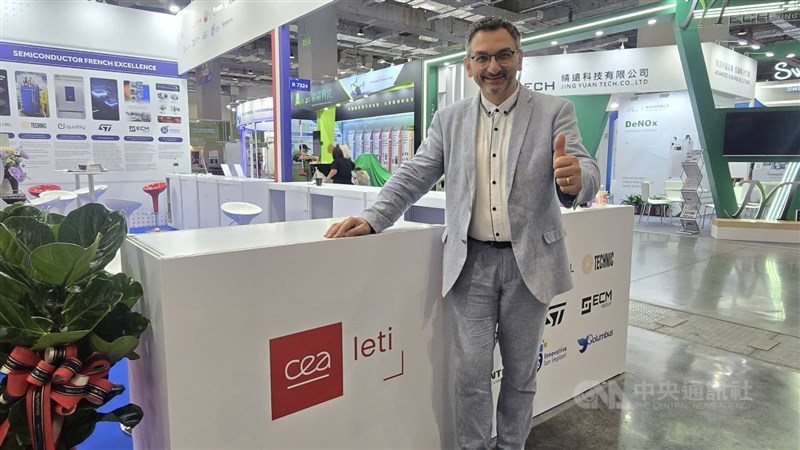
Tchagaspanian said a CEA-Leti team of 10 to 15 engineers specializing in areas such as design, process engineering, testing and system architecture is involved. Potential applications include AI computing and the high-speed data communications required by data centers, with hyperscalers among the prospective customers.
Knowledge, skills and production can be distributed among trusted partners, Tchagaspanian said, with Taiwan retaining the manufacturing capabilities in which it excels.
Relying on Taiwan does not undermine French sovereignty in broadly commercial fields such as AI, data communications, data centers and consumer markets, he said. Stricter requirements for domestic control should apply to limited areas directly related to national defense, he added.
"For such a domain, we need to leverage all the skills, all the capabilities," he said of AI and data communications, adding that sovereignty concerns should be limited to defense and other narrowly defined areas.
Made in Europe?
The European Commission's proposed Chips Act 2.0 seeks to strengthen European research, design and manufacturing capacity, develop semiconductor skills and reinforce supply security, while expanding cooperation with international partners through Strategic Partnerships on Semiconductors.
Notton argued that Europe should first cultivate fabless chip companies, competitive products and sufficient demand to sustain additional fabrication plants. Europe had previously put factories before products, he said.
SiPearl would be happy to manufacture in Europe if suitable capacity became available in five or 10 years, but using Taiwan's production capabilities now allows companies to bring products to market rather than wait for an entire domestic supply chain to emerge, Notton said.
Yu described the desired model as one in which France and Taiwan "co-invest, co-create and co-scale up," combining French strengths in fundamental science, engineering and algorithms with Taiwan's ability to commercialize and scale technologies.
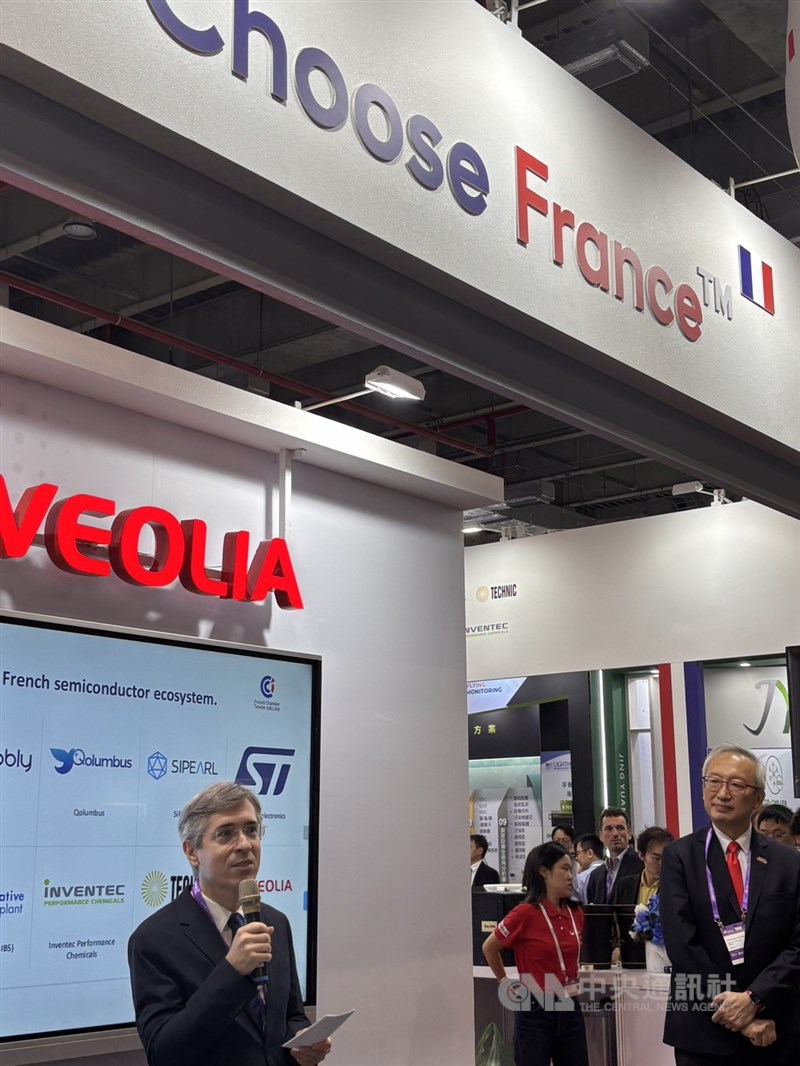
However, given different attitudes toward working hours and personal life, Stephen Su (蘇孟宗), a senior vice president at Taiwan's Industrial Technology Research Institute, told CNA that Europe might be "overly optimistic" about reproducing the working culture underpinning Taiwan's semiconductor manufacturing.
"In Taiwan, for many years, if you work in a fab, you don't have a life," Su said during the panel, citing how TSMC employees may rush back to factories after an earthquake, even in the middle of the night.
Choosing whom to trust
Aniah has avoided taking on customers in China because of U.S. restrictions and concerns that such ties could complicate future fundraising or an eventual listing, Chen said.
Chen estimated that markets outside China were roughly three times the size of the Chinese market, making it commercially unwise to jeopardize access to the larger group for the sake of the smaller one.
Cross-strait tensions, however, have not changed Aniah's plans to expand in Taiwan.
"Everything in semiconductors is happening in Taiwan," Chen said. "If you don't work with Taiwan, you may fall behind."
"Made in Taiwan is a good value," Tchagaspanian said, citing the country's knowledge of high-yield manufacturing. "It's a real strength of Taiwan."
Enditem/cs
![DPP at 40: Founders reflect on risk, rise, reckoning]() DPP at 40: Founders reflect on risk, rise, reckoningFour decades after the Democratic Progressive Party (DPP) was founded under martial law, its pioneers recall the risks they took, the democratic changes they helped bring about and the challenges facing the party today.09/28/2026 11:10 AM
DPP at 40: Founders reflect on risk, rise, reckoningFour decades after the Democratic Progressive Party (DPP) was founded under martial law, its pioneers recall the risks they took, the democratic changes they helped bring about and the challenges facing the party today.09/28/2026 11:10 AM!['Umpire strikes back': Taiwanese ump sets U.S. pro baseball milestone]() 'Umpire strikes back': Taiwanese ump sets U.S. pro baseball milestoneIn her younger days, Sophiyah Liu (劉柏君) was a spiritual medium, serving as a bridge between the mortal plane and that of the unknown.09/18/2026 04:44 PM
'Umpire strikes back': Taiwanese ump sets U.S. pro baseball milestoneIn her younger days, Sophiyah Liu (劉柏君) was a spiritual medium, serving as a bridge between the mortal plane and that of the unknown.09/18/2026 04:44 PM![Beyond labels: How immigrant families reshape NCCU's Southeast Asia department]() Beyond labels: How immigrant families reshape NCCU's Southeast Asia department[Editor's Note: This is part two of a two-part series on a university department in Taiwan dedicated to Southeast Asian languages and regional studies, and the people behind it.]08/12/2026 12:12 PM
Beyond labels: How immigrant families reshape NCCU's Southeast Asia department[Editor's Note: This is part two of a two-part series on a university department in Taiwan dedicated to Southeast Asian languages and regional studies, and the people behind it.]08/12/2026 12:12 PM
- Politics
Cabinet approves upgraded dementia care plan targeting '888' goals by 2035
10/15/2026 09:03 PM - Politics
Taipei mayoral candidates Chiang, Shen to debate Oct. 31
10/15/2026 08:56 PM - Politics
Army to open Chengkungling base to public Oct. 24
10/15/2026 08:52 PM - Society
Labor groups allege contract swaps, low pay for Indonesian workers
10/15/2026 08:39 PM - Politics
MND says zero tolerance for bullying after new suicide case evidence
10/15/2026 08:34 PM