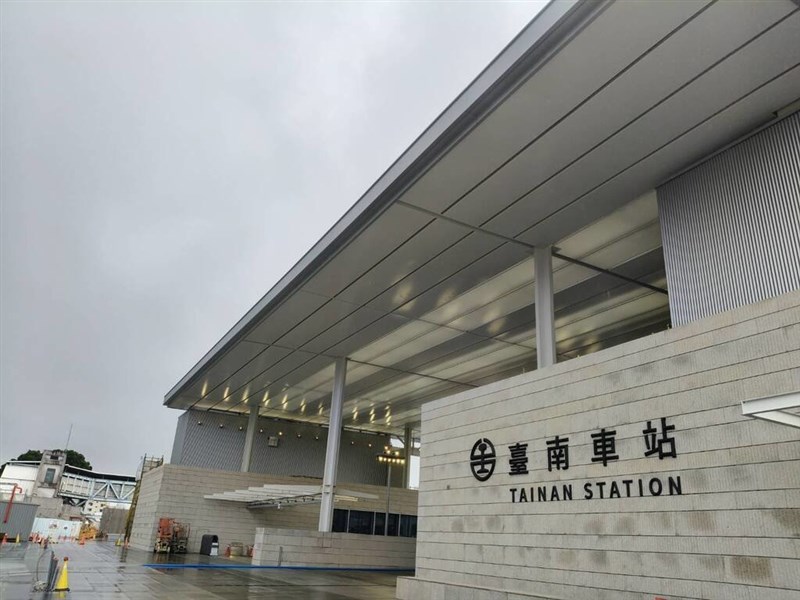
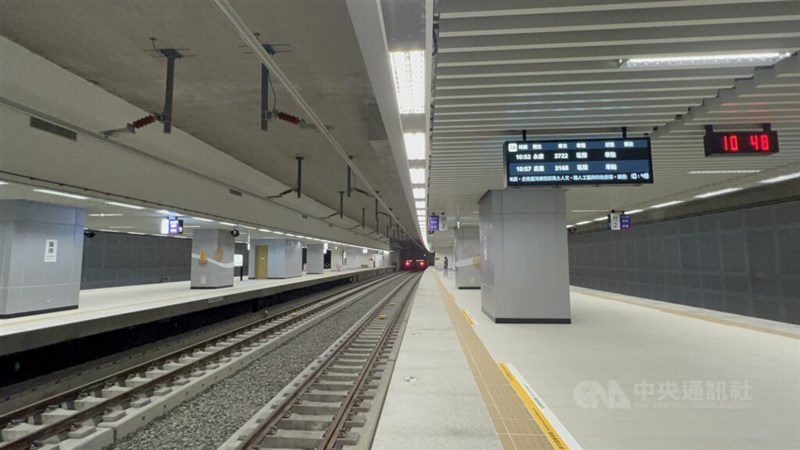
Tainan, Oct. 15 (CNA) Trains are set to begin running underground in Tainan on Saturday, marking a major step in reshaping the southern Taiwan city's urban landscape and opening up new possibilities for its century-old railway station to serve as a gateway to local history and culture.
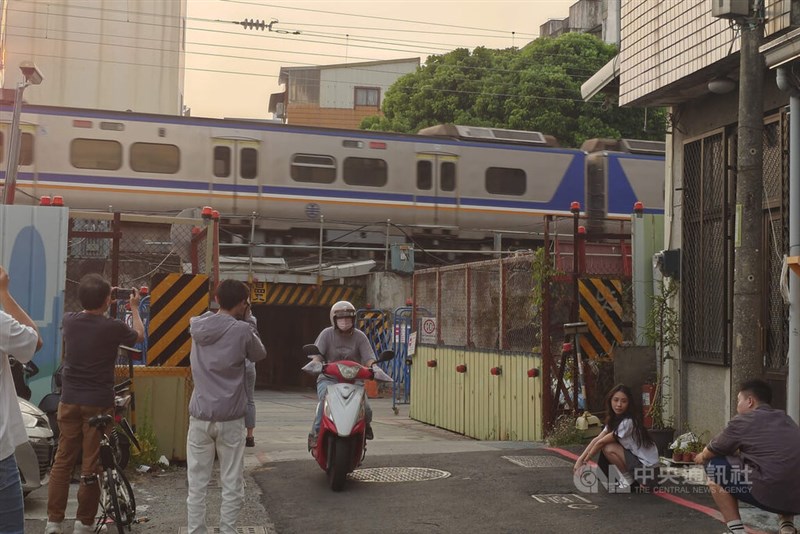
For generations, the railway has served as a vital north-south transportation corridor through Tainan, Taiwan's oldest city. But its tracks, level crossings, underpasses and overpasses have also divided the city, making travel between its eastern and western districts more difficult.
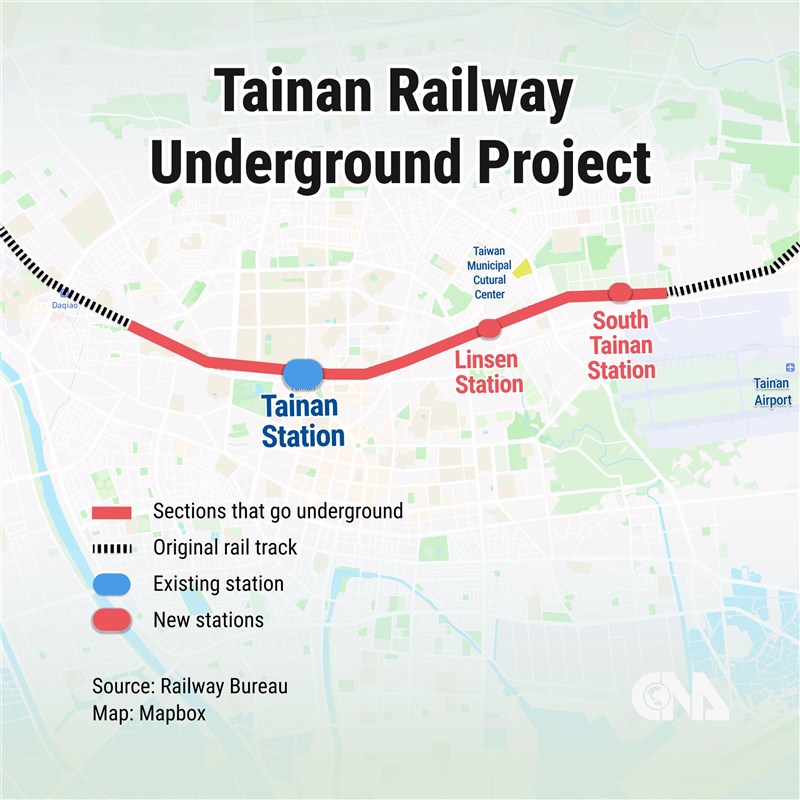
According to the Ministry of Transportation and Communications (MOTC), the 8.23-kilometer underground section will eliminate 23 railway crossings and related structures, improving access for pedestrians and cyclists while easing traffic bottlenecks.
Approved by the Cabinet in September 2009 and led by the Railway Bureau, the project will have taken about 17 years to reach its first-stage opening. In that period the cost rose from a projected NT$33 billion to NT$41.26 billion (US$1.3 billion), with the full project now scheduled for completion in March 2031, according to the bureau.
The transformation will extend beyond transportation. Once the existing tracks are removed, there are plans to turn the former railway corridor into a greenway about 30 meters wide, with walking and cycling paths and landscaped areas linking new stations, neighborhoods, schools and public facilities, the MOTC said.
A new role for a historic station
The project also offers an opportunity to rethink the role of Tainan Station, one of the city's most recognizable landmarks, said Fu Chao-ching (傅朝卿), an emeritus professor of architecture at National Cheng Kung University (NCKU) and a member of the review committee for the station's restoration and reuse plan.
First opened in 1900 during Japanese colonial rule (1895-1945), the station's historic building was rebuilt in 1936 and designated a national monument in 1998. It will remain in place alongside the new underground station rather than be replaced by it.
Fu said the station is closely tied to Tainan's urban layout. Its position facing the station roundabout and the historic city center has shaped how people enter and navigate the city.
Railway planners initially considered building a new station further north, leaving the historic building behind, a proposal Fu opposed because it risked severing the station's long-standing relationship with the city center.
The adopted design instead places the new station underground and next to the historic building, allowing the two to coexist. Its low, horizontal profile and broad canopy give visual prominence to the old station, while a sunken plaza and connecting walkways link the two facilities.
The old station could also take on a more prominent cultural and commercial role, Taiwan Railway Corp. said, adding that plans under discussion include cafes, light meals options, local souvenirs, reading spaces and exhibitions.
Connecting transport and heritage
The railway's relocation underground also presents an opportunity to preserve and interpret the historic features around the station, said Chen Yen-chung (陳彥仲), a distinguished professor in NCKU's Department of Urban Planning.
With a history of more than 400 years, Tainan was once the capital of Taiwan and retains historic railway facilities and other remnants of the past around the station, including platforms, a turntable, warehouses and sections of the old city wall.
Chen said future development should balance preservation with new uses, allowing the station to serve as a starting point for understanding Tainan's history and culture.
He said rather than simply passing through the station to transfer to other forms of transportation, visitors could encounter the city's past there before continuing to historic areas such as the old city center and Anping.
"Restrictions should not be seen as limitations. They can instead become opportunities to create a distinctive urban character," Chen said.
The project has also revealed traces of Tainan's earlier history beneath the modern city. According to the city's Cultural Affairs Bureau, construction teams uncovered 20 archaeological sites containing remains dating from prehistoric times to the Qing dynasty and Japanese colonial period.
The discoveries directly impacted the project's construction schedule, with archaeological investigations and preservation work adding about two years to the original timetable, the Railway Bureau said.
According to the Tainan City government, there were also design changes to preserve archaeological remains, either by relocating them for safekeeping or reinforcing them in place.
However, the transformation will take time. After trains begin running underground, the existing tracks and structures still need to be removed, roads restored and pedestrian facilities improved before the full benefits can be realized.
Two additional underground commuter stations, Linsen and South Tainan, are scheduled to open in 2029 and 2030, respectively.
The longer-term challenge will be to ensure that the land freed up by the project becomes useful public space, encourages renewal along the corridor and helps reconnect communities, Chen said.
For Tainan, the railway's move underground could ultimately reshape more than the city's transport network. Whether the former railway corridor becomes a meaningful public space, and whether the historic station can draw visitors into the city's wider cultural landscape, will help determine how far the project succeeds in reconnecting Tainan with its past as well as its future.
- Society
Underground railway set to reshape old Tainan, revive historic station
10/15/2026 05:54 PM - Business
TSMC raises 2026 sales growth forecast to 44%, leaves capex unchanged
10/15/2026 05:17 PM - Society
Taipei hospital highlights long-term medical work in Eswatini
10/15/2026 05:10 PM - Business
U.S. dollar closes sharply higher on Taipei forex market
10/15/2026 04:34 PM - Society
Thai influencer's videos of illegal work lead to 25 arrests
10/15/2026 04:31 PM