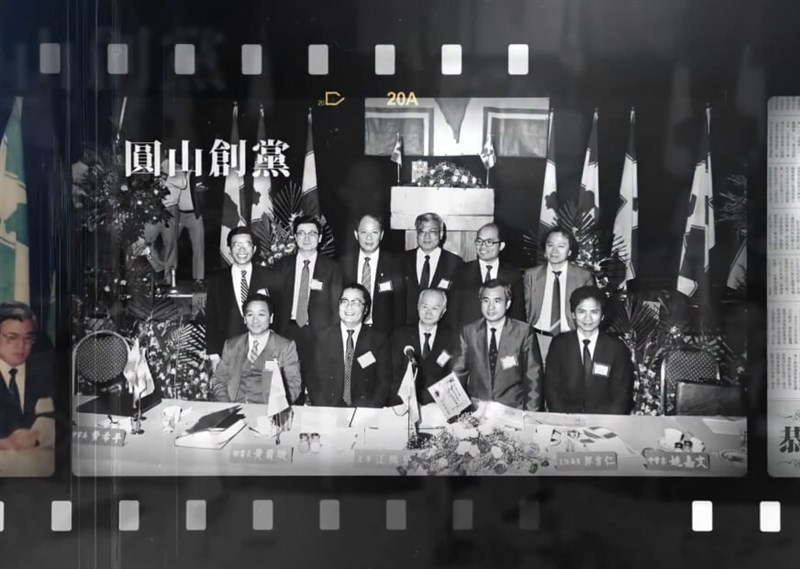
Taipei, Sept. 28 (CNA) Four decades after the Democratic Progressive Party (DPP) was founded under martial law, its pioneers recall the risks they took, the democratic changes they helped bring about and the challenges facing the party today.
The ruling DPP was founded on Sept. 28, 1986, amid decades of Kuomintang (KMT) authoritarian rule following the party's retreat to Taiwan after losing the Chinese Civil War.
Founded in secrecy and fear
On that day, a gathering at Taipei's Grand Hotel was originally scheduled to support "tangwai" candidates -- those challenging the KMT -- in year-end elections for a limited number of seats in the Legislature and the now-defunct National Assembly.
During the meeting, a proposal was made from the floor to discuss forming a new political party, You Si-kun (游錫堃), who presided over the meeting, recalled in a recent interview with CNA.
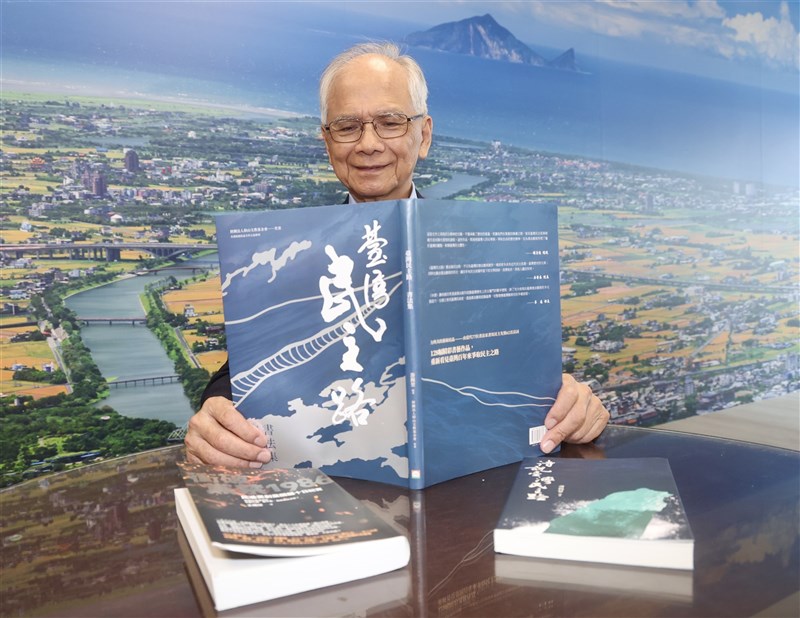
The proposal stirred shock, disbelief and debate among the several hundred people present, with some saying the decision was being made too casually for such a serious matter. When those present were asked to sign up as founding members, "some were reluctant, while others signed and left immediately," he said.
You said he quickly announced that the proposal had passed and, following a suggestion by Frank Hsieh (謝長廷), the party was named the Democratic Progressive Party. It was formally unveiled at a news conference at 6:06 p.m. that day.
Hsieh, a member of the "secret 10-member party-forming group" that began discussing the party's formation in July that year and planning the Sept. 28 move, said no one knew whether they would be arrested as they headed to the news conference.
Hsieh said they only felt a sense of relief when the news of the party's formation appeared in international media.
"Because once the name 'Democratic Progressive Party' appeared internationally, even if we were arrested, someone would still be able to run under the DPP banner in the year-end elections," Hsieh said. "That meant we had succeeded!"
Risks shared by all
Building on decades of activism, long-running efforts to form a political party gained momentum in the 1980s after the 1979 Kaohsiung Incident, in which many "tangwai" figures, including Lin I-hsiung (林義雄), were arrested.
A year later came the Lin family murders, an unresolved case that has long been associated with the then-KMT regime.
Support for "tangwai" candidates, many of them wives of jailed dissidents, was surging, and calls to form a new political party had become nearly universal at "tangwai" events, You said.
Yet plans for the Sept. 28 move were kept so secret that even the participants' families were not told.
You said he asked his wife to bring their two children to Taipei on Sept. 27 without telling them why, thinking he would "have a chance to say goodbye" if he was arrested the next day.
Hsieh, who was tasked by the "secret 10-member party-forming group" with drafting the party constitution, said he had prepared a letter of last words in case he was arrested.
The group gathered at the home of Chou Ching-yu (周清玉) to plan the party's formation. Chou had been elected to the National Assembly in 1980 after her husband, Yao Chia-wen (姚嘉文), was sentenced to 12 years in prison for his involvement in the Kaohsiung Incident.
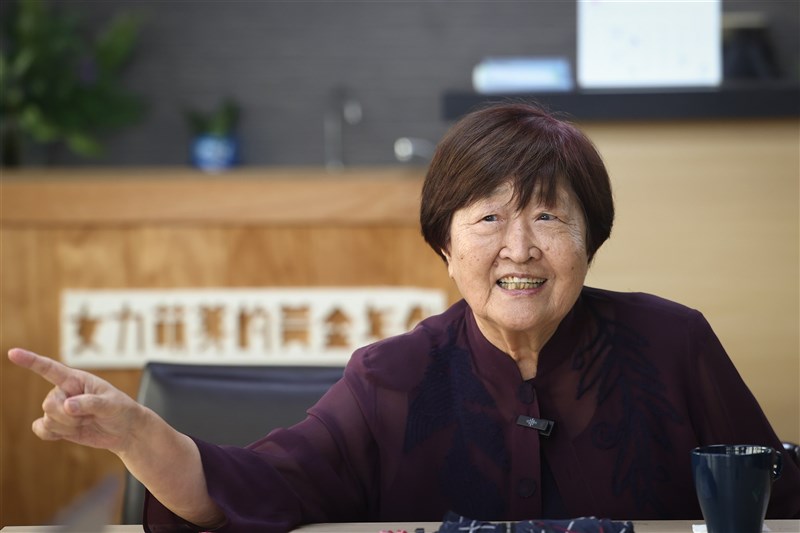
"I don't think I was brave. Once I understood what was happening, I simply couldn't run away. There was nowhere to run anyway," Chou told CNA, reflecting on the moment.
"At worst, I would be arrested and jailed, and perhaps I could be imprisoned with Yao Chia-wen. Half of me was already gone, so what more could happen?" she continued.
Chiang Ching-kuo's acquiescence?
Although forming a new political party was still banned under martial law, the authorities did not arrest the founders, a decision later interpreted by some as tacit acceptance of the DPP's formation by then-President Chiang Ching-kuo (蔣經國).
Wang Chia-hua (王家驊), then head of Chiang's Office of Confidential Affairs, said in an oral-history interview for the book "Breaking the Party Ban: The Crucial 10 Days of the DPP's Founding in 1986" that intelligence officials did not consider the gathering significant enough to report to Chiang because "tangwai" figures frequently held meetings.
But when Wang was informed that afternoon that the DPP had been established, he was shocked and immediately reported the news to Chiang, according to the book. Wang recalled that Chiang's first response was, "Are you sure this is true?"
According to Wang's account, Chiang held a meeting at the Presidential Office on the afternoon of Sept. 29, with some officials urging a crackdown and others advising against confrontation. Chiang said, "I could arrest them with a single order, but what then? Where would that leave the country's development? How do we move forward?"
Later, in an Oct. 7 interview with Katharine Graham, then publisher of The Washington Post, Chiang said, "An opposition party is simply a phenomenon of the political process."
The comments came as the government moved toward lifting martial law and restrictions on the formation of new political parties. Martial law was lifted on July 15, 1987.
Rejecting the view that Chiang had tacitly approved the DPP's formation, You, a member of the "18-member party-forming working group" established during the early stages of the party's formation, said there would have been no need for secrecy or fear of arrest if that were true.
"What actually happened was that people took the risk of defying the party ban, forcing the authoritarian regime to face the political reality that had already emerged," You said.
Tests of governance
As Taiwan democratized from the late 1980s onward, the DPP gradually grew into a major political force.
A breakthrough came in the 1997 local elections, when the party won 12 of the then 23 county and city leadership posts, paving the way for its historic presidential victory in 2000 and Taiwan's first transfer of power between political parties.
Chen Shui-bian (陳水扁) became Taiwan's first DPP president in 2000 and served two terms. The party returned to power in 2016 under Tsai Ing-wen (蔡英文) and secured a third consecutive presidential term in 2024 under Lai Ching-te (賴清德).
That means the DPP has held the presidency for 18 years since Taiwan's direct presidential election in 1996, compared with 12 years under the KMT -- during Lee Teng-hui's (李登輝) presidency from 1996 to 2000 and Ma Ying-jeou's (馬英九) from 2008 to 2016.
Looking back on the DPP's 40-year history, DPP Legislator Ker Chien-ming (柯建銘), who served as the party's legislative caucus leader for 25 years until 2026, said the party's journey has mirrored Taiwan's democratization and social reforms.
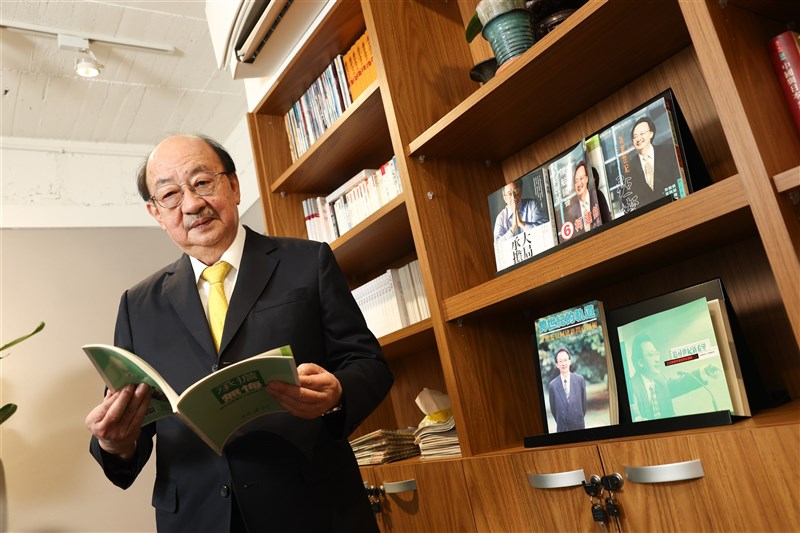
From fighting for freedom of speech during the "tangwai" era to enacting pension reform, transitional justice and marriage equality while in government, each step has been marked by fierce debate and left its mark on Taiwan, Ker said.
Except during Tsai's eight-year presidency, when the DPP held a legislative majority, the party has been in the minority in the Legislature but has always stood by its convictions, Ker said.
Former DPP Chairman Hsu Hsin-liang (許信良), who led the party to victory in the 1997 local elections, said the DPP has a political advantage in Taiwan after governing for much of the past three decades.
He told CNA in a recent interview that the advantage stems from the DPP's role in Taiwan's democratization and its long-standing support among voters who strongly identify with Taiwan rather than China.
Hsu, now 85, said, however, that the party faces a different set of political challenges today.
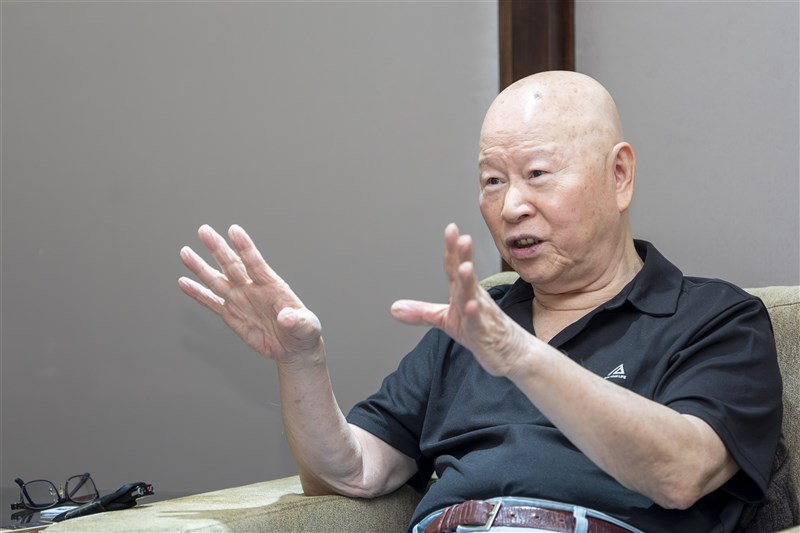
He urged the DPP to move beyond "ethnic-based ideology" and build a shared Taiwanese identity based on democracy, freedom, social and economic equality, and common interests rather than language, blood ties or ethnicity.
"It must embrace different groups and opinions," Hsu said.
The party also faces the practical challenge of governing without a legislative majority.
The DPP lost control of the Legislature in the 2024 elections, creating what Hsu described as a political stalemate under divided government.
He said the administration must win the support of opposition lawmakers if it wants to advance its agenda.
Hsu, who worked with then-President Lee on constitutional reforms in 1997, also argued that the DPP needs a better understanding of Taiwan's constitutional system and how political power is exercised.
It should explain those issues to the public, he said, rather than relying primarily on online attention and political slogans amid confrontation with opposition parties.
For a party founded in defiance of authoritarian rule, Hsu said, the test now is less about its democratic legacy than about how effectively it governs.
The DPP can no longer rely primarily on that legacy or on ethnic issues to mobilize support, he said, and must instead demonstrate that it can meet Taiwan's current political challenges.
!['Umpire strikes back': Taiwanese ump sets U.S. pro baseball milestone]() 'Umpire strikes back': Taiwanese ump sets U.S. pro baseball milestoneIn her younger days, Sophiyah Liu (劉柏君) was a spiritual medium, serving as a bridge between the mortal plane and that of the unknown.09/18/2026 04:44 PM
'Umpire strikes back': Taiwanese ump sets U.S. pro baseball milestoneIn her younger days, Sophiyah Liu (劉柏君) was a spiritual medium, serving as a bridge between the mortal plane and that of the unknown.09/18/2026 04:44 PM![Made in Taiwan, sovereign in Europe: France's different chip strategy]() Made in Taiwan, sovereign in Europe: France's different chip strategyDuring a May visit to a high-performance computing center operated by the French Alternative Energies and Atomic Energy Commission (CEA) in Bruyères-le-Châtel, south of Paris, French President Emmanuel Macron was photographed holding a sample of Rhea1.09/05/2026 05:27 PM
Made in Taiwan, sovereign in Europe: France's different chip strategyDuring a May visit to a high-performance computing center operated by the French Alternative Energies and Atomic Energy Commission (CEA) in Bruyères-le-Châtel, south of Paris, French President Emmanuel Macron was photographed holding a sample of Rhea1.09/05/2026 05:27 PM![Beyond labels: How immigrant families reshape NCCU's Southeast Asia department]() Beyond labels: How immigrant families reshape NCCU's Southeast Asia department[Editor's Note: This is part two of a two-part series on a university department in Taiwan dedicated to Southeast Asian languages and regional studies, and the people behind it.]08/12/2026 12:12 PM
Beyond labels: How immigrant families reshape NCCU's Southeast Asia department[Editor's Note: This is part two of a two-part series on a university department in Taiwan dedicated to Southeast Asian languages and regional studies, and the people behind it.]08/12/2026 12:12 PM

- Business
Starlux adds fourth weekly Taipei-Prague flight
10/18/2026 09:08 PM - Society
Taichung Arena on track for completion in 2030: City gov't
10/18/2026 09:02 PM - Society
Typhoon Champi sea warning possible Wednesday night: CWA
10/18/2026 08:42 PM - Politics
Chiang touts first-term results; Shen denies cash gift rumors
10/18/2026 08:38 PM - Sports
Zeng Sheng-an's three-run homer gives Dragons 2-0 lead in Taiwan Series
10/18/2026 08:18 PM