Taipei, June 1 (CNA) Taiwan's manufacturing sector reached its highest level of activity in nearly five years in May, as AI demand continued to drive supply chain activity and fuel strong exports, the Chung-Hua Institution for Economic Research (CIER) said Monday.
The seasonally adjusted purchasing managers' index (PMI), which gauges the manufacturing sector's climate, rose 1.1 points from a month earlier to 61.4 in May, marking the eighth consecutive month of expansion and the highest PMI reading since September 2021, the CIER said.
A PMI reading above 50 indicates expansion, while a reading below 50 signals contraction.
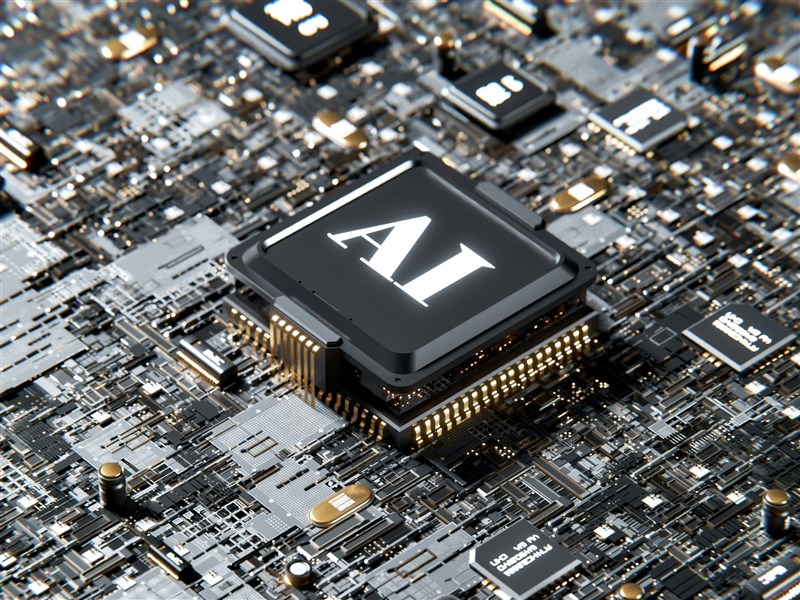
The CIER, one of Taiwan's leading economic think tanks, attributed the increase mainly to continued momentum in the electronics and optical industry, as well as the electrical and machinery equipment industry, both key parts of the AI supply chain.
In addition, the sub-index for the business outlook over the next six months also rose 2.9 from a month earlier to 66.8 in May, its highest level since June 2021, data compiled by the CIER showed.
"The overall economy is actually very strong," CIER President Lien Hsien-ming (連賢明) said, noting that AI-related industries have continued to support robust exports amid strong demand.
The Directorate-General of Budget, Accounting and Statistics (DGBAS) in late May raised its 2026 economic growth forecast for Taiwan to 9.64 percent, after preliminary data showed first-quarter GDP grew 14.55 percent.
CIER Vice President Chen Shin-Horng (陳信宏) said previous generations of information and electronics products tended to bring only partial upgrades, such as the addition of specific functions, and therefore benefited only certain companies or sectors.
By contrast, the AI boom has created a broader chain effect involving graphics processing units (GPUs), central processing units (CPUs), memory chips and other components, bringing "a structural transformation to many industries."
That structural shift, Chen said, had broken the traditional "poor May and dreadful June" pattern used in the past to describe a seasonal slowdown in Taiwan's electronics sector.
Meanwhile, Taiwan's non-manufacturing index (NMI), which is not seasonally adjusted, stood at 58.2 in May, marking the 15th straight month of expansion, the CIER said.
The expansion was supported by factors such as easing concerns over the Middle East conflict, record-high local shares and Mother's Day demand, the CIER said.
- Business
NT$10 receipts win NT$10 million prizes
10/05/2026 09:02 PM - Politics
OCAC minister, family accused of misusing public resources overseas
10/05/2026 08:58 PM - Politics
New Eswatini envoy pledges support for Taiwan's int'l participation
10/05/2026 08:17 PM - Politics
Taichung mayoral rivals Ho, Chiang visit transport project sites
10/05/2026 07:41 PM - Society
6 Taipei police officers disciplined over misconduct in gay bar raid
10/05/2026 07:04 PM