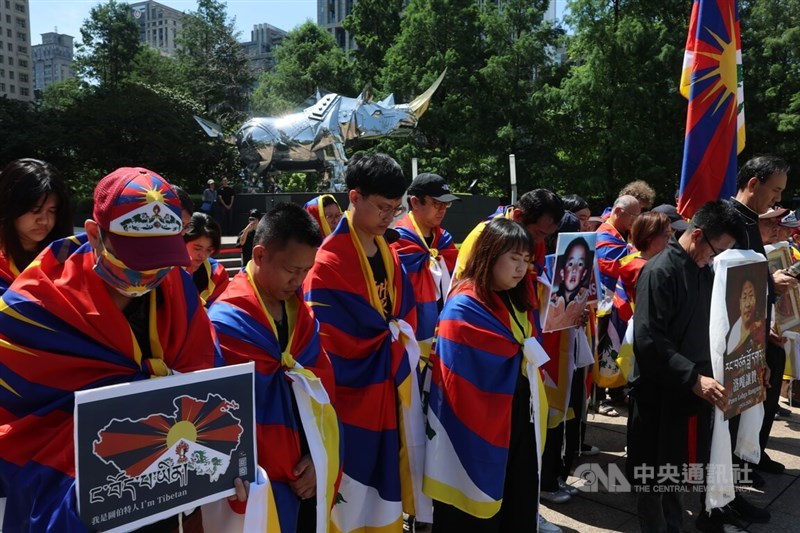
Taipei, Aug. 2 (CNA) Several dozen people protested outside the Bank of China's Taipei branch on Sunday, marking one month since Tibetan activist Lobga Rangzen set himself on fire outside United Nations (U.N.) headquarters in New York to protest Chinese rule.
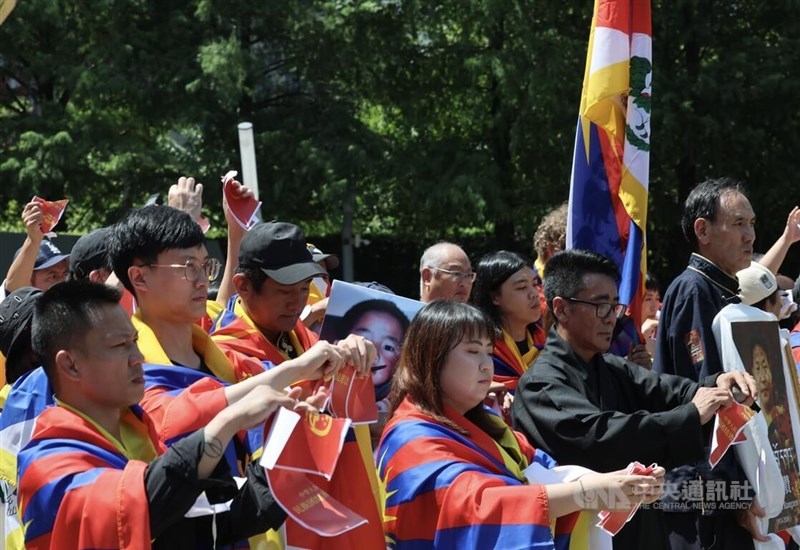
In memory of Lobga Rangzen and as part of a Global Day of Action called for by his family, participants, including Tibetans living in Taiwan and Taiwanese supporters, staged a "die-in" outside the branch, lying on the ground draped in Tibetan flags before rising one by one.
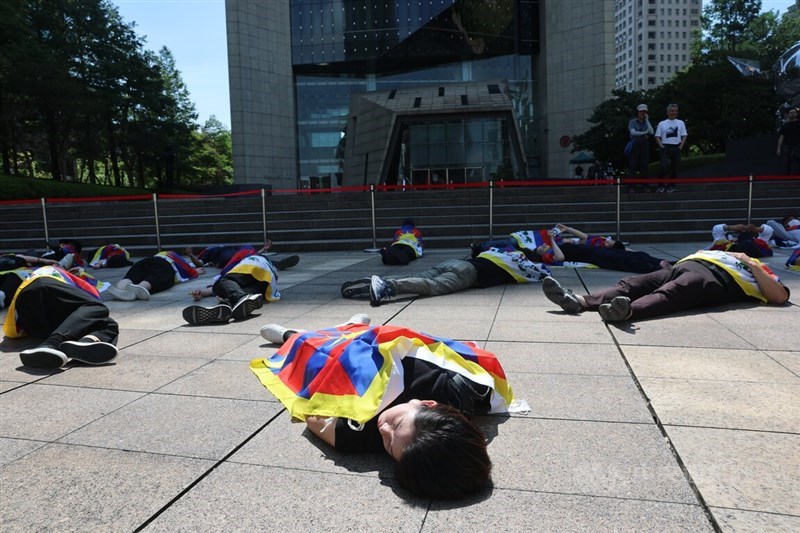
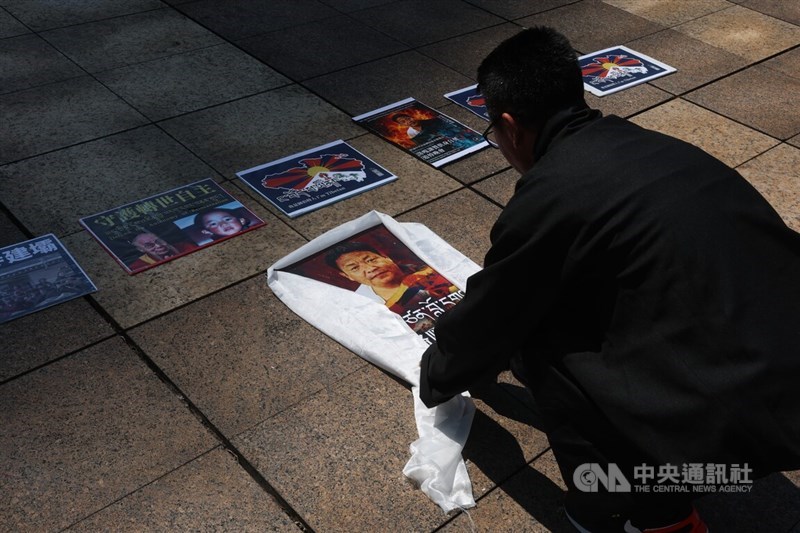
Organizers, including the Human Rights Network for Tibet and Taiwan (HRNTT), said they chose the site for the protest because China has no embassy in Taiwan and the bank is directly controlled by the Chinese government, making it, in their view, the closest available symbol of the Chinese state.
Among those chanting "Free Tibet" and "Tibet belongs to Tibetans" in the scorching heat was Tashi Tsering, a Tibetan exile and HRNTT secretary-general.
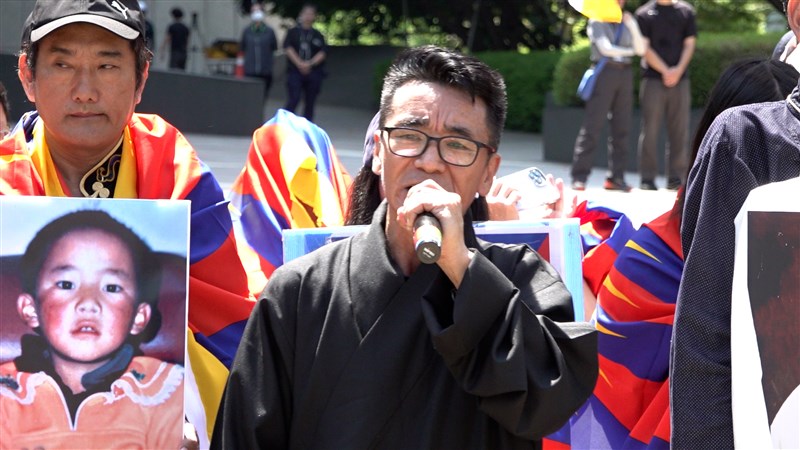
"Through his self-immolation, Lobga Rangzen wanted the U.N. and people around the world to know about and pay attention to the situation inside Tibet," Tashi Tsering said in his remarks.
Lobga Rangzen, whose birth name was Lobsang Palden, had also intended the act as a protest against China's Ethnic Unity and Progress Promotion Law, which took effect on July 1, one day before his self-immolation, according to Tashi Tsering.
Taiwanese voice for Tibet
Lobga Rangzen died from severe burns later on July 2. Footage from his livestream circulated widely online, along with a message he streamed just before he went to U.N. headquarters, in which he urged Tibetans to continue their struggle.
Taiwanese participant Panthea Lee recalled Lobga Rangzen's final message, saying he had urged supporters not simply to mourn him but, if they were moved by his sacrifice, to stand up for all Tibetans.
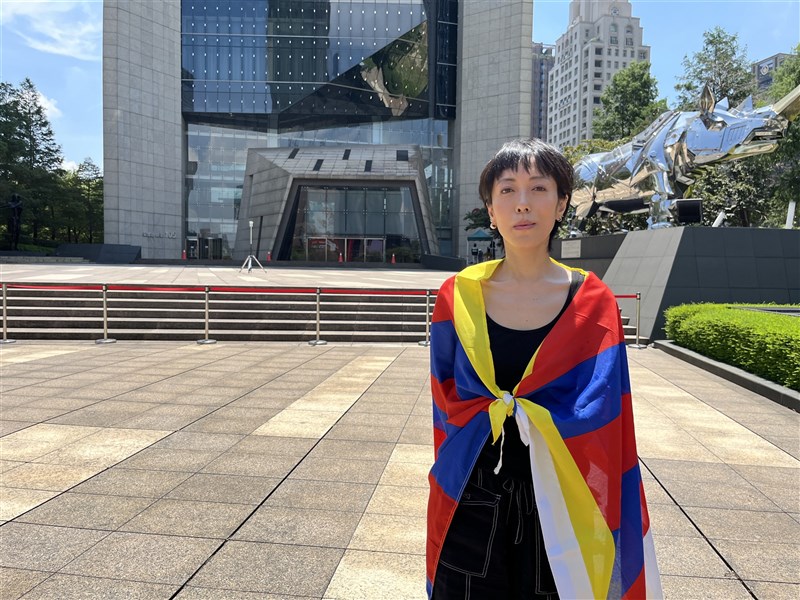
"I feel that we have a responsibility to heed these words and the incredible sacrifice," Lee said, referring to the self-immolations of more than 170 Tibetans, including Lobga Rangzen, since 2009, "and to do what we can to work for a free Tibet."
She also called it "unconscionable" that cars and passersby continued past Lobga Rangzen as he was engulfed in flames, saying people should not simply look away from oppression or pretend it is "normal."
"Silence is a political stance," Lee said. "It is enabling authoritarianism; it is enabling oppression."
China's new law
China's ethnic unity law, which Tibetan activists have protested against, aims to "forge a strong sense of community for the Chinese nation."
Some provisions of the law promote Mandarin in schools and allow legal action against overseas organizations and individuals accused of undermining ethnic unity or promoting ethnic division, with the latter provision raising concerns in Taiwan.
Beijing says the legislation is intended to promote ethnic equality and unity, as well as common prosperity and development, but human rights groups say its broadly worded provisions could facilitate cultural assimilation and threaten the languages, cultures and identities of ethnic minority groups.
- Society
Seasonal winds to bring cooler weather across parts of Taiwan
10/03/2026 07:26 PM - Politics
Local election campaigns heat up across Taiwan
10/03/2026 06:56 PM - Politics
Taiwan confirms its patrol vessels monitoring Chinese ships near Philippines
10/03/2026 06:46 PM - Business
CPC to leave domestic gasoline, diesel prices unchanged next week
10/03/2026 05:48 PM - Science & Tech
Taiwan, U.K. sign science, technology deal covering 3 areas
10/03/2026 04:26 PM