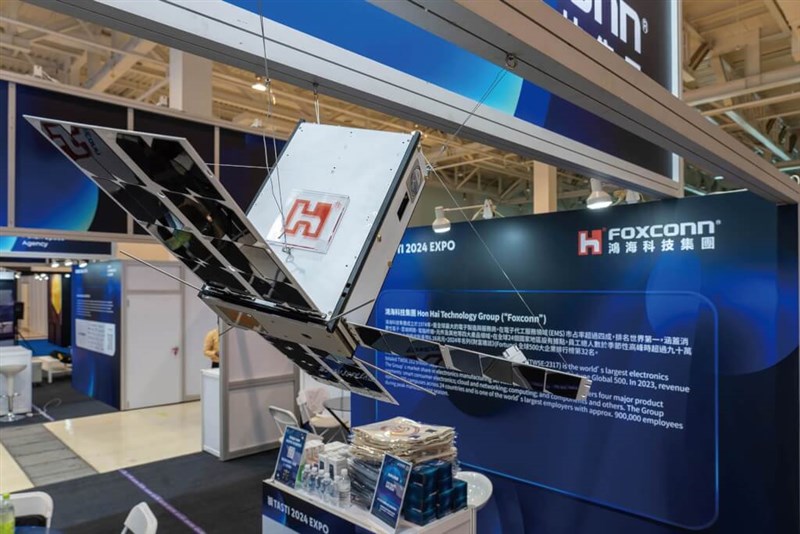
Taipei, May 4 (CNA) Two second-generation satellites developed by Taiwanese electronics manufacturer Hon Hai Precision Industry Co. were launched successfully on Sunday from Vandenberg Space Force Base in California, according to the company.
The low-Earth orbit (LEO) satellites PEARL-1A and PEARL-2B, which have entered their intended orbits, are primarily designed for payload technology verification in communication and space science, with an expected on-orbit mission duration of one to three years, Hon Hai said in a news release.
The second-generation satellites are equipped with Ka-band inter-satellite link (ISL) payloads that enable broadband communication with ground stations, as well as peer-to-peer link verification between the two satellites, according to the news release.
They also carry a Compact Ionospheric Probe (CIP) to monitor the space communication environment, said the company, which is also widely known as Foxconn.
Hon Hai said the advances allow it to utilize beam planning and constellation design tools more effectively, which in turn strengthens its future application capabilities in LEO systems.
Meanwhile, National Central University (NCU), which co-developed the satellites, said Sunday that it was the first Taiwanese double-satellite Ka-band ISL verification.
It was also the first time a CIP, made by NCU, was deployed on two satellites on the same orbit, which can assist in clarifying the causes and extent of space communication interference, the university said in a statement.
According to Hon Hai, the PEARL project demonstrates its positioning in the space industry, with its project team accumulating extensive experience from orbital operations of the first generation mission through receiving stations in Taiwan and Europe.
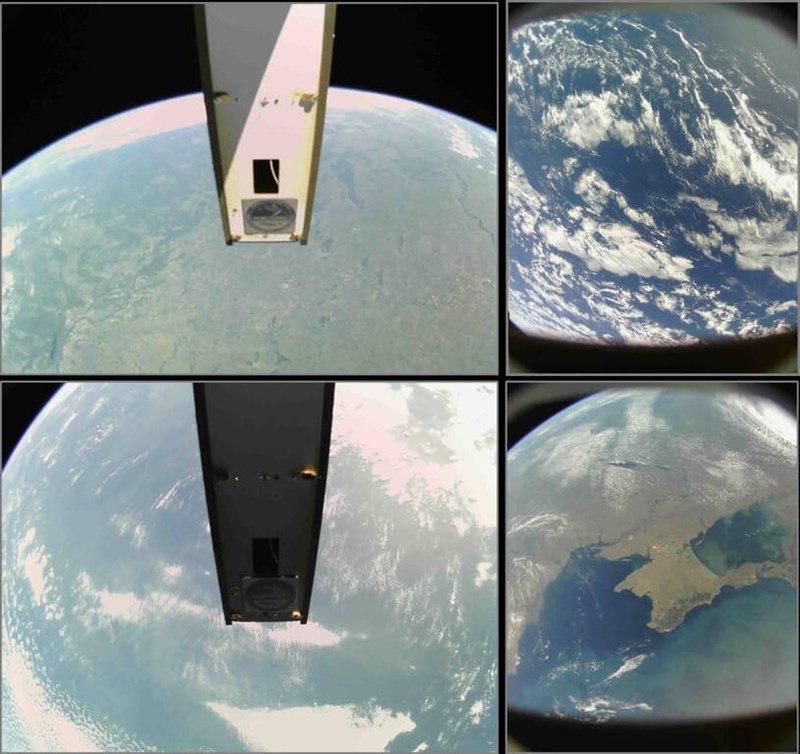
The company said its research and development arm, Hon Hai Institute, was responsible for the latest LEO satellites, from pre-launch system integration to post-launch on-orbit operations and data verification.
The PEARL LEO satellite design integrates Hon Hai's proprietary camera payloads with mature internal and external components, with the R&D team performing system optimizations, based on feedback from the first generation satellites' on-orbit operations, it said.
The PEARL mission series serves to establish "on-orbit practical experience" for continued optimization of next-generation satellites' design and integration capabilities, enhancing Hon Hai's global competitiveness, the press release said.
It will accelerate Hon Hai's focus on diverse application scenarios, including mobile communication supplements, Direct-to-Cell, remote area connectivity, Industrial Internet of Things (IIoT), and backup communications for specific environments, it said.
- Politics
- Society
Scattered showers expected in Greater Taipei, eastern Taiwan Saturday
10/03/2026 10:41 AM - Society
Taiwan headline news
10/03/2026 10:22 AM - Sports
'Hao-yu like that?' A deep dive into Lee's rookie MLB season
10/03/2026 10:00 AM - Sports
Taiwan boosts medal haul in multiple events at Asian Games on Friday
10/02/2026 08:55 PM