ANALYSIS/China defense mobilization law signals preparations for full-scale conflict: Analysts
By Sean Lin, CNA staff reporter
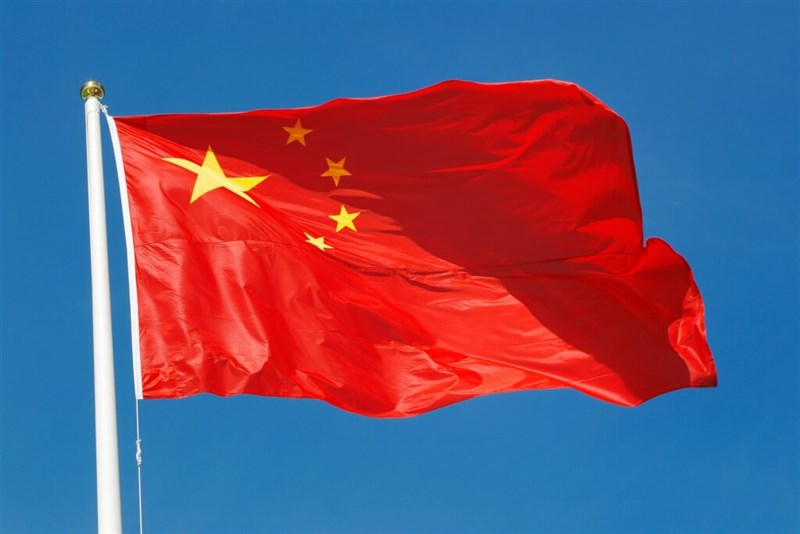
China's revised National Defense Mobilization Law, which will take effect on Oct. 1, indicates that the Chinese Communist Party (CCP) plans to mobilize the country's full resources in the event of potential conflicts with external adversaries, including Taiwan, according to analysts.
The revision, passed on Aug. 28 by the Standing Committee of China's National People's Congress, defines national defense mobilization as "necessary measures" taken by the country to ensure a "rapid transition between peacetime and wartime" in response to threats to "national sovereignty, unity, territorial integrity and security, as well as development interests."
Hung Pu-chao (洪浦釗), an assistant professor at the University of Taipei's Center of General Education, said the revision was not intended solely for Taiwan, but also targeted other countries with which China has territorial disputes, such as the Philippines, India and Japan.
However, Hung noted that it marked the first time that the word "unity" has been directly linked to "national defense mobilization" and "transition between peacetime and wartime."
"This serves the purpose of legal warfare against Taiwan," Hung said.
While the Anti-Secession Law provides a legal basis for the Chinese government to use "non-peaceful means" against forces seeking Taiwan independence, the National Defense Mobilization Law defines how state power can be mobilized in wartime, Hung said.
Should China wage war against forces seeking Taiwan independence, it could invoke the law to seek legal justification for its actions in the international community, thereby attempting to rationalize behavior that would otherwise be unjustifiable under international law, Hung explained.
"China has long used domestic legislation to define Taiwan as an internal affair. The goal is to bolster its claim over Taiwan and create some trappings of legitimacy," Hung said.
Meanwhile, Kuo Yujen (郭育仁), vice president of the Institute for National Policy Research, pointed out that the law does not define "national interests."
"You could interpret it as [Chinese President] Xi Jinping (習近平) arrogating more power, because national interests are open to personal interpretations," Kuo said.
Civilian resources
Another key difference in the revision is the addition of the term "expropriation" to provisions on the requisitioning of "civilian resources" for military use during mobilization. Basic social functions and necessities, such as financial activities, transportation, information networks, and water and energy supplies, are to be rationed and prioritized for the People's Liberation Army.
Yang Tai-yuan (楊太源), chairman of Secure Taiwan Associate Corp., said "expropriation," which implies confiscation, is a more forcible measure than "requisition."
The spirit of the provision is similar to that of China's Counterespionage Law, in that all state agencies, nongovernmental organizations, businesses and individuals must comply unconditionally with investigations by national security agencies.
Yang noted that the law does not clearly define the scope of requisition and expropriation.
"Although the Taiwan Affairs Office has sought to allay public concerns by saying that Taiwanese and foreign businesses will not be targeted, I believe that the revision was drafted with the intention of wartime requisition and expropriation from all civilians and businesses in China."
Hung, meanwhile, noted that the sheer scale of mobilization suggests that "failure is not an option" once China goes to war, as defeat could lead to tremendous economic losses and mounting public pressure, undermining the CCP's rule.
Preparations for Xi's 4th term
According to Yang, the revision likely reflected Xi's desire to push through a series of necessary but overdue legal amendments before the Fifth Plenary Session of the 20th Central Committee of the Communist Party of China is held in October, in order to accommodate systemic changes following China's sweeping military reforms in 2015.
By consolidating his control over the PLA, Xi is also tightening his grip on power as he stands on the brink of announcing his fourth five-year term at the 21st National Congress of the CCP, which is expected to be held in October 2027, Yang said.
Kuo agreed, predicting that Chinese society will be placed under "de facto martial law" in the year between the CCP's Fifth Plenary Session of the 20th Central Committee and the 21st National Congress to ensure that Xi can smoothly begin his fourth term.
"There must not be any mistakes or surprises within or outside China, so the revision came at just the right time," he said.
Enditem/ASG
![Lai's WWII remarks warn of China's bid to reshape world order: Analysts]() Lai's WWII remarks warn of China's bid to reshape world order: AnalystsA senior official said Saturday that President Lai Ching-te's (賴清德) emphasis on preserving the historical facts of World War II in his National Day address highlighted concerns over Beijing's efforts to undermine the postwar international order.10/10/2026 07:27 PM
Lai's WWII remarks warn of China's bid to reshape world order: AnalystsA senior official said Saturday that President Lai Ching-te's (賴清德) emphasis on preserving the historical facts of World War II in his National Day address highlighted concerns over Beijing's efforts to undermine the postwar international order.10/10/2026 07:27 PM![Laos air base part of China's Indian Ocean ambitions: Expert]() Laos air base part of China's Indian Ocean ambitions: ExpertThe recent opening of a joint air support center in Laos is part of China's decades-long power-projection efforts to extend its influence into the Indian Ocean, a Taiwanese defense expert said Sunday.10/04/2026 04:44 PM
Laos air base part of China's Indian Ocean ambitions: ExpertThe recent opening of a joint air support center in Laos is part of China's decades-long power-projection efforts to extend its influence into the Indian Ocean, a Taiwanese defense expert said Sunday.10/04/2026 04:44 PM!['Hao-yu like that?' A deep dive into Lee's rookie MLB season]() 'Hao-yu like that?' A deep dive into Lee's rookie MLB seasonOne of the biggest stars on the Detroit Tigers' Threads account is infielder Lee Hao-yu (李灝宇), with posts featuring the Taiwanese rookie rarely drawing fewer than 5,000 likes, far more than the 1,000 likes posts featuring other players only occasionally draw.10/03/2026 10:00 AM
'Hao-yu like that?' A deep dive into Lee's rookie MLB seasonOne of the biggest stars on the Detroit Tigers' Threads account is infielder Lee Hao-yu (李灝宇), with posts featuring the Taiwanese rookie rarely drawing fewer than 5,000 likes, far more than the 1,000 likes posts featuring other players only occasionally draw.10/03/2026 10:00 AM

- Business
Taiwan shares close up 0.3%
10/16/2026 01:40 PM - Business
Taiwan economic growth in 2026 to be highest in 39 years: CIER
10/16/2026 01:06 PM - Culture
Lee Yun-chan wins Best Director at Busan Int'l Film Festival
10/16/2026 01:01 PM - Society
Warm weather to persist across Taiwan through Saturday: CWA
10/16/2026 11:08 AM - Sports
Jeremy Lin joins ESPN's NBA analyst lineup for new season
10/16/2026 10:53 AM