INTERVIEW/Pushback on Taiwan defense budget sends wrong message: Ex-MSC chair
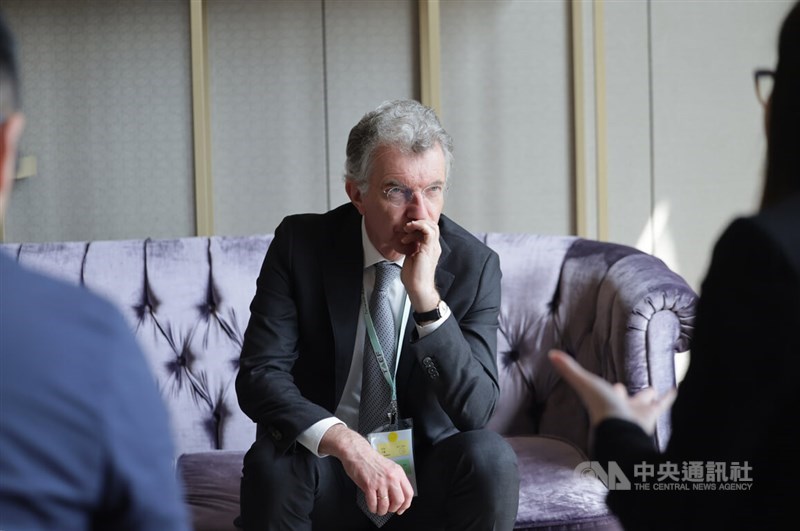
Taipei, March 18 (CNA) Former Munich Security Conference (MSC) Chairman Christoph Heusgen said Tuesday that ongoing pushback in Taiwan against a NT$1.25 trillion (US$39.26 billion) defense bill due to political differences could send the wrong message to the world.
Speaking to CNA in an interview in Taipei, Heusgen, who chaired the annual MSC from 2022 to 2025, said a majority of Germans now support significantly increasing their country's defense budget despite minimal economic growth in recent years.
That shift is largely the result of the Russian invasion of Ukraine and the return to the White House in 2025 of U.S. President Donald Trump, who has repeatedly called on NATO nations, including Germany, to increase defense spending, he said.
Heusgen said he did not want to get involved in Taiwan's domestic politics.
"But just...seeing the aggressive stance of the People's Republic of China (PRC) and the unreliability of the Trump administration, I think if I were Taiwanese, I would clearly say that we have to now step up our defense efforts," he said.
Asked what kind of message the ongoing domestic pushback against the supplementary defense budget proposed by Taiwan's ruling Democratic Progressive Party (DPP) government could send to the world, Heusgen said there were two.
"One message is a message of surprise," he said.
People who follow foreign policy have clearly seen that it is important for Taiwan to beef up its self-defense amid rising military threats from China, but some people in Taiwan seem too naive to see it, he said.
The other message is that the PRC's cognitive warfare is apparently working well in Taiwan, as the PRC, like Russia, is adept at using social media to influence public opinion in foreign countries, he said.
He said Chinese leader Xi Jinping (習近平) "has made it clear that the PRC intends to unify Taiwan sometime around 2027" and that "people in Taiwan should at least recognize that Beijing views military invasion as an option."
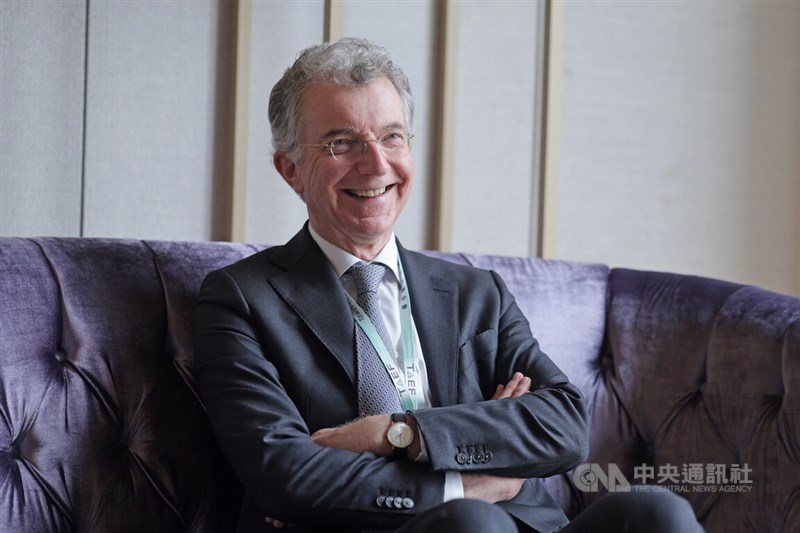
"I think it's pretty naive to believe this is not the case and then not start preparing for it," he said.
He was likely referring to a timetable cited by some U.S. officials describing when China could be ready to attack Taiwan, though Beijing has never explicitly said such an attack would occur that year.
Heusgen, who served as Germany's ambassador to the United Nations from 2017 to 2021 before chairing the conference, was visiting Taiwan mainly to attend the two-day 2026 edition of the Yushan Forum, which was held Monday and Tuesday.
Taiwan President Lai Ching-te (賴清德) announced in November 2025 that his administration would propose a supplementary defense budget of NT$1.25 trillion to be spent over the next eight years in response to a growing Chinese threat.
The Cabinet subsequently submitted a bill to allocate NT$1.25 trillion for the purchase of weapons and joint development programs with the United States and for other domestically produced arms, such as drones, from 2026 to 2033.
The proposal has been blocked, however, by the opposition-controlled Legislature, with lawmakers from the main opposition Kuomintang (KMT) and the Taiwan People's Party (TPP) arguing that it lacked detail and that debt would be incurred.
The KMT and the TPP later proposed their own versions of the supplementary plan that earmarked much lower levels of funding covering only a US$11.1 billion arms package from the U.S.
Those versions and the Cabinet proposal are waiting for lawmaker review and approval.
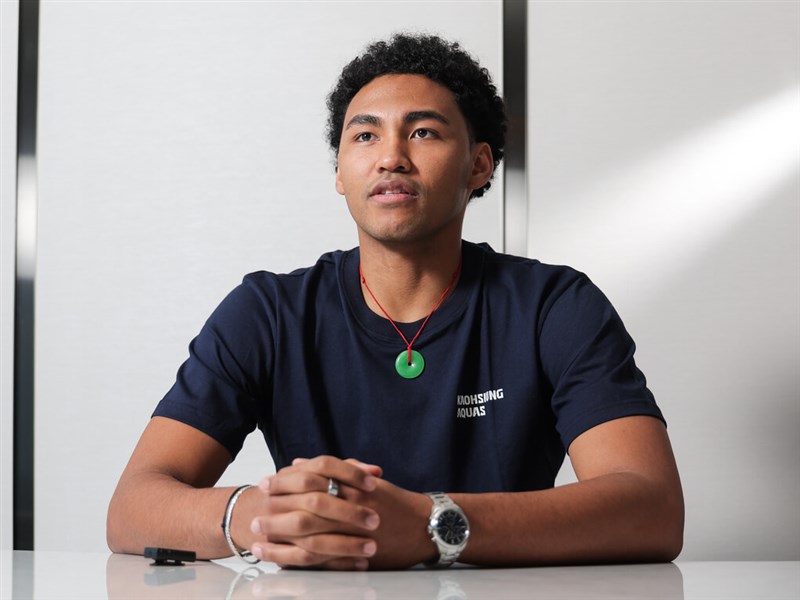
![TPBL top pick Adam Hinton ready to cook in Taiwan]() TPBL top pick Adam Hinton ready to cook in TaiwanWhen Adam Hinton and his younger brother Robert returned to Taiwan to play in their first William Jones Cup in 2023, they said in unison that they did not want to leave their "second home."07/17/2026 08:22 PM
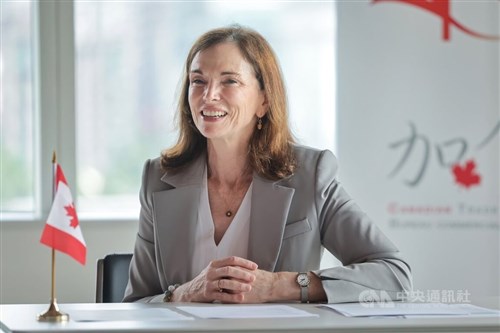
TPBL top pick Adam Hinton ready to cook in TaiwanWhen Adam Hinton and his younger brother Robert returned to Taiwan to play in their first William Jones Cup in 2023, they said in unison that they did not want to leave their "second home."07/17/2026 08:22 PM![Canada's Taiwan policy unchanged, engages Taipei on own merits: Envoy]() Canada's Taiwan policy unchanged, engages Taipei on own merits: EnvoyCanada's long-standing framework to interact with Taipei "has not changed," Canada's representative to Taiwan, Marie-Louise Hannan, said Monday amid concerns in Taipei over Mark Carney's ongoing efforts to improve relations with China.07/01/2026 11:17 AM
Canada's Taiwan policy unchanged, engages Taipei on own merits: EnvoyCanada's long-standing framework to interact with Taipei "has not changed," Canada's representative to Taiwan, Marie-Louise Hannan, said Monday amid concerns in Taipei over Mark Carney's ongoing efforts to improve relations with China.07/01/2026 11:17 AM![Scholar uses rare skill to decode work shining light on Taiwan's past]() Scholar uses rare skill to decode work shining light on Taiwan's pastWhen Taiwanese scholar Chang Shoou-huey (張守慧) realized that a 350-year-old travelogue of Taiwan written in an obsolete form of German existed, she saw it as a unique opportunity to apply years of specialized training.06/22/2026 04:48 PM
Scholar uses rare skill to decode work shining light on Taiwan's pastWhen Taiwanese scholar Chang Shoou-huey (張守慧) realized that a 350-year-old travelogue of Taiwan written in an obsolete form of German existed, she saw it as a unique opportunity to apply years of specialized training.06/22/2026 04:48 PM
- Politics
Cabinet to introduce food safety law amendments amid oil scandal
07/18/2026 06:16 PM - Politics
Taiwan reviewing gas imports after Papua New Guinea orders office closure
07/18/2026 05:57 PM - Society
- Sports
Lee Hao-yu delivers go-ahead double in Tigers comeback win over Angels
07/18/2026 04:16 PM - Society
E-commerce site shuts down without prior notice: Taipei government
07/18/2026 03:54 PM