Taiwan should closely watch U.S. policy despite no stated changes: Experts
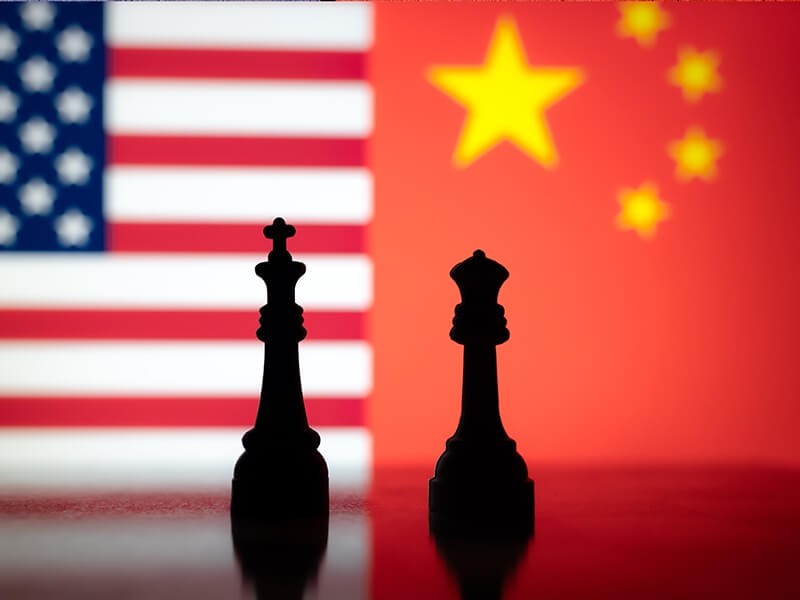
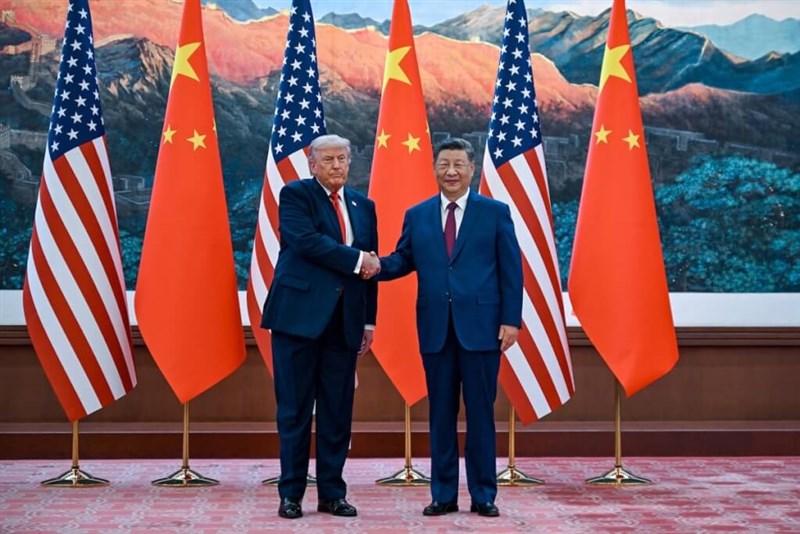
Taipei, May 15 (CNA) Taiwan should remain alert to possible subtle shifts in Washington's approach toward Taipei, despite the absence of stated changes in the United States' Taiwan policy following the summit between U.S. President Donald Trump and Chinese President Xi Jinping (習近平), an expert said Friday.
At a Taipei forum on the Trump-Xi talks, Ronan Fu (傅澤民), an assistant research fellow at Academia Sinica's Institute of Political Science, said Taiwan should place greater emphasis on its long-term strategic value and shared interests with the U.S., rather than relying solely on democratic values, because "Trump is temporary."
Fu said Chinese and U.S. readouts of Thursday's summit in Beijing reflected sharply different priorities, with Beijing placing Taiwan at the center of its public messaging while the White House avoided mentioning Taiwan altogether.
Although U.S. media outlets across the political spectrum largely oppose treating Taiwan as a bargaining chip in U.S.-China negotiations, Fu argued that Beijing could seek symbolic concessions from Trump through softer wording or delays in U.S. arms sales to Taiwan in the future.
He cited commentary in Foreign Policy magazine warning that even minor rhetorical adjustments on Taiwan could carry major strategic implications because "small words" in U.S.-China diplomacy can produce "large consequences."
"Taiwan should pay particular attention to whether strategic space will be gradually narrowed under this kind of 'unanswered rhetoric,'" Fu said, referring to Beijing's push for a more stable and manageable relationship with Washington.
Hung Yao-nan (洪耀南), deputy director of Tamkang University's Institute of China Studies, said Beijing appeared to be using the summit to promote a new framework for "constructive strategic stability" in U.S.-China relations while warning Washington against crossing its red lines on Taiwan.
Underscoring Beijing's use of the language of "stability" to manage, instead of resolve, strategic rivalry, Hung said China was attempting to frame Taiwan as central to the overall stability of U.S.-China ties.
"Stability never equals peace, and silence never equals commitment," he said.
Meanwhile, Hsu Tsun-tzu (徐遵慈), an associate research fellow and director at the Chung-Hua Institution for Economic Research (CIER), said trade tensions between Washington and Beijing were likely to persist despite temporary signs of easing following the summit.
Trump's second-term China policy is now focused not only on reducing trade deficits, but also on limiting China's technological competitiveness and global influence, she said.
Kuo Yu-jen (郭育仁), vice president of the Institute for National Policy Research, instead emphasized the lack of a major breakthrough at the summit, referring to it as "largely expected" given the structural nature of U.S.-China rivalry.
"The absence of a clear conclusion was itself the conclusion," Kuo said, adding that both Washington and Beijing currently appeared more focused on preventing tensions from escalating rather than resolving their core disputes.
- Business
Manufacturing sector flashes 'green' light in August
10/02/2026 05:20 PM - Sports
Lin Yu-ting sets sights on LA Olympics after winning Asian Games gold
10/02/2026 05:12 PM - Business
U.S. dollar closes lower on Taipei forex market
10/02/2026 04:18 PM - Politics
Ex-President Tsai Ing-wen to visit U.S., deliver speech at Stanford
10/02/2026 03:54 PM - Business
Taiwan shares end at new high but gains capped before U.S. jobs data
10/02/2026 03:51 PM