INTERVIEW/Myth of 'good person': Thai writer Veeraporn Nitiprapha on memory and nonconformity
By Chao Yen-hsiang, CNA staff reporter
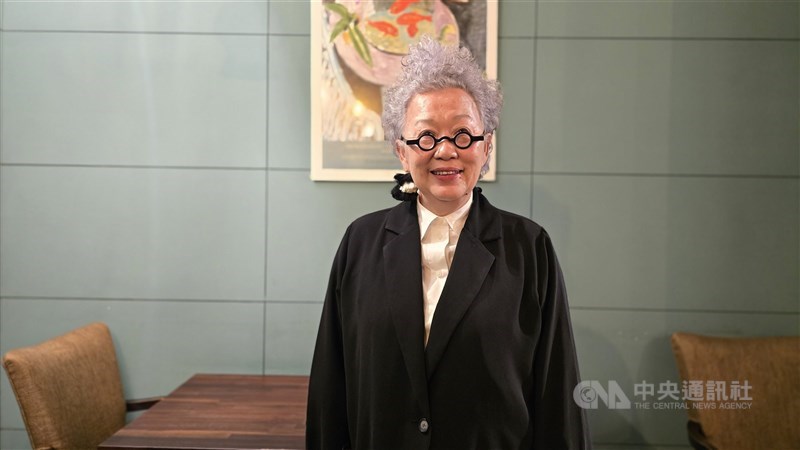
Veeraporn Nitiprapha was surprised to watch her "kind and nice" friends retreat into a state of chilling indifference, when the Thai government opened fire on Red Shirt demonstrators on April 10, 2010.
"I went to see a guy who was close to our family, someone I grew up with. He was so kind and nice," the 63-year-old Thai novelist recalled in an interview with CNA on Wednesday.
"But when I told him the government shot people, he just asked, 'Am I dead?' and I was like, 'What?'," said Nitiprapha, who was invited to the 2026 Taipei International Book Exhibition to promote her novels.
The crackdown in Thailand in 2010 eventually saw nearly 100 people killed, but many of Nitiprapha's once-anarchistic friends were ignorant to the brutality or even supportive of the government's shooting.
It is against this backdrop that Nitiprapha began to write her first novel, "The Blind Earthworm in the Labyrinth."
To the first female Thai writer to win Southeast Asian literature's highest honor -- the S.E.A. Write Award -- twice, writing has never been about fame or fortune, but a way to navigate the confusion of the world around her.
"My question is why people become the person they were not," she said. "And what are they? What are we?"
Maze of myth memory
Nitiprapha's work is a meta-textual rebellion against what she calls "myth memories" -- collective illusions shaped by power to replace real experience. She titled her second novel "Memories of the Memories of the Black Rose Cat," a work she prepared to write by writing her first novel.
"When I say myth, it's not only the myth; it's the memory. And it's not only the memory; it's the 'myth memory' -- the fake memory they gave us," she said, referring to state-sanctioned narratives.
While "Memories" traces a family's history across generations and blends personal recollections with broader political and social upheavals, "Blind Earthworm" follows characters struggling against the illusions of love and success in a rapidly changing society.
She described her first novel as a reflection on Thailand in the 1980s and 1990s, when Thai baby boomers "refused to obey" traditional paths, only to later retreat into the safety of the myth.
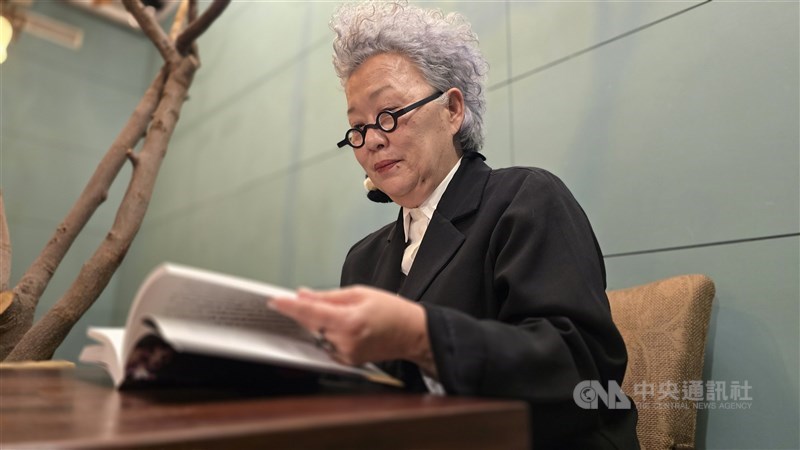
"Some of my friends didn't even wear underwear back then," she said, but noted that as they aged many who once championed liberal minds and progressive ideals retreated into the very conservatism they once despised.
Witnessing this shift felt like a "midlife crisis" she could only process through writing, Nitiprapha said. She cited Ernest Hemingway, noting her exigency to "write hard and clear about what hurts."
To her, a major source of such pain lies in history defined by the government that gives rise to collective illusions and narratives people accept as reality. Rather than official records, she argued that "emotion is the real history."
"How we felt when we were young made us who we are now," Nitiprapha said.
She noted that myths are prevalent in daily life, not just politics; her resistance to such imposed myths takes the form of a "simple life" guided by what she terms the "common sense" of Lao Tzu's (老子) "Tao Te Ching" (道德經).
"Why do you need to pay 50,000 baht for a phone with a thousand functions you don't know how to use?" she asked. "You just need a simple one that allows you to call someone who matters to you often and tell them how you love them before they die."
Proud motherhood
Nitiprapha noted that winning two S.E.A. Write Awards didn't change her: "I'm still poor," she remarked, recalling having only 5,000 baht left before her first win in 2015.
She distinguishes her work from the "simple and linear" narratives prevalent in Thai literature by focusing on linguistic musicality and "literary flavors." Through these, she said she intends to expose young readers to the "weight of words" in an era where languages are "flattened" by digital communication.
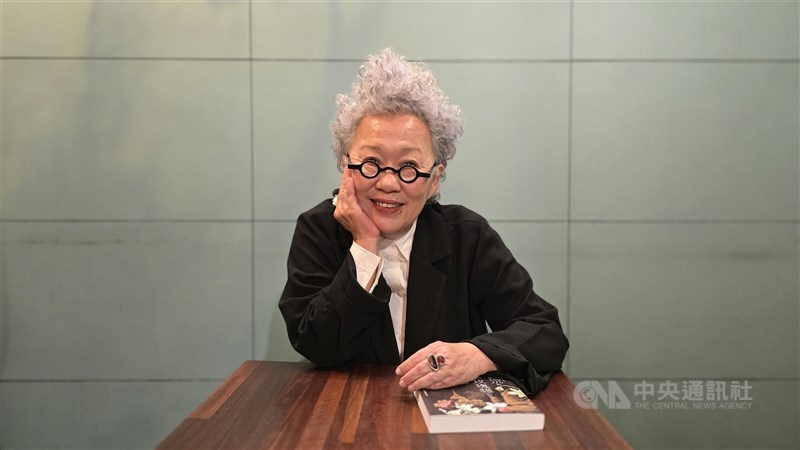
What she considers the true metric of her work's success is not professional recognition, but rather, having saved a life with her books.
"A young lady told me, 'I intended to kill myself, but I hadn't finished your book. By the time I finished the first, the second one came out,'" Nitiprapha recalled.
Ultimately, she views being a mother as her most profound role. It was motherhood that finally connected her to abstract concepts such as equality and love -- ideas she had read about but never fully embodied.
"It's just like you grow up overnight," she said.
Even her decision to write long-form fiction was a maternal challenge: "I just couldn't stand the feeling that [my son] found somebody else more fascinating, so I tried to be fascinating."
A former punk fan who retains her spirit of nonconformity, Nitiprapha attributed the popularity of the subgenre Boys' Love in Thailand to the country's conservative attitude toward sex-related issues, saying to force youth into being "good people" as defined by social norms is just to frame them within another myth.
Likewise, she welcomes different interpretations of her works instead of giving readers official "answers."
She also believes the best education for youngsters is to let them cultivate their own tastes and choose for themselves.
"Our generation did not make the society good enough for you," she said, apologizing to Thai youth.
Enditem/cs
![Tang Prize laureate Susan Solomon says environmental successes offer hope]() Tang Prize laureate Susan Solomon says environmental successes offer hopeFor Susan Solomon, receiving the news that she had won the 2026 Tang Prize in Sustainable Development was both surreal and deeply humbling.06/15/2026 01:44 PM
Tang Prize laureate Susan Solomon says environmental successes offer hopeFor Susan Solomon, receiving the news that she had won the 2026 Tang Prize in Sustainable Development was both surreal and deeply humbling.06/15/2026 01:44 PM![Late Czech speaker's daughter fulfills father's mission with Taiwan trip]() Late Czech speaker's daughter fulfills father's mission with Taiwan tripVendula Vinšová, daughter of the late Czech Senate President Jaroslav Kubera, said her recent trip to Taiwan with current Senate President Miloš Vystrčil was a way to fulfill her father's final wish.06/07/2026 01:31 PM
Late Czech speaker's daughter fulfills father's mission with Taiwan tripVendula Vinšová, daughter of the late Czech Senate President Jaroslav Kubera, said her recent trip to Taiwan with current Senate President Miloš Vystrčil was a way to fulfill her father's final wish.06/07/2026 01:31 PM![Anduril founder says Taiwan should become arms exporter; warns against China]() Anduril founder says Taiwan should become arms exporter; warns against ChinaTaiwan should look beyond its role as a global supplier of advanced semiconductors and become a major weapons supplier to shore up its own defenses and those of other countries, Anduril Industries founder Palmer Luckey said in an interview on Thursday.06/05/2026 06:59 PM
Anduril founder says Taiwan should become arms exporter; warns against ChinaTaiwan should look beyond its role as a global supplier of advanced semiconductors and become a major weapons supplier to shore up its own defenses and those of other countries, Anduril Industries founder Palmer Luckey said in an interview on Thursday.06/05/2026 06:59 PM
- Business
Taiwan shares open higher
06/16/2026 09:13 AM - Politics
Taipei's tech corridor to drive next-generation innovation economy: Mayor
06/15/2026 08:58 PM - Business
Taiwan remains 6th largest net creditor nation in 2025: Central bank
06/15/2026 08:50 PM - Culture
Spanish language Taiwan literature anthologies launched in Madrid
06/15/2026 08:18 PM - Culture
Lanyu boat sets sail on historic journey to Philippines' Batanes
06/15/2026 08:12 PM