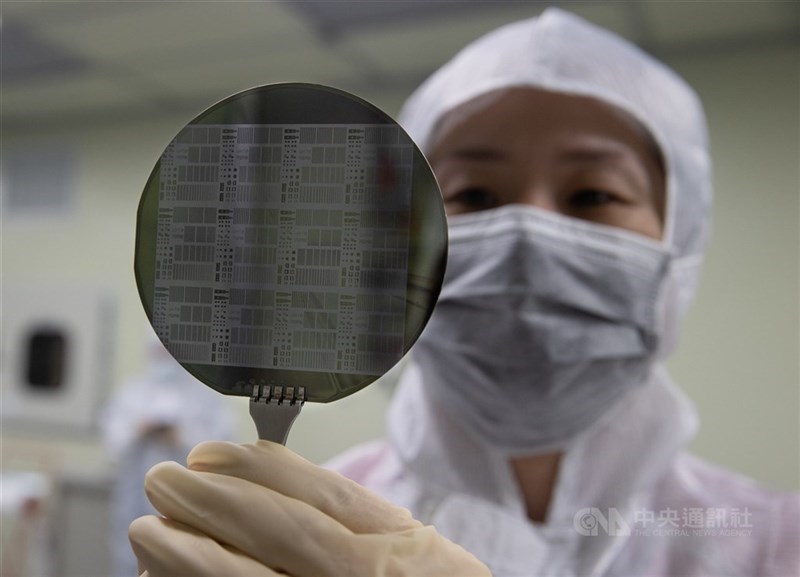
Taipei, Aug. 31 (CNA) The global semiconductor market is expected to be worth more than US$2 trillion by 2030 because of growth driven by demand for artificial intelligence infrastructure, an executive at Semiconductor Equipment and Materials International (SEMI) said Monday.
Clark Tseng (曾瑞榆), SEMI's senior director of market intelligence, said earlier projections had put the market at about US$1 trillion by 2030 based on demand for traditional applications such as personal computers, smartphones and consumer electronics.
Those forecasts have since changed significantly as AI data centers drive demand for advanced logic chips, high-bandwidth memory (HBM) and enterprise solid-state drives (SSDs), Tseng said at a press conference ahead of SEMICON Taiwan 2026.
The market is expected to surpass US$1.5 trillion in 2026, but the growth is not broad-based, with PC and smartphone shipments remaining under pressure despite semiconductor demand outpacing overall economic and investment growth, he said.
"AI is reshaping semiconductor growth, driving sustained demand for advanced logic, HBM and DRAM, high-layer-count NAND, testing, and advanced packaging equipment," Tseng said. DRAM stands for dynamic random-access memory.
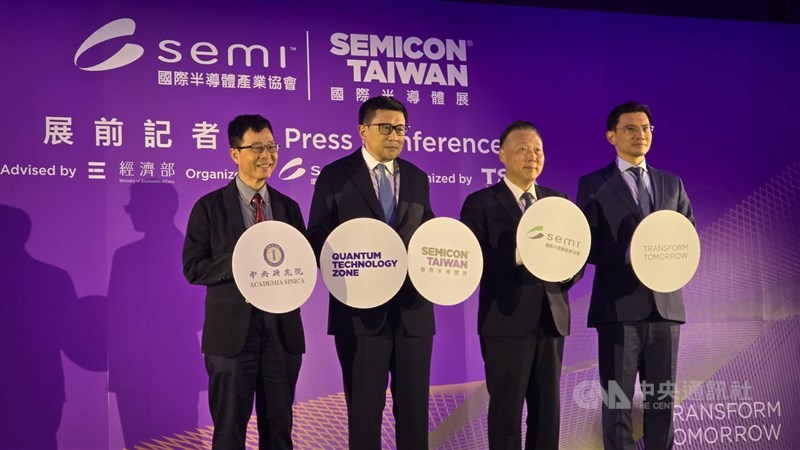
In a market outlook due to be released in September, SEMI expects the global wafer fab equipment market to grow from US$117 billion in 2025 to US$220 billion in 2028, up from its previous 2028 forecast of US$200 billion.
The association has also raised its 2028 forecasts for testing equipment from US$20.8 billion to US$23.5 billion and for packaging equipment from US$8.6 billion to US$10 billion, Tseng said.
The revisions reflect stronger investment in 2-nanometer and 3-nm production capacity, as well as rising demand for HBM, enterprise SSDs, and more complex chip testing and packaging, he said.
Tseng said the global semiconductor materials market was expected to post double-digit growth in both 2026 and 2027, reaching US$83 billion this year and US$92 billion next year.
Taiwan is expected to account for approximately 30 percent of the market in 2027, reflecting its importance in both advanced manufacturing and packaging, he said.
On the same occasion, Tien Wu (吳田玉), chair of the SEMI International Board of Directors and chief executive officer of ASE Technology Holding Co., said the rapid expansion of AI was creating stress on Taiwan's resources.
Wu said the ecosystem required to meet strong AI demand was creating short-term pressure on land, talent, capital and electricity in Taiwan, while also raising concerns in other countries about the concentration of semiconductor production in Taiwan.
AI's long-term value, however, will not come from replacing existing human knowledge but from enabling cross-disciplinary innovation and replicating successful applications on a much larger scale, Wu said.
Taiwan should therefore accelerate investment in AI infrastructure while strengthening ties with international partners and explaining the purpose of that investment more clearly, he said.
SEMICON Taiwan will run from Wednesday through Friday at Taipei Nangang Exhibition Center Halls 1 and 2.
The event will feature more than 1,300 exhibitors and is expected to attract over 100,000 visitors, according to Terry Tsao (曹世綸), SEMI's global chief marketing officer and president for Taiwan.
- Politics
Cabinet approves upgraded dementia care plan targeting '888' goals by 2035
10/15/2026 09:03 PM - Politics
Taipei mayoral candidates Chiang, Shen to debate Oct. 31
10/15/2026 08:56 PM - Politics
Army to open Chengkungling base to public Oct. 24
10/15/2026 08:52 PM - Society
Labor groups allege contract swaps, low pay for Indonesian workers
10/15/2026 08:39 PM - Politics
MND says zero tolerance for bullying after new suicide case evidence
10/15/2026 08:34 PM