Taiwan, U.S. to boost semiconductor workforce cooperation: U.S. envoy
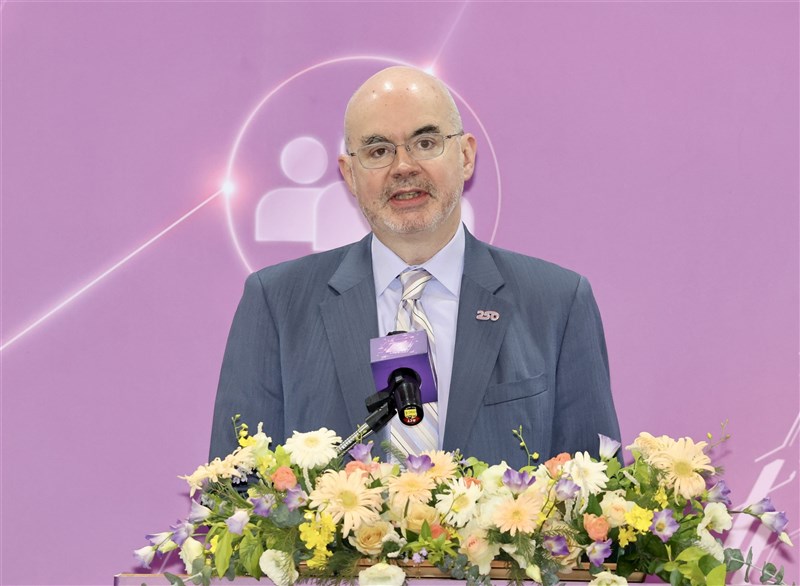
Taipei, Aug. 31 (CNA) United States representative to Taiwan Raymond Greene on Monday announced new measures to strengthen bilateral cooperation on semiconductor workforce development, saying at an event in Taipei that the initiative would expand educational pathways to cultivate talent on both sides.
"In doing so, we will not only deliver high-quality jobs for U.S. and Taiwan workers in critical sectors, but we will also grow and strengthen our enduring partnership," said Greene, director of the American Institute in Taiwan (AIT), in his opening remarks at the Freedom 250 Workforce First Summit organized by the AIT.
The U.S. has two new initiatives that are intended to encourage more American students to study in Taiwan in high-tech fields, he said at the two-day summit, which brought together 150 government, industry, and academic leaders from the U.S. and Taiwan with the aim of strengthening bilateral cooperation on workforce development.
One of the measures is a recent US$20 million private donation to the University of Arizona to support students pursuing study-abroad opportunities, potentially also in Taiwan, Greene said.
The other initiative will bring two additional graduate students to National Yang Ming Chiao Tung University in 2027 under the U.S. government-funded Fulbright Semiconductor Scholarship program, he said.
"These actions and programs serve as a powerful catalyst, a source of inspiration for other institutions here today to develop their own institutional and financial incentives and academic pathways to ensure today's rising talents become the next generation of leaders in critical institutions," Greene said.
It is all part of the deepening cooperation between the U.S. and Taiwan in high-tech sectors, with the two sides continuing to develop and expand educational pathways to cultivate talent and align their workforce preparation efforts, according to Greene.
Also speaking at the event, Taiwan's Education Minister Cheng Ying-yao (鄭英耀) said that by welcoming American students, Taiwan enables them to learn directly from its educators, researchers, engineers, industry experts and students.
"Yet, this is not one-way learning," Cheng said. "American students will experience Taiwan's semiconductor ecosystem firsthand, while Taiwanese students gain international perspectives by learning alongside their American peers."
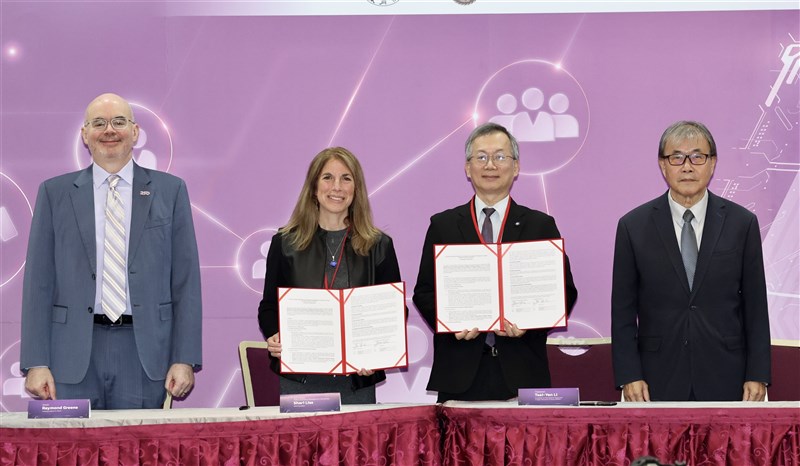
During the summit, Cheng and Greene also witnessed the signing of a memorandum of intent between the Foundation for International Cooperation in Higher Education of Taiwan and the U.S.-based SEMI Foundation to promote closer cooperation between the two organizations.
The Taipei-based foundation promotes international cooperation in Taiwan's higher education sector, while the SEMI Foundation, the nonprofit arm of microelectronics industry association SEMI, focuses on strengthening the global semiconductor talent pipeline through workforce development programs.
- Politics
Lai's WWII remarks warn of China's bid to reshape world order: Analysts
10/10/2026 07:27 PM - Business
Gasoline, diesel prices to remain unchanged next week: CPC
10/10/2026 06:09 PM - Politics
Opposition leaders criticize DPP, Lai in National Day remarks
10/10/2026 04:48 PM - Politics
Ex-President Tsai calls for deeper ties between Taiwan, Silicon Valley
10/10/2026 04:25 PM - Society
Filipino worker hospitalized, over 300 evacuated in Tainan dorm fire
10/10/2026 03:59 PM