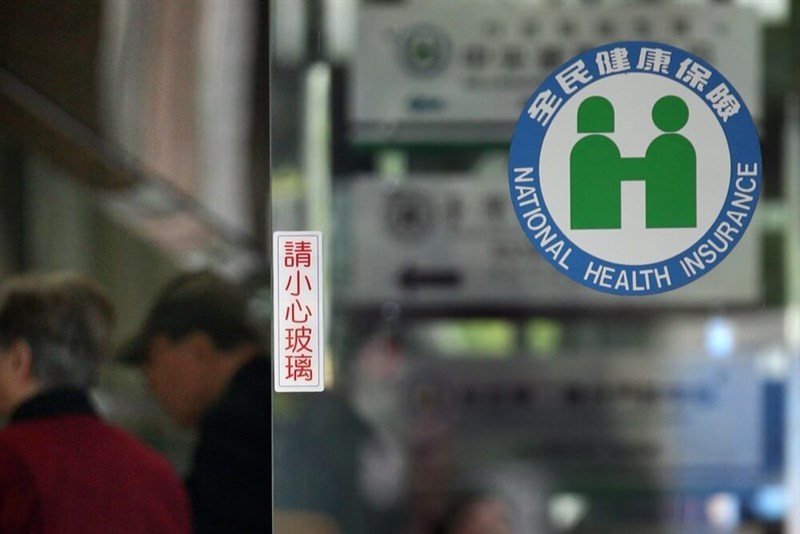
Taipei, Oct. 18 (CNA) Health Minister Shih Chung-liang (石崇良) has warned that newly passed legislation fully subsidizing National Health Insurance (NHI) premiums for most seniors would increase the financial burden on younger generations.
The amendments to the Senior Citizens Welfare Act were passed 60-39 in the Legislature on Friday by lawmakers from the opposition Kuomintang (KMT) and Taiwan People's Party (TPP).
Under the amendments, the central government would be required to fully cover NHI premiums for people aged 65 and older whose total consolidated income is subject to an income tax rate below 20 percent.
Because the 20 percent tax bracket applies only to taxable income above NT$1.33 million (US$40,950) this year, as many as 83 percent of seniors would qualify, according to a health ministry estimate.
Speaking to reporters on Saturday, Shih said Taiwan already has some of the world's lowest health care premiums.

Citing government statistics, Shih said children aged 6 and younger pay an average of NT$8,522 a year in premiums but use an average of 27,509 NHI points. Each point is worth close to, but not exactly, NT$1.
People aged 65 and older pay an average of NT$9,912 a year in premiums and use an average of 90,149 NHI points, or over nine times what they pay in, Shih said.
The figures show that young children and seniors use far more in health care services than they pay in premiums, with the difference borne by the working-age population, who get sick less often and pay more on average, Shih explained.
Shih said that even before the bill was passed, the government had proposed allocating an additional NT$60 billion next year to shore up the NHI system.
In a statement on Sunday, the Ministry of Health and Welfare said the subsidies would cost about NT$40 billion a year at current levels. The cost would rise as the population ages, even as premium income falls because of a shrinking workforce, the ministry said.
NHI points explained
Under Taiwan's NHI "global budget payment system," the government sets a fixed annual spending cap for each health care sector.
When health care providers deliver services, they claim a set number of NHI "points," whose monetary value fluctuates.
If use of medical services is high and the points claimed exceed the budget allocation for that period, the value of a point falls below NT$1, and medical institutions must absorb the lower reimbursement rate.
In recent years, the quarterly value of 1 NHI point has fluctuated between NT$0.90 and NT$1 for hospitals and NT$0.86 and NT$1 for clinics, with variations by region.
- Sports
CTBC Brothers condemn threats against pitcher Mario Sanchez
10/18/2026 07:44 PM - Society
Health minister decries bill subsidizing NHI premiums for most seniors
10/18/2026 07:29 PM - Politics
Candidates woo voters with swag ahead of local elections
10/18/2026 07:19 PM - Society
2 suspects in Kaohsiung homicide case brought back from South Korea
10/18/2026 05:11 PM - Culture
Podcaster Brian Tseng wins Golden Bell lifestyle program award
10/18/2026 03:22 PM