INTERVIEW/Anduril founder says Taiwan should become arms exporter; warns against China
By Sean Lin, CNA staff reporter
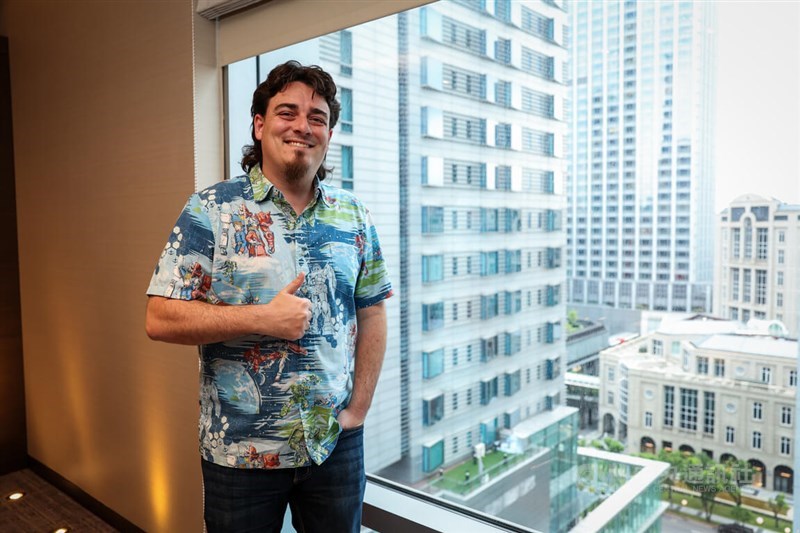
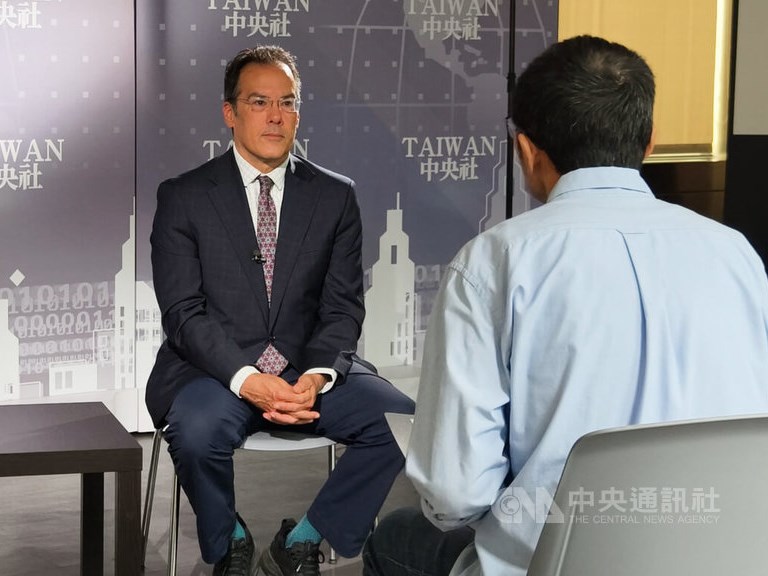
Taiwan should look beyond its role as a global supplier of advanced semiconductors and become a major weapons supplier to shore up its own defenses and those of other countries, Anduril Industries founder Palmer Luckey said in an interview on Thursday.
In Taipei for the Computex trade show, which ended Friday, Luckey was asked by CNA about a range of issues, from how Taiwan could ramp up its production of drones -- Anduril's specialty -- to his views on doing business with China and dealing with its practices.
In a world where autonomous systems are becoming increasingly important in modern warfare, Taiwan faces a major gap in its domestic supply chain for specialized drone components, such as AI imaging modules and flight control systems and modules.
Taiwan's government has launched an initiative to manufacture critical components it currently imports by March 2027, but Luckey felt Taiwan could aim bigger to boost its lagging production capacity in this area.
He suggested that Taiwan scale up its autonomous system capacity and focus more on exporting its production.
"Taiwan is not ever going to need enough arms purely for itself to justify a large defense market or a large weapons market," Luckey said.
"I think the ideal situation is one where Taiwan is not just exporting high-end semiconductors and chips, but actually completed weapons systems to the rest of the world."
Ideally, he continued, Taiwan should be making 10 times more weapons than it needs for itself, which would be good for the economy, international relations, and its own weapons stockpiles.
"In wartime, maybe you can just take all that capacity and keep it internal," he said.
Developing such an industry might also give Taiwan a second defensive "shield" in addition to the silicon shield.
"The reason why so many countries care so much about Taiwan is because of their critical dependency on [Taiwan's] semiconductors," he said. "But what if they could be dependent on [Taiwan] also for arms?"
"If I were running Taiwan, I would be trying to make myself indispensable to the rest of the world in as many ways as I could, including defense items."
Dealing with Chinese threat
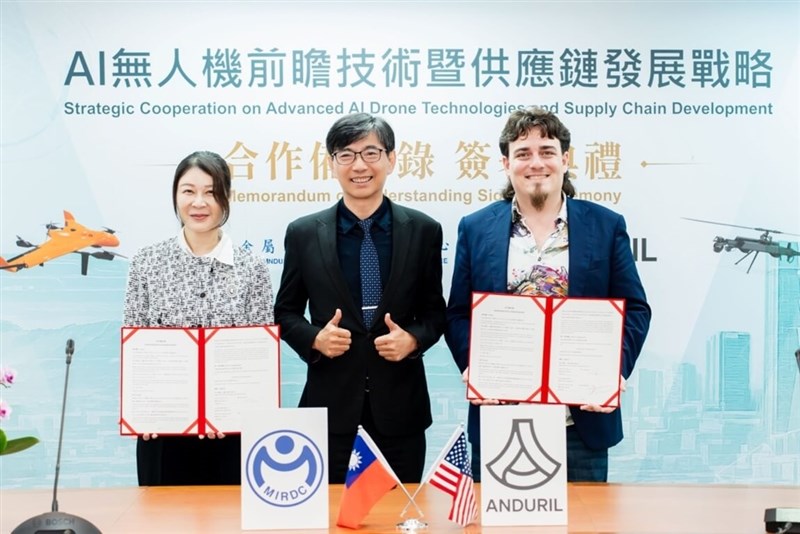
Luckey said he has deep connections to Taiwan, developed when he was with Oculus VR, the virtual reality hardware manufacturer that Facebook acquired in 2014.
There are now around 30 Taiwanese companies in Anduril's supply chains.
"There are things in this world that only exist because Taiwan is the leader in technology, and that's not something that I want to disappear," he said.
Asked how crucial drones are in Taiwan's overall defense strategy, Luckey underlined their critical role in Taiwan's need to develop asymmetric capabilities against China, in which highly mobile and relatively inexpensive systems are deployed against more sophisticated and expensive ones.
"Taiwan doesn't need to be as strong as the PLA Army," he said, referring to the Chinese People's Liberation Army.
"It doesn't need to even be a hundredth of what China's military is, as long as it has what it needs to prevent China's military from getting across the strait, landing material in mass quantities, and then supplying a sustained occupation."
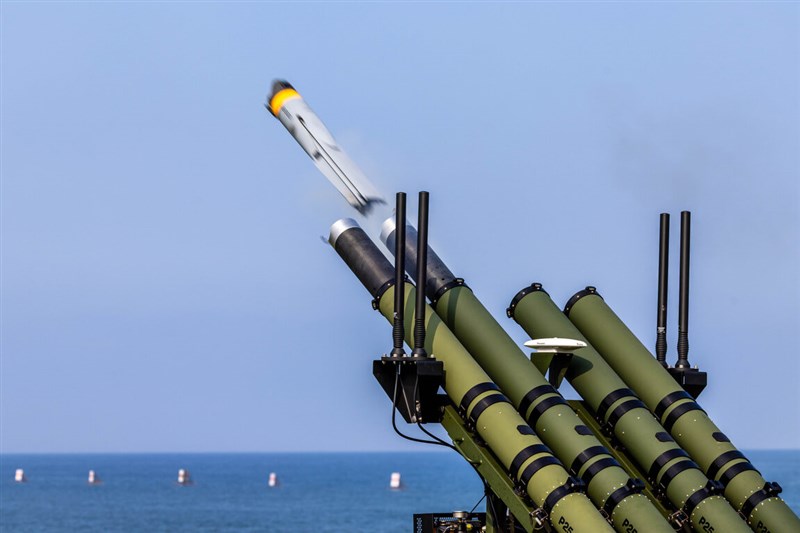
Luckey cited the test-firing of Altius-600M anti-armor drones in Yilan County on Wednesday, where the drones were deployed against floating platforms in the sea and achieved a 100 percent hit rate.
Shunned by China
Luckey has focused on the China threat in his own business, launching a "China 2027" plan five years ago.
"China 27 was a policy that we implemented about five years ago. The things that are relevant to 2027 have already been decided … and we are now working on things that are not going to be useful till 28 [or] 29," he said.
In December 2025, Beijing sanctioned 20 U.S. defense companies and 10 senior executives, including Luckey and Anduril, for their involvement in the US$11.1 billion arms sales to Taiwan approved by Washington that same month.
Asked to comment on being blacklisted by China and how that has affected him, Luckey said he can no longer visit China, use airlines owned or controlled by the Chinese government or catch connecting flights in China or Hong Kong. He added that violating these sanctions would lead to his arrest.
The 33-year-old entrepreneur appeared unfazed by the sanctions.
"I actually have the sanction notice on my wall in a frame, so I treat it like an award. It's next to all my other awards," Luckey said.
He warned of China's practices in stealing technology based on his own experiences.
According to Luckey, when he visited Shenzhen, he would "regularly" have his hotel rooms broken into and product samples stolen.
He also accused Chinese companies of giving him samples with wiretaps in them.
"Something like that, you would immediately contact the FBI and report that," he said. "But in China, there's no point in reporting it, because the government isn't going to do anything to stop that kind of intellectual property theft, and in fact might be involved in it."
![New ECCT chair urges greater agility in Taiwan's software, energy sectors]() New ECCT chair urges greater agility in Taiwan's software, energy sectorsTaiwan is known for its strength in hardware manufacturing, but Frank Grunert, the new chairperson of the European Chamber of Commerce Taiwan (ECCT), sees considerable potential in software as well.10/10/2026 12:36 PM
New ECCT chair urges greater agility in Taiwan's software, energy sectorsTaiwan is known for its strength in hardware manufacturing, but Frank Grunert, the new chairperson of the European Chamber of Commerce Taiwan (ECCT), sees considerable potential in software as well.10/10/2026 12:36 PM![Strategic partnership key to Taiwan-U.K. cooperation: Deputy economics minister]() Strategic partnership key to Taiwan-U.K. cooperation: Deputy economics ministerTaiwan's Deputy Minister of Economic Affairs Cynthia Kiang (江文若), who has just concluded an annual economic and trade dialogue with her U.K. counterpart in London, said Friday that establishing a strategic partnership is key to bilateral cooperation.10/03/2026 01:53 PM
Strategic partnership key to Taiwan-U.K. cooperation: Deputy economics ministerTaiwan's Deputy Minister of Economic Affairs Cynthia Kiang (江文若), who has just concluded an annual economic and trade dialogue with her U.K. counterpart in London, said Friday that establishing a strategic partnership is key to bilateral cooperation.10/03/2026 01:53 PM![Taiwan, democracies must build resilience against China, Russia: Scholar]() Taiwan, democracies must build resilience against China, Russia: ScholarTaiwan and other democracies must strengthen their resilience against the "sharp power" wielded by authoritarian regimes such as China and Russia to defend their shared democratic values, a visiting American scholar said Monday.09/21/2026 04:39 PM
Taiwan, democracies must build resilience against China, Russia: ScholarTaiwan and other democracies must strengthen their resilience against the "sharp power" wielded by authoritarian regimes such as China and Russia to defend their shared democratic values, a visiting American scholar said Monday.09/21/2026 04:39 PM
- Politics
Lai's WWII remarks warn of China's bid to reshape world order: Analysts
10/10/2026 07:27 PM - Business
Gasoline, diesel prices to remain unchanged next week: CPC
10/10/2026 06:09 PM - Politics
Opposition leaders criticize DPP, Lai in National Day remarks
10/10/2026 04:48 PM - Politics
Ex-President Tsai calls for deeper ties between Taiwan, Silicon Valley
10/10/2026 04:25 PM - Society
Filipino worker hospitalized, over 300 evacuated in Tainan dorm fire
10/10/2026 03:59 PM