INTERVIEW/After long search, Filipino doctor brings wife to Taiwan for rare treatment
By Sunny Lai, CNA staff reporter
For more than 18 months, Filipino doctor Mark Joseph Radin pushed for a rare treatment for his wife's breathing disorder after a life-threatening brain injury, even though many around him -- including medical professionals -- had never heard of it, and some doubted it would work.
After surgery at Tri-Service General Hospital (TSGH) in Taipei in early March helped free his wife, Wendilyn Santoalla, from ventilator dependence, Radin told CNA in an interview later in the month that the couple were "very thankful" for the successful operations, after going through "layers of hardship and suffering."
Life-altering strokes

Radin and Santoalla, both 37, were based in the United Kingdom between 2021 and 2025, where he was employed as a cruise ship doctor, while Santoalla worked as a nurse.
While that period was described by Radin as "living our dreams," their lives were upended in early 2024, when Santoalla, who was pregnant at the time, was diagnosed with two serious cerebrovascular conditions.
"My wife suffered multiple brain infarcts following brain surgery she underwent in March 2024," Radin said, referring to an operation aimed at addressing one of the conditions.
In the first two weeks after the surgery, Santoalla was in "very critical" condition and there was a possibility she might die, he recalled.
Following the brain infarcts, or strokes, Santoalla developed central sleep apnea and impaired breathing control.
Further testing later confirmed she had central hypoventilation syndrome, requiring ventilator and oxygen support to maintain adequate breathing, according to Radin.
"I don't know if being a doctor is a blessing," he said. "Because as a doctor, I know how bad and how severe my wife's condition was at that time."
A little-known device

Despite the ordeal, the couple's baby was born in June 2024, and Radin began looking into options that might help Santoalla.
A month or two later, he came across the diaphragm pacing system (DPS), a device designed to stimulate the diaphragm to contract through electrical impulses and help certain patients breathe more independently.
"Back in 2024, I was nine years in[to] my practice as a physician, and that was the only time I heard about the diaphragm pacemaker," he said.
The treatment was unknown to many of the people around him, he said, and not everyone shared his optimism.
Still, he kept researching, contacting the device makers and trying to determine whether Santoalla might be a suitable candidate.
From the Philippines to Taiwan

In early 2025, the family returned to the Philippines, where Santoalla underwent further evaluation at a hospital in Manila, which confirmed that "she would need the ventilator 24/7 with oxygen support."
Unwilling to accept a future in which Santoalla would live with what he described as "a chain," Radin decided to pursue the DPS.
He initially planned to have the DPS implantation procedure done in the Philippines and began seeking emergency-use registration for the device with the country's Food and Drug Administration, but the effort stalled after Santoalla's medical team became "risk-averse."
The operation had never been performed in the Philippines before, according to Radin.
Taiwan then came onto his radar after the DPS manufacturer told him an implantation procedure had already been performed there, Radin said.
"If they have done it once, then I would say I have confidence in the medical team" in carrying out the surgery, he said.
Taiwan's second DPS case
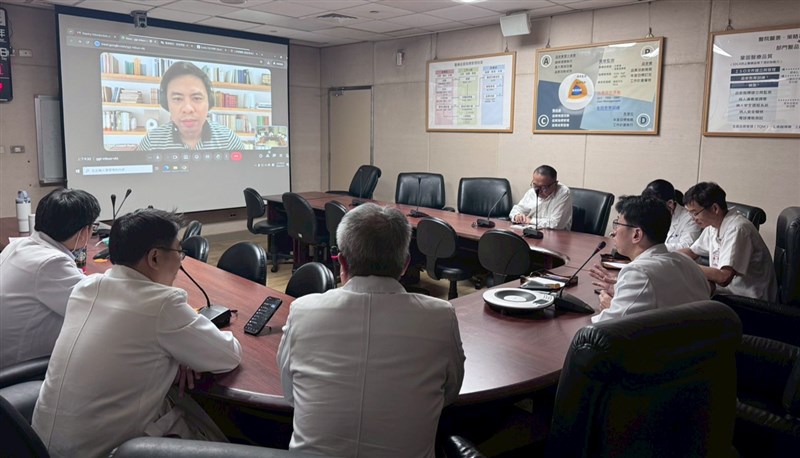
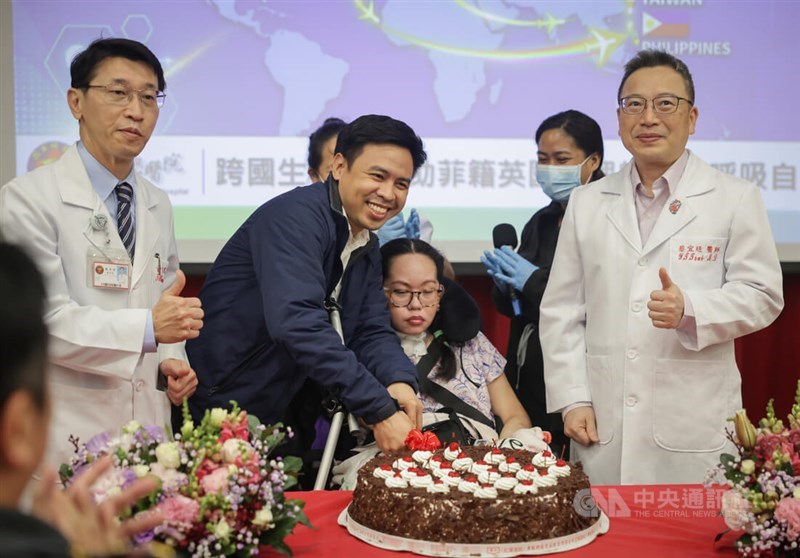
At a press conference in Taipei on March 23, Huang Tsai-wang (黃才旺), director of TSGH's Department of Surgery, said the first DPS implantation case in Taiwan was completed in December 2023, involving a 70-year-old man who was successfully weaned off a ventilator.
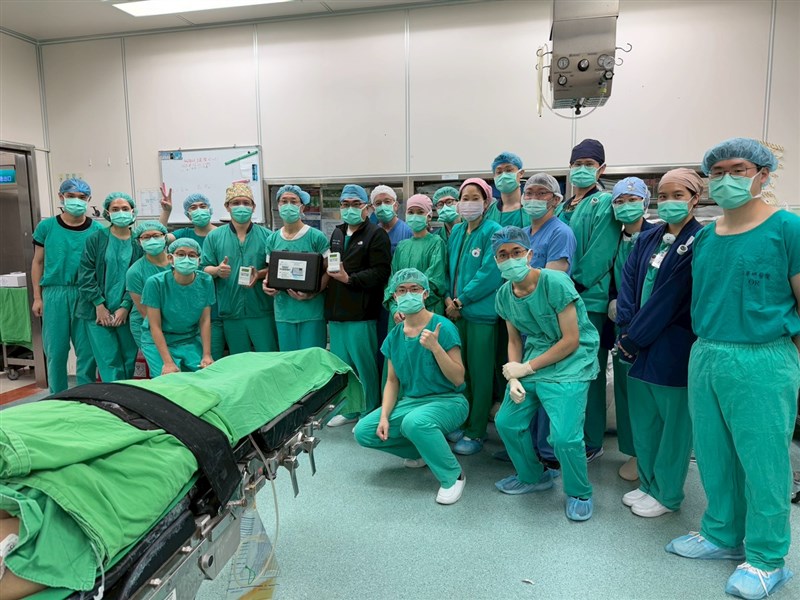
Huang was speaking nearly three weeks after Santoalla underwent a three-hour operation at the TSGH following months of preparation and cross-border coordination.
The operation and the subsequent treatment in the intensive care unit and respiratory care center allowed Santoalla to finally be weaned off the ventilator, marking the second such successful procedure performed in Taiwan, according to Huang.
"We are among the institutions at the forefront of performing this technique in Asia," he said, adding that neighboring regions such as Hong Kong and Japan have also only recently begun carrying out similar procedures.
From Taiwan to the Philippines
Radin, who also attended the press event with Santoalla shortly before returning home, told CNA that some doctors he knew in the Philippines have expressed interest in learning more about the DPS.
Radin said he was impressed by "the bravery of the people" at the TSGH.
"Because of the rarity of the intervention, most of the people would be quite risk-averse," he said. "I am really impressed that the people here still believe that they could help Wendilyn."
Back in Metro Manila permanently, Radin said he is reapplying to work as a cruise ship doctor to help cover Santoalla's ongoing rehabilitation costs after the family exhausted most of its savings on her treatment -- especially given that the DPS alone cost around US$25,000 to US$50,000.
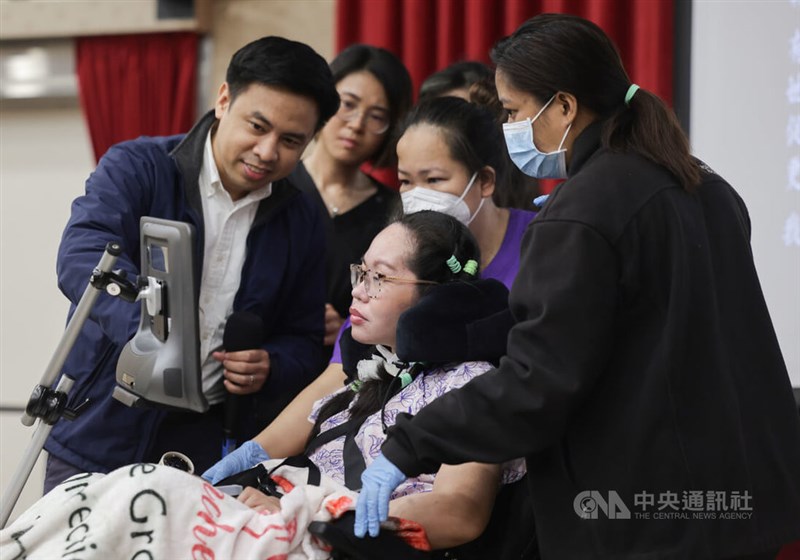
With Santoalla still reliant on a wheelchair, able to communicate only via an eye-tracking device, and with limited movement in her arms and legs, Radin said "only God knows" whether she will ever fully recover.
"But we have this mentality: If we never try, we will never know," he said.
Now that she is off the ventilator, he continued, "it gives me this feeling that we are now starting a new chapter of our lives."
Enditem/AW
![Taiwan, democracies must build resilience against China, Russia: Scholar]() Taiwan, democracies must build resilience against China, Russia: ScholarTaiwan and other democracies must strengthen their resilience against the "sharp power" wielded by authoritarian regimes such as China and Russia to defend their shared democratic values, a visiting American scholar said Monday.09/21/2026 04:39 PM
Taiwan, democracies must build resilience against China, Russia: ScholarTaiwan and other democracies must strengthen their resilience against the "sharp power" wielded by authoritarian regimes such as China and Russia to defend their shared democratic values, a visiting American scholar said Monday.09/21/2026 04:39 PM![European Parliament vice president praises Hsiao as 'role model' for women]() European Parliament vice president praises Hsiao as 'role model' for womenEuropean Parliament Vice President Pina Picierno on Saturday praised Taiwanese Vice President Hsiao Bi-khim (蕭美琴) as a role model for freedom-loving women around the world and told CNA that she would soon begin planning a trip to Taipei after accepting Hsiao's invitation to visit.09/13/2026 01:08 PM
European Parliament vice president praises Hsiao as 'role model' for womenEuropean Parliament Vice President Pina Picierno on Saturday praised Taiwanese Vice President Hsiao Bi-khim (蕭美琴) as a role model for freedom-loving women around the world and told CNA that she would soon begin planning a trip to Taipei after accepting Hsiao's invitation to visit.09/13/2026 01:08 PM![VP Hsiao flags funding, oversight gaps in opposition drone bills]() VP Hsiao flags funding, oversight gaps in opposition drone billsVice President Hsiao Bi-khim (蕭美琴) has questioned key elements of military drone procurement bills sponsored by opposition lawmakers, saying the omissions would hurt the industry and Taiwan's preparedness.08/26/2026 10:21 AM
VP Hsiao flags funding, oversight gaps in opposition drone billsVice President Hsiao Bi-khim (蕭美琴) has questioned key elements of military drone procurement bills sponsored by opposition lawmakers, saying the omissions would hurt the industry and Taiwan's preparedness.08/26/2026 10:21 AM

- Society
DPP township council candidate dies after collapsing on stage
09/23/2026 11:52 AM - Science & Tech
Taiwan part of WorldSkills Competition opening ceremony in China
09/23/2026 10:53 AM - Business
U.S. dollar down in Taipei trading
09/23/2026 10:17 AM - Society
Taiwan headline news
09/23/2026 10:05 AM - Business
Taiwan shares open higher
09/23/2026 09:15 AM