Wistron chairman urges review of power planning as AI demand surges
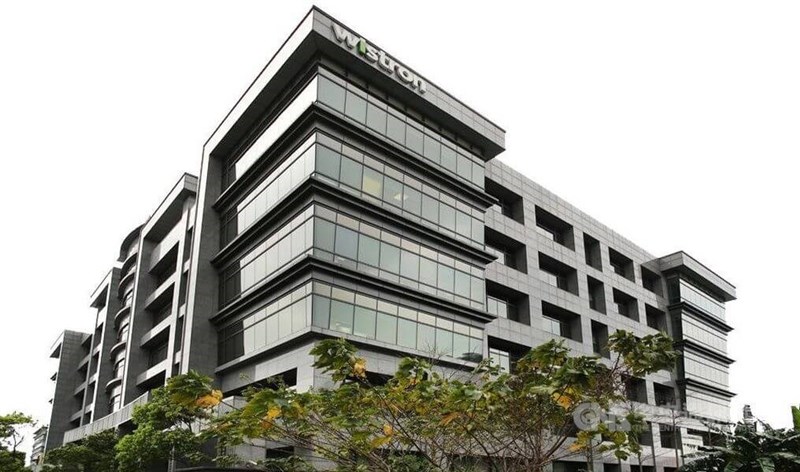
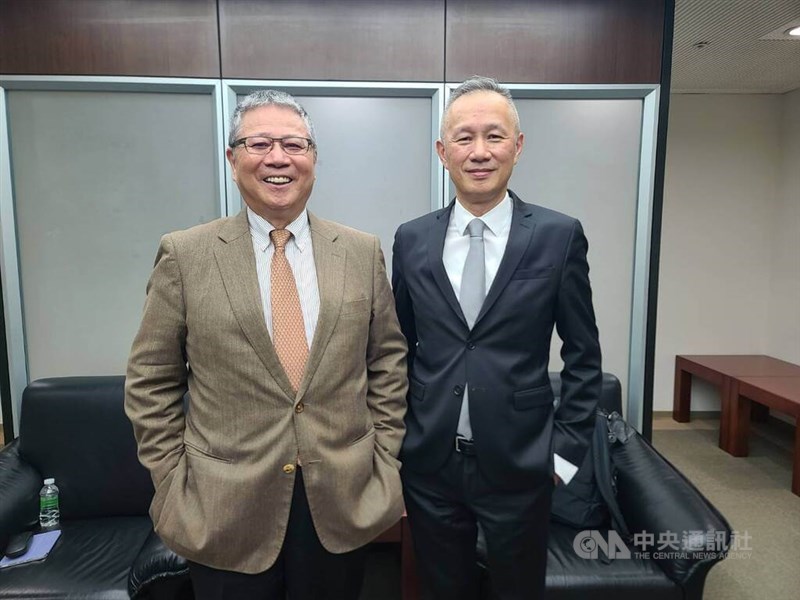
Taipei, May 29 (CNA) Taiwan's government should reassess its electricity demand projections, as power supply constraints have already affected Wistron Corp.'s plans to expand its AI computing infrastructure, Wistron Chairman Simon Lin (林憲銘) said Friday.
Speaking to reporters after Wistron's annual shareholders' meeting, Lin said the company had originally planned to build its second computing center near its existing facility in Taipei's Neihu District, but changed course after being informed of insufficient power supply.
Instead, the company decided to establish the facility at National Yang Ming Chiao Tung University in Tainan, he said.
"Taiwan underestimated the electricity needed to support AI development at this early stage," Lin said, adding that the government should rethink and adjust future electricity demand curves to accommodate rapidly growing power consumption from AI computing.
Concerns about Taiwan's power supply have increasingly surfaced as demand from AI-related industries grows.
During an employee gathering in Taipei on Wednesday, Nvidia CEO Jensen Huang (黃仁勳) used the occasion to remind Taipei Mayor Chiang Wan-an (蔣萬安) that Taiwan would need more power to support future AI development.
"Mayor, we could use more energy in Taiwan," Huang said. "Human labor needs rice, but our AI labor needs electricity."
Wistron, one of Taiwan's leading AI server manufacturers, is a key supplier in Nvidia's AI hardware ecosystem.
According to Lin, the AI industry still had more than 10 times its current growth potential, and he rejected concerns that the sector was entering bubble territory.
Citing Huang's outlook for the industry, he said companies that fail to adopt AI would face growing challenges as the technology becomes increasingly embedded in business operations.
AI applications have already begun gaining traction in Taiwan, particularly in the financial sector, where firms are using the technology for customer service and credit reviews, Lin said.
As AI adoption expands, demand for computing hardware such as graphics processing units (GPUs), central processing units (CPUs), tensor processing units (TPUs) and memory will continue to grow, according to Lin.
Lin also rejected suggestions that Taiwan's recent stock market gains reflected overheating, saying many large-cap technology stocks still trade at relatively modest valuations.
Despite the recent rally, most heavyweight stocks are not trading at particularly high price-to-earnings ratios, he said, noting that Taiwan Semiconductor Manufacturing Co. (TSMC) had previously traded at a P/E ratio of less than 20.
Taiwan's industries remain fundamentally strong and play an indispensable role in global supply chains, Lin said, adding that the market's performance reflects growing recognition of the country's economic strength rather than speculative excess.
- Society
Taiwan headline news
10/03/2026 10:22 AM - Sports
'Hao-yu like that?' A deep dive into Lee's rookie MLB season
10/03/2026 10:00 AM - Sports
Taiwan boosts medal haul in multiple events at Asian Games on Friday
10/02/2026 08:55 PM - Society
Workers at Taiwan snack maker Kuai Kuai extend strike over relocation
10/02/2026 08:45 PM - Business
Chain businesses association seeks more foreign workers
10/02/2026 08:04 PM