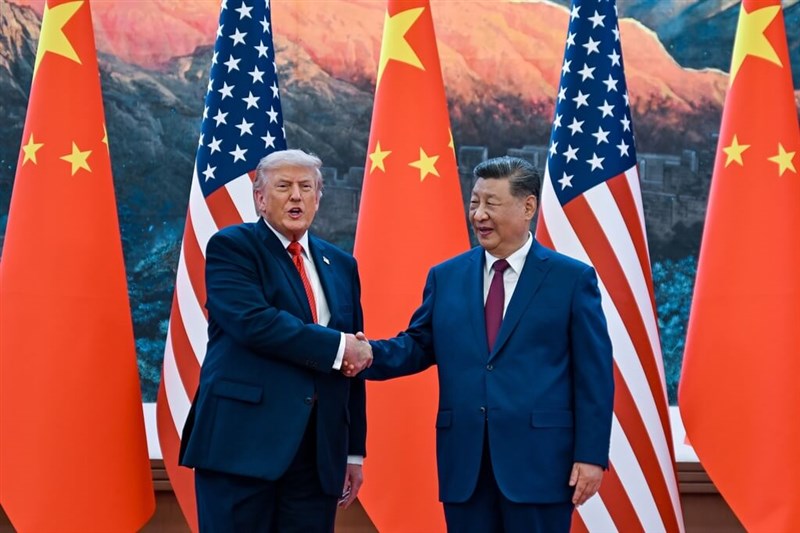
Washington, Sept. 22 (CNA) American scholars expect Chinese President Xi Jinping (習近平) to raise the issue of Taiwan during his meeting with United States President Donald Trump in Washington, D.C., this week, they told CNA on Monday.
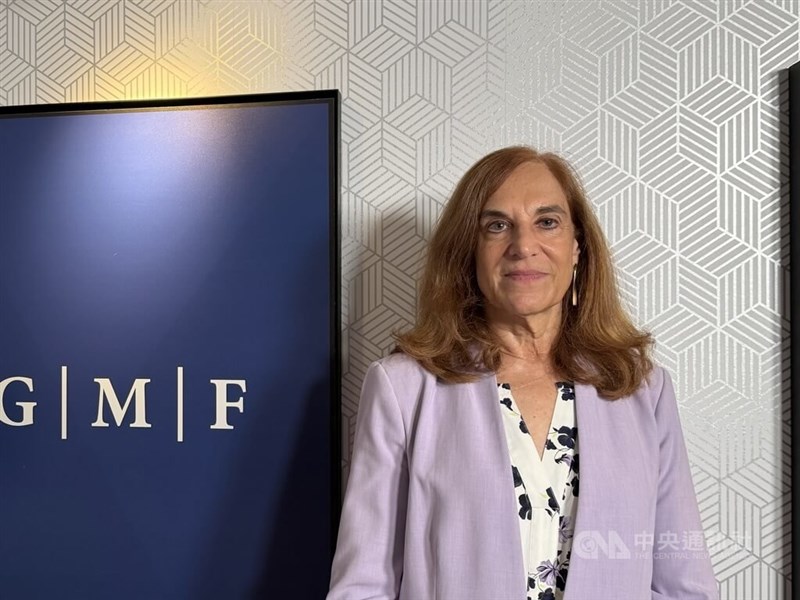
Bonnie Glaser, managing director of the Indo-Pacific program of the German Marshall Fund, a Washington-based think tank, told CNA that Xi is likely to raise Taiwan, with a focus on U.S. arms sales to Taiwan.
From Xi's perspective, Glaser said, the two leaders have an understanding that their countries' relationship should be based on constructive strategic stability, and that the United States should avoid actions that undermine that understanding.
"Xi Jinping would say that arms sales to Taiwan would undermine that understanding and inject greater friction into the relationship," she said.

Dennis Wilder, who previously served as director for China at the U.S. National Security Council, echoed Glaser's assessment, saying Beijing would likely raise the issue and seek to portray President Lai Ching-te (賴清德) as the source of tensions.
Trump, meanwhile, is very unlikely to raise Taiwan, Wilder said, noting that Trump views the status quo as "very acceptable" and sees no reason to change it.
If the issue does arise, Glaser said it would be "a good idea" for Trump to caution Xi against using force against Taiwan and support maintaining the status quo in the Taiwan Strait.
Glaser also said Trump should remind Xi that the United States operates under its domestic laws, just as China does, and that the Taiwan Relations Act requires the United States to provide defensive arms to Taiwan.
Japan also watching summit
Wilder said Japan may be even more anxious about the meeting than Taiwan.
He noted that Japan's relationship with China is currently strained and that Beijing is likely to raise concerns about Japan with Trump, including allegations of rising "neo-militarism."
"The Japanese will be eager for reassurance that the United States remains very committed to Japan, and that even though the relationship with Beijing is improving, that it isn't at the expense of Japan," he said.
Japanese Prime Minister Sanae Takaichi is scheduled to meet Trump in New York on Tuesday.
Iran, AI and trade among main issues
Glaser said Iran would likely be high on Trump's agenda, as he may seek to learn what Xi is willing to do, including whether China can encourage Iran to return to the negotiating table or reduce its purchases of Iranian crude oil.
The Trump administration is "clearly trying to squeeze Iran" for concessions, she said.
She also expects tariffs, rare earths and a proposed "Board of Trade" to be discussed. Under the framework being prepared by the two countries, up to US$30 billion in non-sensitive goods could be subject to tariff reductions.
Both scholars also expect artificial intelligence (AI) to be on the agenda, noting its importance to the two sides, which agreed at their May meeting to establish an AI dialogue.
Wilder said that although "fierce competition" between the two countries would continue, Washington and Beijing could cooperate to reduce the risks posed by AI, including the possibility of bad actors or terrorists obtaining and misusing frontier AI technologies.
Another issue Trump may raise, Glaser said, is the fate of Americans detained in China, noting that he has taken pride in his role in securing the release of some U.S. citizens.
Hopes for summit outcomes
Both scholars hoped the summit will produce progress on AI and the delivery of rare earths, the production of which is dominated by China, leaving other economies vulnerable to Beijing's threats to stop shipments of the critical minerals.
Glaser said she hoped the two leaders could agree on the issues and objectives of the planned AI dialogue, while Wilder also hoped for progress in the talks.
Glaser also said she would like Trump and Xi to extend the existing tariff agreement and ensure China follows through on its commitments, including on rare earth deliveries.
Wilder said China had not done enough to export rare earths to the United States and expressed hope that Beijing would make additional commitments. He also said a positive outcome would be an agreement by the two leaders to hold more meetings.
The two leaders could also meet at the Asia-Pacific Economic Cooperation (APEC) summit in Shenzhen, China, in November and the G20 summit in Miami in December.
If both leaders were to make those trips, Glaser said, it would be "unprecedented" for the U.S. and Chinese leaders to make two reciprocal visits in a single year.
Xi is expected to arrive at Joint Base Andrews outside Washington, D.C., on Wednesday afternoon, where Trump is scheduled to attend a welcoming ceremony.
The two leaders are scheduled to hold bilateral talks Thursday, followed by a state banquet that evening.
It will be Xi's first visit to the White House in 11 years.
- Politics
Cabinet approves upgraded dementia care plan targeting '888' goals by 2035
10/15/2026 09:03 PM - Politics
Taipei mayoral candidates Chiang, Shen to debate Oct. 31
10/15/2026 08:56 PM - Politics
Army to open Chengkungling base to public Oct. 24
10/15/2026 08:52 PM - Society
Labor groups allege contract swaps, low pay for Indonesian workers
10/15/2026 08:39 PM - Politics
MND says zero tolerance for bullying after new suicide case evidence
10/15/2026 08:34 PM