INTERVIEW/From TV star to exiled journalist: Gulchehra Hoja tells Uyghur story
By Ken Chao, CNA staff reporter
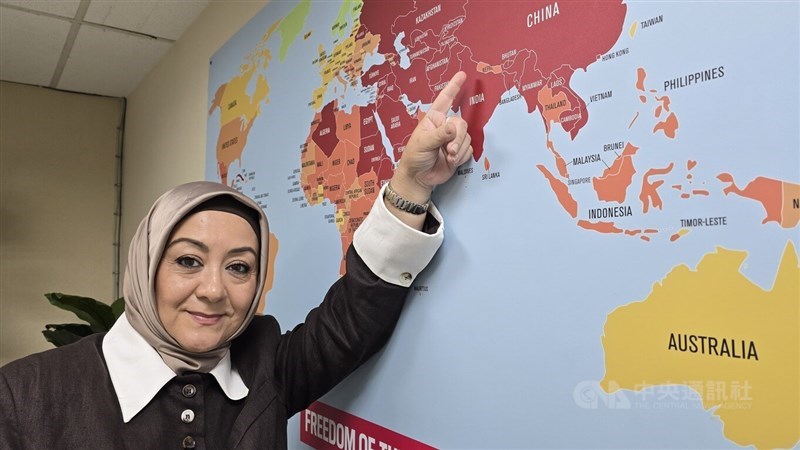
Before Gulchehra Hoja became one of the world's best-known Uyghur journalists, she hosted a popular children's program on Xinjiang Television, making her a trusted personality on Chinese state media.
Today, she jokes that merely interviewing her could make someone appear suspicious in Beijing's eyes.
"You met me -- terrorist," she laughed before sitting down for an interview with CNA in Taipei on July 10.
The remark reflects the extraordinary transformation of a journalist who left China's state media more than two decades ago and went on to help expose what some governments and human rights experts have described as a genocide against the Uyghurs.
Reporting for Radio Free Asia's (RFA) Uyghur Service, Hoja and her colleagues were the first journalists to expose Xinjiang's mass detention camp system at a time when information from the region was scarce and tightly controlled.
That mission would eventually come at an extraordinary personal cost, forcing her to choose between her family and the work she believed they needed her to continue.
From propaganda to journalism
Hoja, now a correspondent for Reporters Without Borders (RSF), said the turning point in her career came around 2000, when she came to a realization about her show for children.
"I fully understood what this program was for," she recalled. "The Chinese government was using my people's trust in me ... as a propaganda tool to assimilate my own generation."
"Immediately I felt guilty," Hoja said.
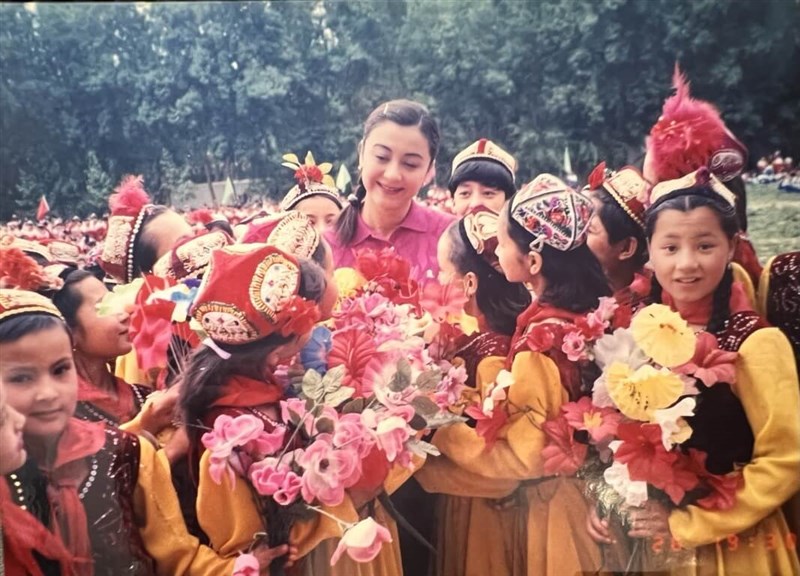
For about a year, she struggled with the knowledge that her work had helped promote a policy of assimilation.
A short trip to Europe soon exposed her to an uncensored internet for the first time. Listening to RFA's Uyghur Service from abroad, she began comparing its reporting with the work she had done in China and decided she could no longer remain in the state media system.
"I felt I was wrong," she said. "Back home, it had nothing to do with real journalism."
She joined RFA in Washington in October 2001, only weeks after the Sept. 11 terrorist attacks, which delayed the issuance of her visa.
The transition was not immediate. Having experienced both propaganda and independent reporting, Hoja said she gradually came to understand what press freedom meant in practice: "Whenever I have a chance, I will be a voice for the completely voiceless people."
Hope amid loss
Hoja's pursuit of independent journalism overseas dealt a heavy blow to her family back home.
Her brother was arrested by Chinese authorities in September 2017, an act she said was directly linked to her reporting for RFA.
Four months later, on Jan. 31, 2018, authorities detained 24 more members of her extended family, bringing the total number of relatives targeted to 25.
It was only three days later that Hoja learned what had happened.
Looking back, Hoja said it was the only time she seriously considered giving up journalism and returning to China, believing that surrendering herself might secure her relatives' release.
"That was the hardest night for me," she recalled. "I was thinking, should I go back? Surrender myself, then maybe they can release all my relatives."
The following morning, she told her husband she wanted to return, but her husband urged her to keep fighting.
"How do you know the Chinese government is going to release your relatives?" he asked. "We have to fight from here."
Instead of returning, Hoja appealed publicly for help, testified before the U.S. Congress, and raised awareness internationally.
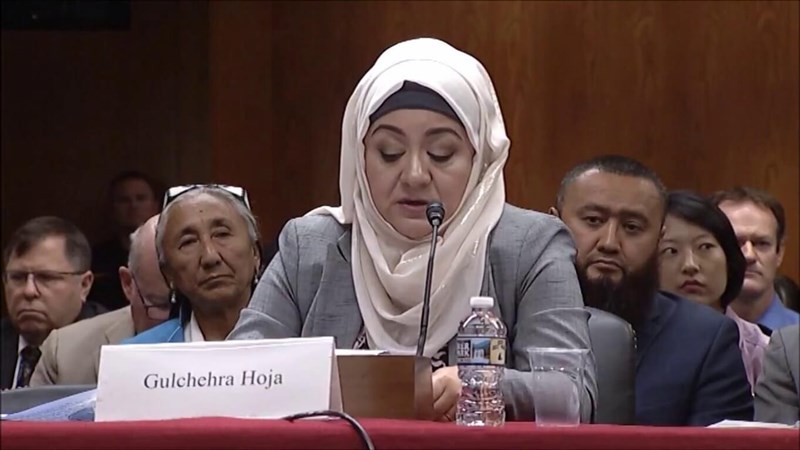
Most of her relatives have since been released, though she said she can now speak with her parents only briefly once or twice a month under what she believes is constant government surveillance.
Despite the emotional burden, Hoja said journalism serves another purpose beyond documenting abuses.
"We also want to give hope to our people," she said. "The world is paying attention to you. The world knows the situation. Listening to you."
That mission is also what sustains her.
Hoja said she drew strength from her family's sacrifices, her Islamic faith, and generations of Uyghurs who have not abandoned their hopes despite decades of repression.
"My people never gave up hope," she said. "I am just continuing their dream."
A different Uyghur face
The same motivation led her to write her memoir "A Stone Is Most Precious Where It Belongs."
Before the world's attention turned to Xinjiang, Hoja said, "barely" anyone outside the region knew about the Uyghurs. Yet when the issue gained worldwide attention after 2016, coverage focused almost entirely on detention camps and repression.
"It only shows our sad face," she said. "I wanted to tell the Uyghur story."
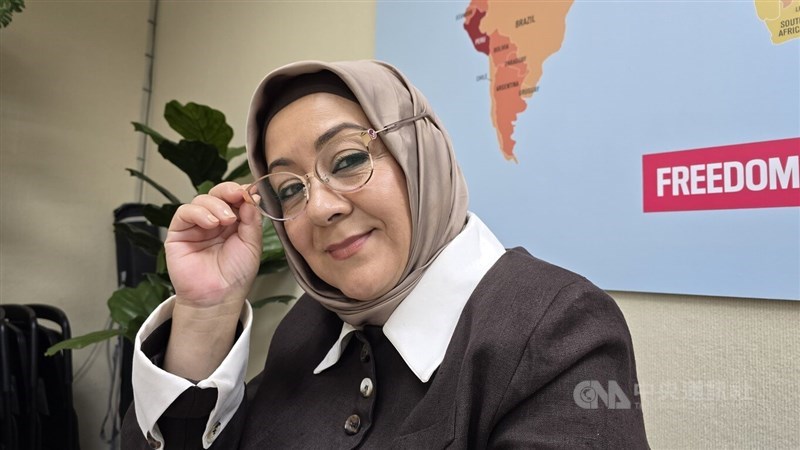
Today, Hoja said the flow of information from Xinjiang has become so restricted that even she no longer knows what everyday life there looks like.
After RFA shut down its Uyghur Service in May 2025 and Beijing further tightened its controls, the region has become what she described as an "information dark hole."
"Even I cannot imagine what's the real situation right now," she said, though RFA did resume its Uyghur-language service in February 2026, according to RFA's CEO and president. "I only know my family members are alive."
Freedom must be protected
Hoja said the Chinese government's approach toward the Uyghurs has remained fundamentally unchanged across different generations of leaders, though she believes the repression intensified significantly after Xi Jinping came to power.
"The policy is systematic assimilation," she said. "We always felt the pressure, always felt the control in our life back home."
Hoja believes the Uyghur experience carries lessons for other democratic societies, including Taiwan.
She warned that authoritarianism rarely arrives all at once.
"It advances gradually through language, law, institutions and normalization," she said. "By the time mass repression becomes visible, the system enabling it is already entrenched."
Calling freedom a "precious gift," Hoja urged Taiwanese to protect the democratic values they enjoy today.
"When you lose hope for freedom," she said, "that's the dangerous beginning."
Enditem/ls
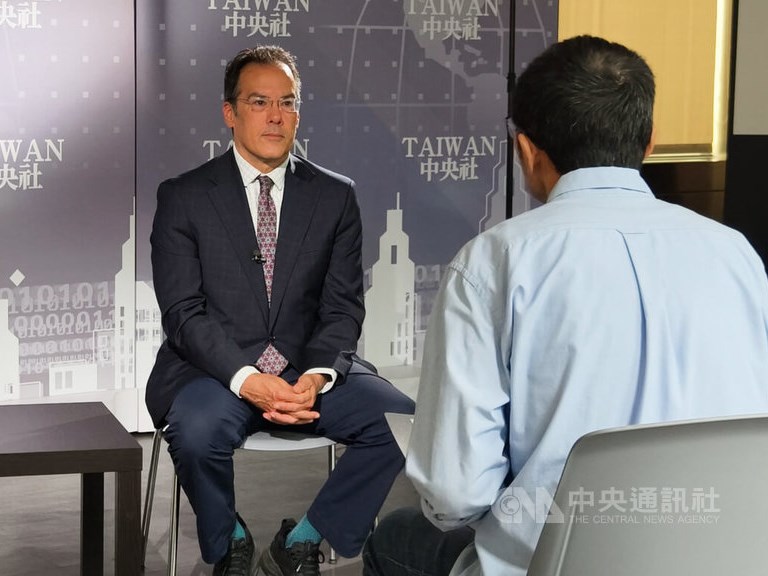
![Taiwan, democracies must build resilience against China, Russia: Scholar]() Taiwan, democracies must build resilience against China, Russia: ScholarTaiwan and other democracies must strengthen their resilience against the "sharp power" wielded by authoritarian regimes such as China and Russia to defend their shared democratic values, a visiting American scholar said Monday.09/21/2026 04:39 PM
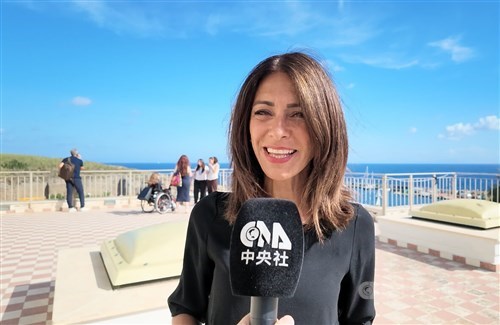
Taiwan, democracies must build resilience against China, Russia: ScholarTaiwan and other democracies must strengthen their resilience against the "sharp power" wielded by authoritarian regimes such as China and Russia to defend their shared democratic values, a visiting American scholar said Monday.09/21/2026 04:39 PM![European Parliament vice president praises Hsiao as 'role model' for women]() European Parliament vice president praises Hsiao as 'role model' for womenEuropean Parliament Vice President Pina Picierno on Saturday praised Taiwanese Vice President Hsiao Bi-khim (蕭美琴) as a role model for freedom-loving women around the world and told CNA that she would soon begin planning a trip to Taipei after accepting Hsiao's invitation to visit.09/13/2026 01:08 PM
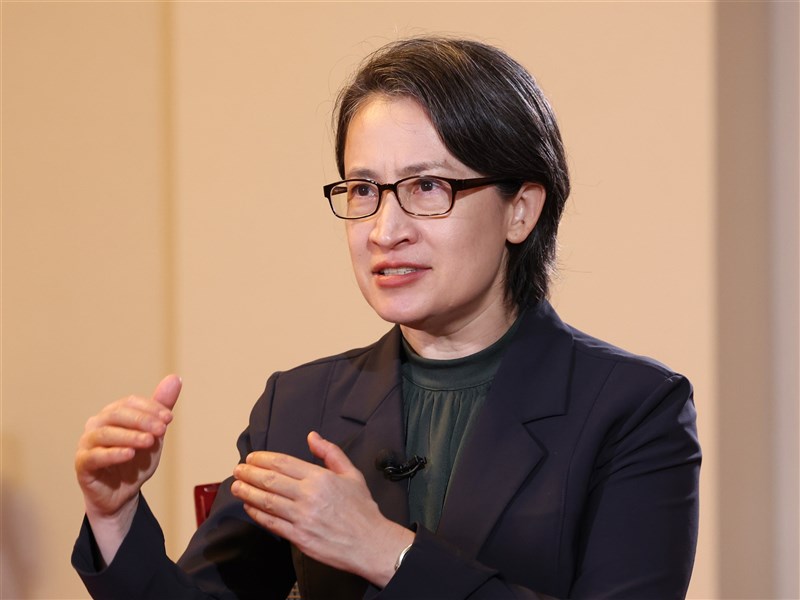
European Parliament vice president praises Hsiao as 'role model' for womenEuropean Parliament Vice President Pina Picierno on Saturday praised Taiwanese Vice President Hsiao Bi-khim (蕭美琴) as a role model for freedom-loving women around the world and told CNA that she would soon begin planning a trip to Taipei after accepting Hsiao's invitation to visit.09/13/2026 01:08 PM![VP Hsiao flags funding, oversight gaps in opposition drone bills]() VP Hsiao flags funding, oversight gaps in opposition drone billsVice President Hsiao Bi-khim (蕭美琴) has questioned key elements of military drone procurement bills sponsored by opposition lawmakers, saying the omissions would hurt the industry and Taiwan's preparedness.08/26/2026 10:21 AM
VP Hsiao flags funding, oversight gaps in opposition drone billsVice President Hsiao Bi-khim (蕭美琴) has questioned key elements of military drone procurement bills sponsored by opposition lawmakers, saying the omissions would hurt the industry and Taiwan's preparedness.08/26/2026 10:21 AM
- Sports
Men's archery, esports give Taiwan 2 more bronzes at Asian Games
09/30/2026 08:32 PM - Society
Cooler, wetter weather forecast in northern Taiwan next week
09/30/2026 07:25 PM - Politics
Taiwan, Belize sign agreements to enhance collaboration during FM's visit
09/30/2026 07:08 PM - Society
AGC Display Glass employees protest at MOL ahead of 10/5 strike
09/30/2026 06:53 PM - Culture
CNA to relaunch Spanish-language Focus Taiwan with AI assistance
09/30/2026 05:59 PM