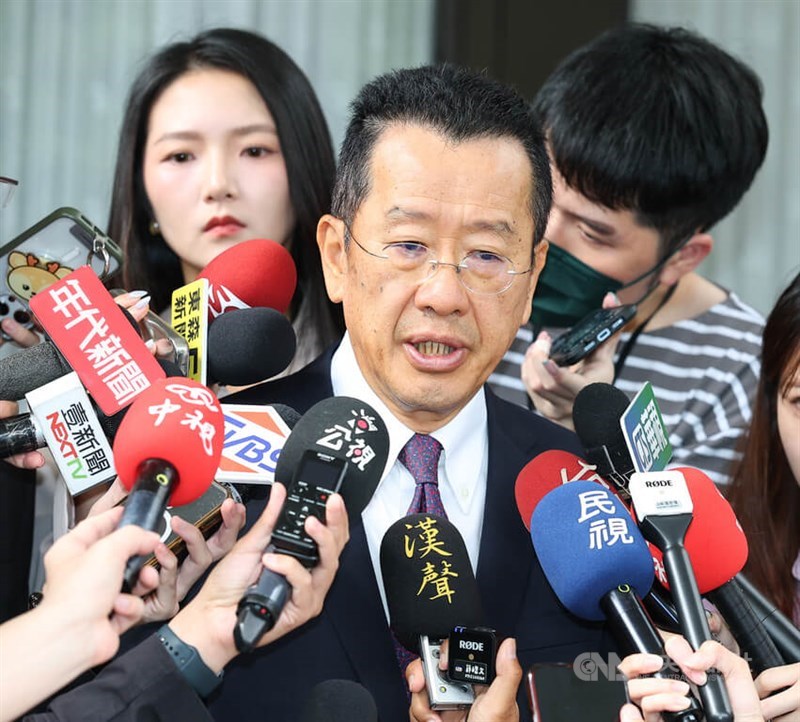
Taipei, April 21 (CNA) Taiwan's Ministry of National Defense (MND) on Tuesday unveiled details of a list of weapons systems it intends to procure via direct commercial sales (DCS) or commissioned manufacturing, under the Cabinet's stalled NT$1.25 trillion (US$39.6 billion) special defense budget proposal.
Most of the items to be acquired through DCS or commissioned manufacturing include thousands of drones and various types of ammunition, according to a list the MND released to local media.
The procurement process would involve the military's top research unit, the National Chung-Shan Institute of Science and Technology (NCSIST) and the Armaments Bureau, the MND said.
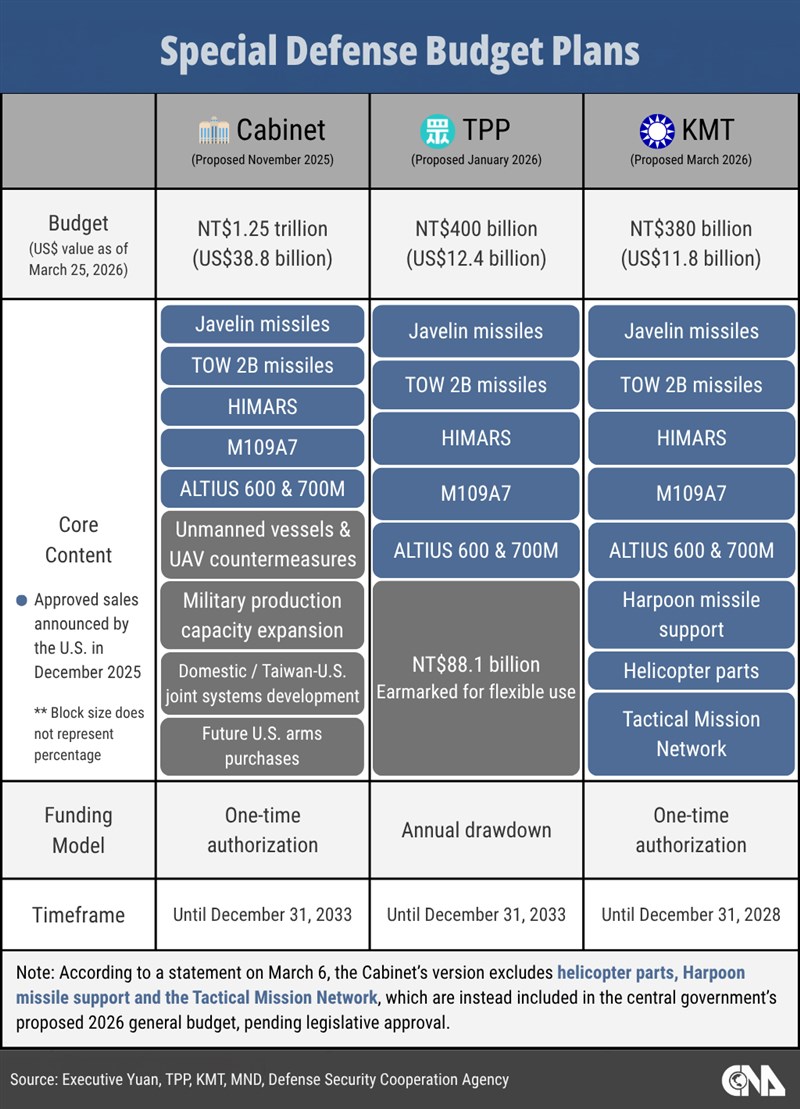
According to the MND, about 24 percent of the eight-year NT$1.25 trillion special budget, which still requires legislative approval, will be allocated to DCS or commissioned manufacturing.
Meanwhile, 76 percent of the proposed budget will be spent on U.S. weapons systems, including those already approved for sale to Taiwan by Washington or identified by Taiwan as items of interest through the Foreign Military Sales (FMS) program, the MND said.
DCS, which involves transactions between private companies and Taiwan's military, is a faster channel for acquiring defense technology, software, and weapon components compared to government-to-government FMS.
The MND released the information a day after holding a closed-door briefing for lawmakers on the matter.
The confidential briefing was intended to solicit support from opposition lawmakers for a bill proposed by the ruling Democratic Progressive Party (DPP), which would authorize NT$1.25 trillion for major weapons purchases and joint development programs with the U.S. over eight years, from 2026 to 2033.
The bill was sent to the opposition-controlled Legislative Yuan for review in late 2025.
The main opposition Kuomintang (KMT) and the smaller Taiwan People's Party (TPP) have since blocked the bill from being placed on the legislative agenda, demanding that President Lai Ching-te (賴清德) brief lawmakers on the proposal first.
The KMT and TPP later proposed their own versions of a supplementary plan, earmarking significantly lower funding levels that cover only a US$11.1 billion U.S. arms package, and do not include items the MND seeks to acquire via DCS or commissioned manufacturing.
Defense Minister Wellington Koo (顧立雄) has repeatedly said the Cabinet's version of the defense budget is the most comprehensive among competing proposals, as it supports long-term domestic weapons production.
Both the KMT and TPP have criticized the Cabinet's proposal for including these domestic production programs in a special budget spanning eight years from 2026 to 2033, labeling it fiscally irresponsible and arguing for funding them through the annual general budget.
- Politics
- Society
Scattered showers expected in Greater Taipei, eastern Taiwan Saturday
10/03/2026 10:41 AM - Society
Taiwan headline news
10/03/2026 10:22 AM - Sports
'Hao-yu like that?' A deep dive into Lee's rookie MLB season
10/03/2026 10:00 AM - Sports
Taiwan boosts medal haul in multiple events at Asian Games on Friday
10/02/2026 08:55 PM