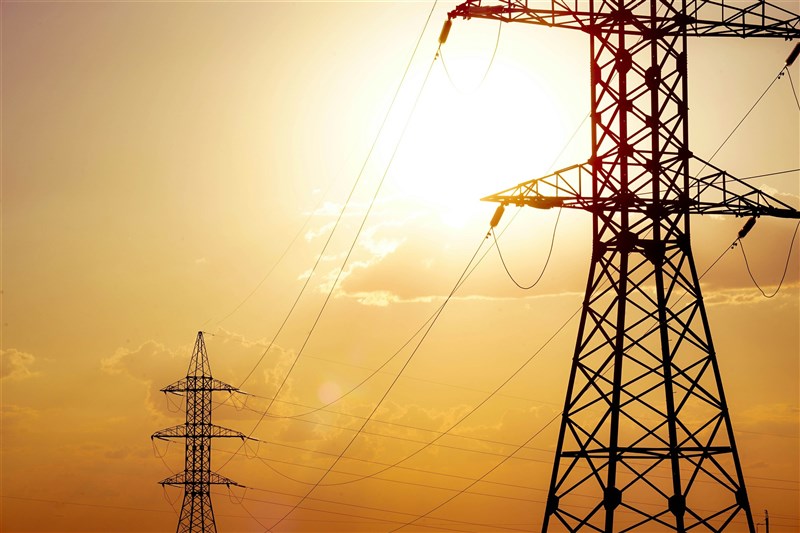
Taipei, June 16 (CNA) Energy security and infrastructure resilience have become critical priorities for Taiwan as artificial intelligence (AI) drives growing demand for electricity and computing capacity, the American Chamber of Commerce (AmCham) in Taiwan said Tuesday.
At a news conference in Taipei to mark the release of the business group's 2026 Taiwan White Paper, AmCham Taiwan Chairperson Anita Chen (陳幼臻) said energy security was no longer "just an economic issue" but a "national security issue."
As geopolitical pressures continue to reshape global energy markets, Chen said that every industry will be affected by energy security challenges and the need for resilient infrastructure, particularly as demand for AI grows.
While AmCham does not advocate a specific energy mix, Chen said the chamber supports efforts to strengthen Taiwan's energy security, including ongoing discussions on increasing imports of U.S. liquefied natural gas (LNG).
Asked about Nvidia CEO Jensen Huang's (黃仁勳) recent comments on Taiwan's energy needs, AmCham President Carl Wegner said businesses were primarily concerned with maintaining a reliable power supply, noting that a more diversified energy portfolio would improve resilience.
The White Paper also urged Taiwan to improve digital resilience through systems designed for "continuity, recoverability and adaptability" across critical sectors.
"We call this approach resilience by design," Chen said. "We cannot emphasize enough how important this is, not only to business, but also to Taiwanese society as a whole."
In addition, the White Paper recommended stronger coordination among government agencies, continued efforts to attract and retain international talent, and AI regulations that are aligned with evolving international standards.
This year's White Paper introduced a more detailed assessment system that reviewed progress on individual recommendations raised in 2025, according to the chamber.
Of the 237 recommendations reviewed, seven were classified as fully resolved and 49 as showing satisfactory progress.
Among the changes highlighted were faster and more predictable work permit approvals, expanded digital processing of immigration-related applications, simplified document requirements for foreign workers and their families, and the launch of an e-visa system to streamline business travel.
However, with 161 issues still under observation or considered stalled, Chen said there was still a need for better coordination among government agencies and more decisive action to reduce regulatory uncertainty.
The latest White Paper was released against what Wegner described as a "golden age" in Taiwan-U.S. economic relations.
Wegner cited record trade figures between the two sides, noting that two-way trade reached US$256 billion last year and that the United States became Taiwan's largest trading partner in 2025 for the first time in more than 20 years.
Taiwan also rose to fourth place among U.S. trading partners, while Taiwanese exports to the U.S. increased by 35 percent and Taiwan imported 30 percent more U.S. goods than the year before, he added.
- Business
U.S. dollar closes lower on Taipei forex market
10/05/2026 04:17 PM - Politics
China pressured Munich institute to cancel Taiwan author event: Diplomat
10/05/2026 04:14 PM - Science & Tech
Metaverse healthcare can boost Taiwan's global competitiveness: Minister
10/05/2026 03:40 PM - Society
Green energy company, 25 indicted over alleged investment fraud
10/05/2026 03:37 PM - Business
Taiwan Lottery launches 2 new scratch cards with NT$2.11B prize pool
10/05/2026 03:07 PM