TANG PRIZE/'Sound-bite democracy' threatens elections: Tang Prize laureate Bruce Ackerman
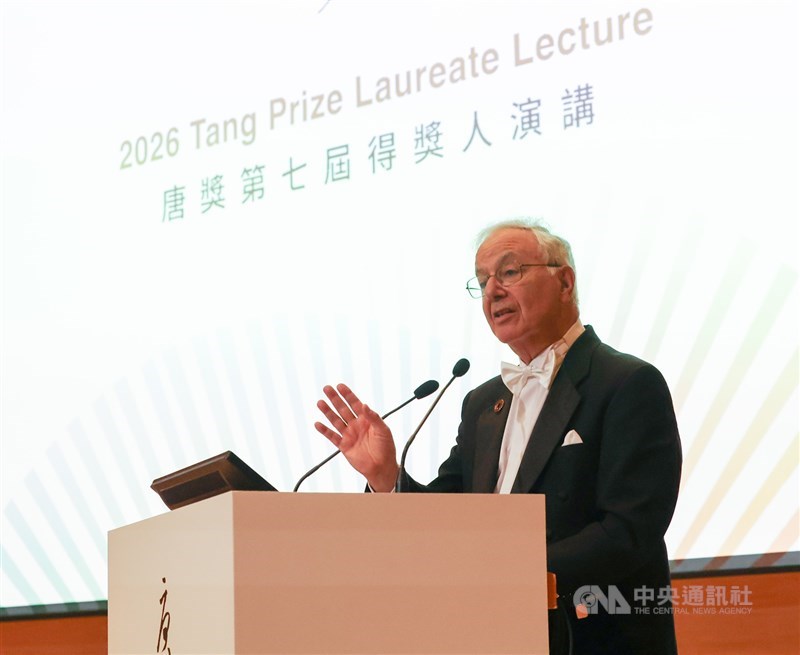
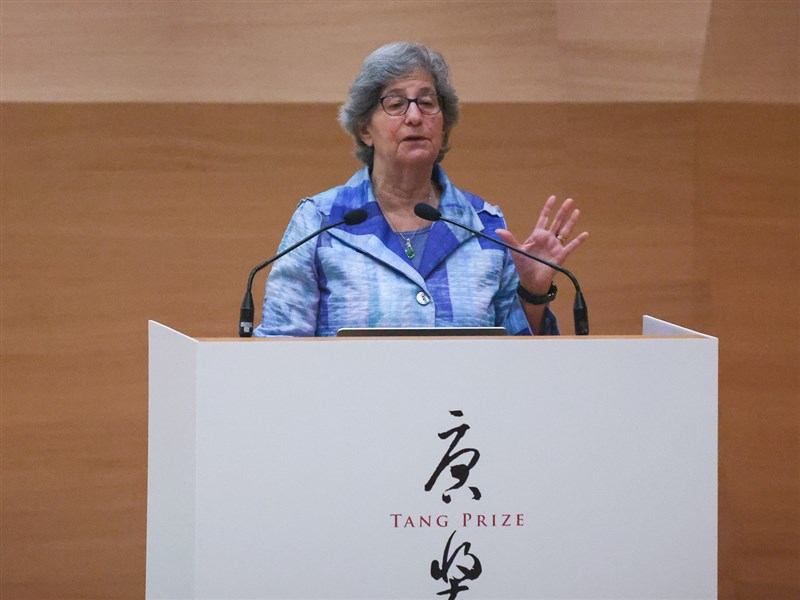
Taipei, Sept. 19 (CNA) The internet is enabling demagogues to win democratic elections through rapid, emotionally charged messaging, posing a growing threat to constitutional government, 2026 Tang Prize laureate Bruce Ackerman said Saturday.
In his laureate lecture in Taipei, Ackerman, Sterling Professor of Law and Political Science at Yale Law School, warned against this messaging, which he called "sound-bite democracy," and argued that democracies needed institutions that give voters time to think before casting their ballots.
"The Internet has revolutionized the real-world operation of democracy in ways that threaten its utter destruction," he said.
Before the internet, aspiring demagogues had to obtain sustained attention from newspaper editors and television commentators, giving their opponents time to organize, Ackerman said.
Today, however, online platforms allow political figures to bombard large audiences directly with exaggerations and misrepresentations, while consultants compress their appeals into 15- or 30-second messages, he said.
That environment has increasingly allowed demagogues to gain power through elections by portraying their opponents as "enemies of the people," rather than destroying democratic systems through violent seizures of power, he said.
Although Donald Trump's reelection has led many scholars to despair over the prospects for reform, Ackerman said "the point of this lecture is to challenge the prevailing despair."
His proposed remedy is "Deliberation Day," a public holiday that would be held several weeks before a major election, during which citizens would spend a full day examining key issues and competing arguments before voting.
Participants would meet online in small groups, receive equal speaking time, choose priority questions by secret ballot and question representatives of competing candidates in larger assemblies.
Ackerman said around 150 deliberative-polling experiments conducted internationally found that participants gained knowledge through the forums and better understood opposing views, often leading them to reconsider their positions.
Overall opinion commonly shifted by 10 to 15 percentage points, without consistently moving left or right.
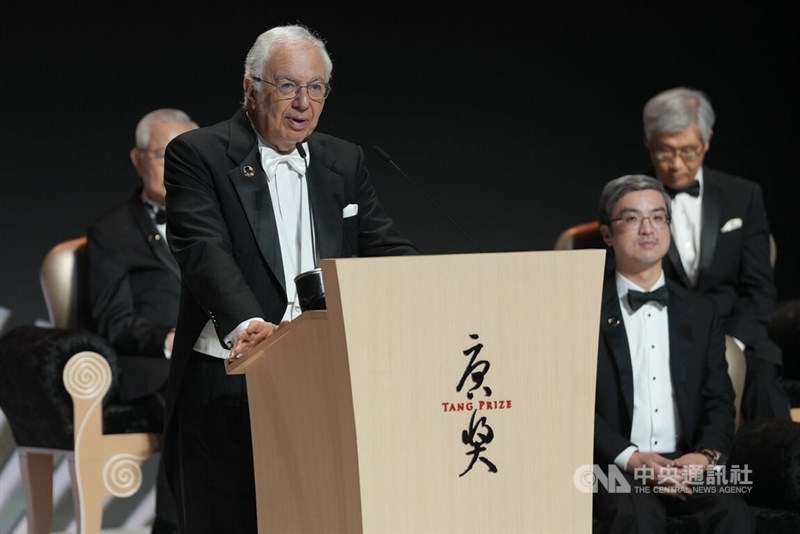
He cited French President Emmanuel Macron's citizens' assembly on end-of-life issues as evidence that structured deliberation can influence policy. Its work helped underpin an assisted-dying law approved in July after extended parliamentary debate, Ackerman said.
Ackerman also urged European Commission President Ursula von der Leyen to consider an EU-wide Deliberation Day, arguing that Europe's military buildup amid Russia's war in Ukraine makes stronger safeguards against future authoritarian leaders especially urgent.
Turning to Taiwan, Ackerman acknowledged that he had not studied its political system as intensively as he had studied Europe's but suggested that it could demonstrate how democracy can respond constructively to geopolitical danger.
"Wouldn't it serve your interests to be an example of genuine democracy?" he asked, suggesting that Taiwan could implement his proposed Deliberation Day and become an international model of deliberative democracy.
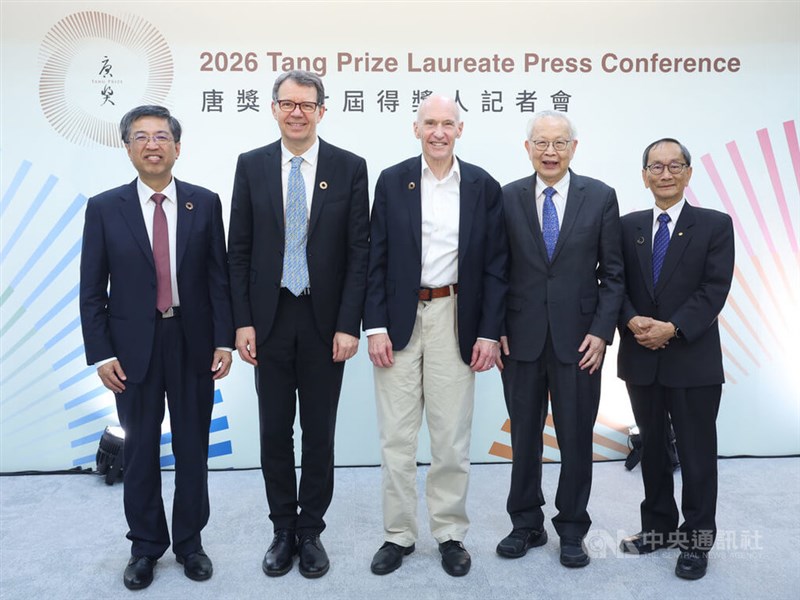
The Tang Prize is a biennial award established in 2012 by the late Taiwanese entrepreneur Samuel Yin (尹衍樑) to honor people who have made prominent contributions in four categories -- sustainable development, biopharmaceutical science, sinology, and rule of law.
Ackerman received the Tang Prize in Rule of Law for his work on constitutional government, judicial review and democratic institutions.
This year's recipients received their prizes on Friday and delivered their laureate lectures at the Taipei Bioinnovation Park in Taipei's Nangang District on Saturday.
![U.S. research funding cuts hurt scientific progress: Tang Prize laureates]() U.S. research funding cuts hurt scientific progress: Tang Prize laureatesThe 2026 Tang Prize laureates in Biopharmaceutical Science warned Saturday that cuts to U.S. government research funding could slow scientific progress and reduce opportunities for young researchers, with potentially long-term consequences for the scientific workforce.09/19/2026 07:39 PM
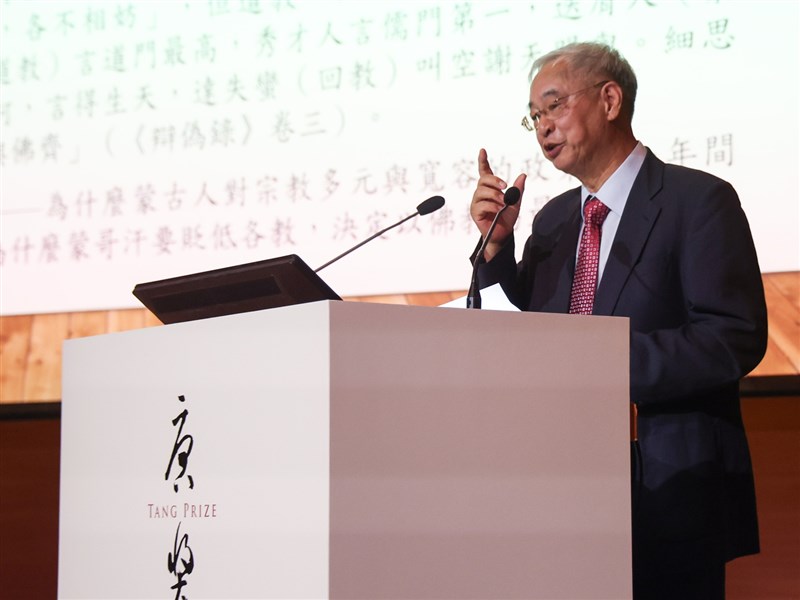
U.S. research funding cuts hurt scientific progress: Tang Prize laureatesThe 2026 Tang Prize laureates in Biopharmaceutical Science warned Saturday that cuts to U.S. government research funding could slow scientific progress and reduce opportunities for young researchers, with potentially long-term consequences for the scientific workforce.09/19/2026 07:39 PM![Find pivotal moments that shape history: Tang Prize Sinology laureate]() Find pivotal moments that shape history: Tang Prize Sinology laureateGe Zhaoguang (葛兆光) used his platform as the 2026 Tang Prize laureate in Sinology on Saturday to encourage historians to broaden their perspective and focus on identifying pivotal moments that shape history's course.09/19/2026 07:02 PM
Find pivotal moments that shape history: Tang Prize Sinology laureateGe Zhaoguang (葛兆光) used his platform as the 2026 Tang Prize laureate in Sinology on Saturday to encourage historians to broaden their perspective and focus on identifying pivotal moments that shape history's course.09/19/2026 07:02 PM![Ozone recovery a rare success story: Tang Prize laureate Susan Solomon]() Ozone recovery a rare success story: Tang Prize laureate Susan SolomonThe recovery of the Antarctic ozone layer represents a rare example of science and international policy successfully addressing a global environmental threat, said Susan Solomon, whose research on chlorofluorocarbons (CFCs) earned her the 2026 Tang Prize in Sustainable Development.09/19/2026 05:25 PM
Ozone recovery a rare success story: Tang Prize laureate Susan SolomonThe recovery of the Antarctic ozone layer represents a rare example of science and international policy successfully addressing a global environmental threat, said Susan Solomon, whose research on chlorofluorocarbons (CFCs) earned her the 2026 Tang Prize in Sustainable Development.09/19/2026 05:25 PM
- Politics
Taiwan needs a 'chain of guardian mountains' across industries: Lai
10/10/2026 01:19 PM - Business
New ECCT chair urges greater agility in Taiwan's software, energy sectors
10/10/2026 12:36 PM - Culture
BigBang throws concert in Taipei; Jay Chou shares photos with group
10/10/2026 11:50 AM - Politics
Full text of President Lai Ching-te's National Day address
10/10/2026 11:10 AM - Society
Taiwan headline news
10/10/2026 10:08 AM