TANG PRIZE/Ozone recovery a rare success story: Tang Prize laureate Susan Solomon
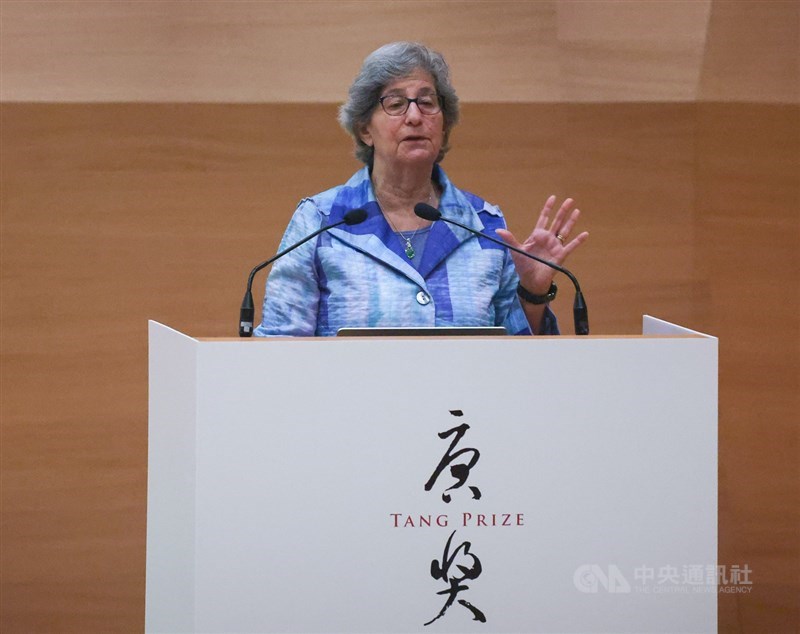
Taipei, Sept. 19 (CNA) The recovery of the Antarctic ozone layer represents a rare example of science and international policy successfully addressing a global environmental threat, said Susan Solomon, whose research on chlorofluorocarbons (CFCs) earned her the 2026 Tang Prize in Sustainable Development.
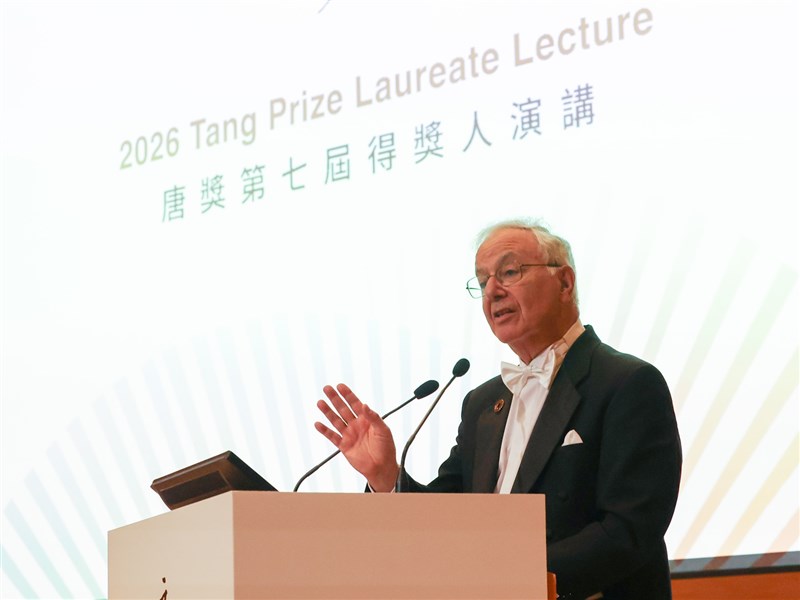
"I think it's fair to say it's really the global environmental success story of science and policy, the greatest one really that the world has ever known," Solomon said during her laureate lecture held in Taipei on Saturday.
The American atmospheric scientist detailed how research she led linking the Antarctic ozone hole to CFCs helped pave the way for the Montreal Protocol, and how the international effort to phase out ozone-depleting chemicals has since provided evidence of ozone recovery.
Solomon said the ozone layer shields life on Earth from biologically damaging ultraviolet radiation, while ground-level ozone is a toxic component of air pollution. Excessive exposure to ultraviolet radiation can cause sunburn, skin cancer and cataracts.
Scientists first warned of the threat posed by CFCs in 1974, when researchers Mario Molina and F. Sherwood Rowland proposed that chlorine released from the compounds could reach the stratosphere and destroy ozone, she said.
CFCs can remain in the atmosphere for decades or more before ultraviolet radiation breaks them down, releasing chlorine atoms that repeatedly participate in chemical reactions that destroy ozone, she said.
The scale of the threat became apparent in 1985, when British scientists measuring ozone in Antarctica discovered a dramatic decline in the layer during the early 1980s.
Subsequent observations by Japanese and American researchers confirmed the phenomenon, according to Solomon, who teaches at the Massachusetts Institute of Technology (MIT).
At the time, the prevailing understanding was that ozone depletion was primarily driven by reactions between gases, known as gas-phase chemistry.
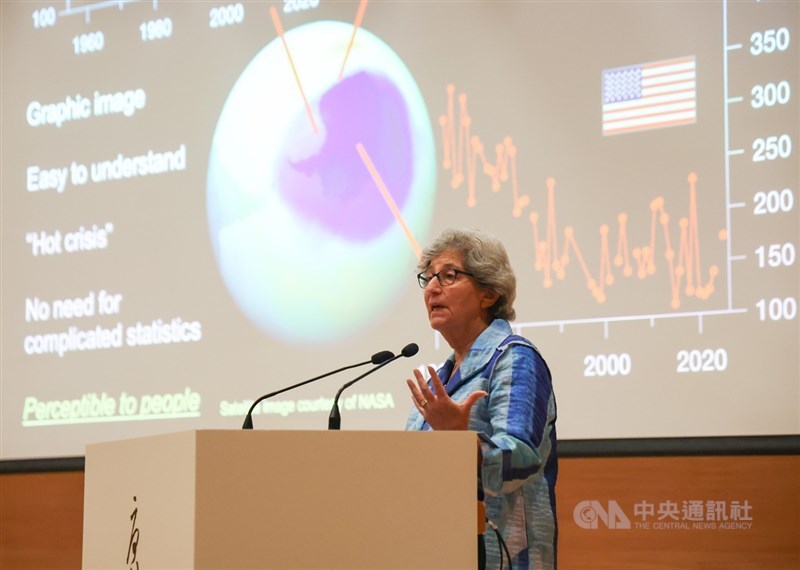
She found evidence, however, that chemical reactions that generated ozone-depleting chlorine over Antarctica occurred on the surfaces of polar atmospheric clouds, overturning the gas-phase chemistry theory.
Solomon discovered that extremely cold conditions in Antarctica created polar stratospheric clouds, whose surfaces enabled chemical reactions that activated chlorine and accelerated ozone destruction when sunlight returned in spring.
A series of independent measurements in the late 1980s provided strong evidence linking the ozone hole to CFC-related chlorine chemistry, helping spur international action that culminated in the Montreal Protocol, Solomon said.
The treaty was eventually signed by 197 United Nations member states, she said.
Solomon noted that the protocol progressively tightened controls on ozone-depleting substances and included financial assistance for developing countries to adopt alternatives.
The agreement demonstrated the importance of making environmental solutions personal, perceptible and practical, she said.
"It has to be personal to people, perceptible to people, and practical solutions have to be out there," Solomon said, describing the three elements she considers necessary to solve environmental problems.
She said the protocol has significantly reduced atmospheric CFC concentrations, with measurements now showing that the Antarctic ozone hole is forming more slowly than it did when chlorine levels were at their peak.
Recovery will take decades, however, because of the long atmospheric lifetimes of CFCs, she said.
She also cautioned that recovery could be slowed by emerging factors, including smoke from increasingly severe wildfires and leakage of CFCs used as chemical feedstocks.
Research following Australia's 2020 wildfires found that smoke particles could facilitate ozone-destroying reactions outside polar regions, she warned.
The Tang Prize is a biennial award established in 2012 by the late Taiwanese entrepreneur Samuel Yin (尹衍樑) to honor people who have made prominent contributions in four categories -- sustainable development, biopharmaceutical science, sinology, and rule of law.
This year's recipients received their prizes on Friday and delivered their laureate lectures on Saturday.
![U.S. research funding cuts hurt scientific progress: Tang Prize laureates]() U.S. research funding cuts hurt scientific progress: Tang Prize laureatesThe 2026 Tang Prize laureates in Biopharmaceutical Science warned Saturday that cuts to U.S. government research funding could slow scientific progress and reduce opportunities for young researchers, with potentially long-term consequences for the scientific workforce.09/19/2026 07:39 PM
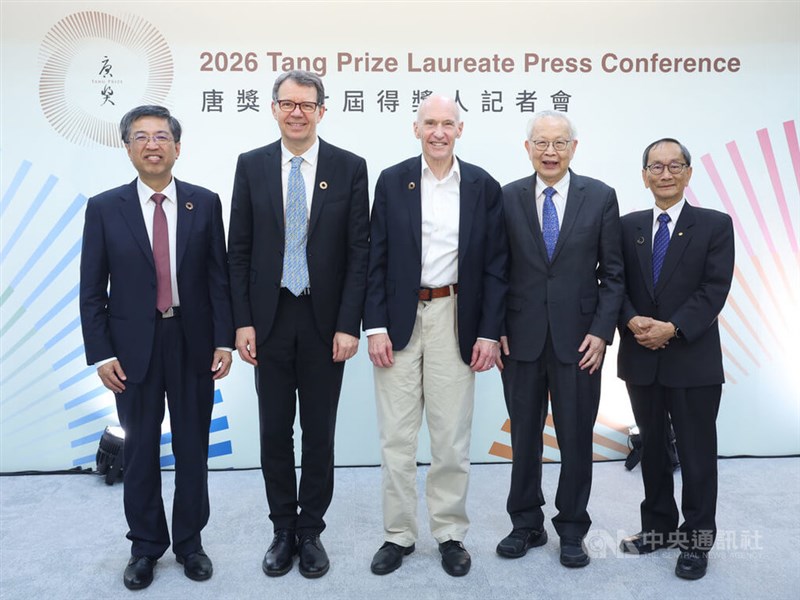
U.S. research funding cuts hurt scientific progress: Tang Prize laureatesThe 2026 Tang Prize laureates in Biopharmaceutical Science warned Saturday that cuts to U.S. government research funding could slow scientific progress and reduce opportunities for young researchers, with potentially long-term consequences for the scientific workforce.09/19/2026 07:39 PM![Find pivotal moments that shape history: Tang Prize Sinology laureate]() Find pivotal moments that shape history: Tang Prize Sinology laureateGe Zhaoguang (葛兆光) used his platform as the 2026 Tang Prize laureate in Sinology on Saturday to encourage historians to broaden their perspective and focus on identifying pivotal moments that shape history's course.09/19/2026 07:02 PM
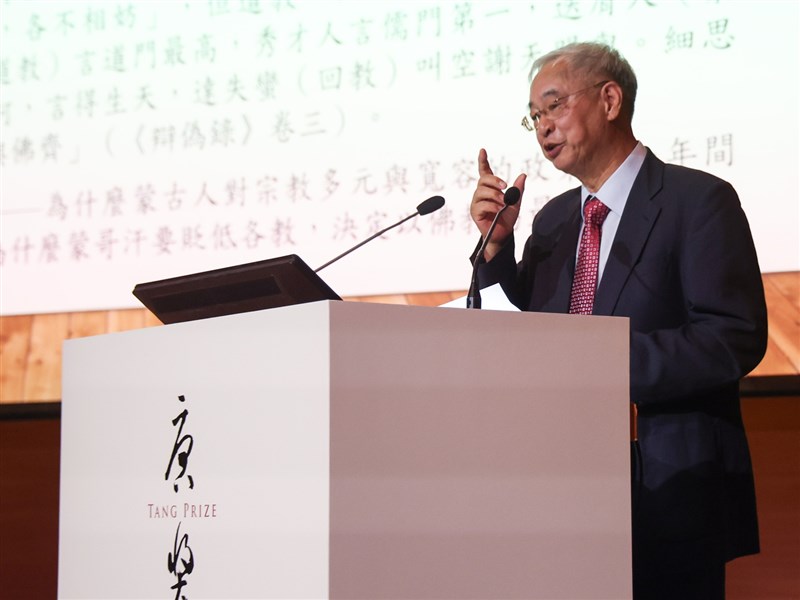
Find pivotal moments that shape history: Tang Prize Sinology laureateGe Zhaoguang (葛兆光) used his platform as the 2026 Tang Prize laureate in Sinology on Saturday to encourage historians to broaden their perspective and focus on identifying pivotal moments that shape history's course.09/19/2026 07:02 PM!['Sound-bite democracy' threatens elections: Tang Prize laureate Bruce Ackerman]() 'Sound-bite democracy' threatens elections: Tang Prize laureate Bruce AckermanThe internet is enabling demagogues to win democratic elections through rapid, emotionally charged messaging, posing a growing threat to constitutional government, 2026 Tang Prize laureate Bruce Ackerman said Saturday.09/19/2026 05:02 PM
'Sound-bite democracy' threatens elections: Tang Prize laureate Bruce AckermanThe internet is enabling demagogues to win democratic elections through rapid, emotionally charged messaging, posing a growing threat to constitutional government, 2026 Tang Prize laureate Bruce Ackerman said Saturday.09/19/2026 05:02 PM
- Business
New ECCT chair urges greater agility in Taiwan's software, energy sectors
10/10/2026 12:36 PM - Culture
BigBang throws concert in Taipei; Jay Chou shares photos with group
10/10/2026 11:50 AM - Politics
Full text of President Lai Ching-te's National Day address
10/10/2026 11:10 AM - Society
Taiwan headline news
10/10/2026 10:08 AM - Society
National Day celebrations kick off with parades, flyovers
10/10/2026 09:10 AM