TANG PRIZE/Find pivotal moments that shape history: Tang Prize Sinology laureate
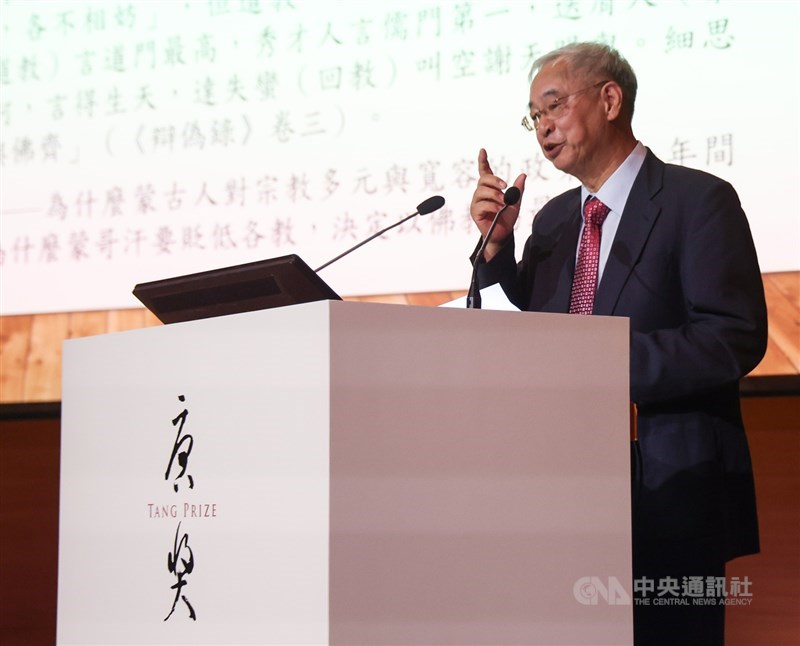
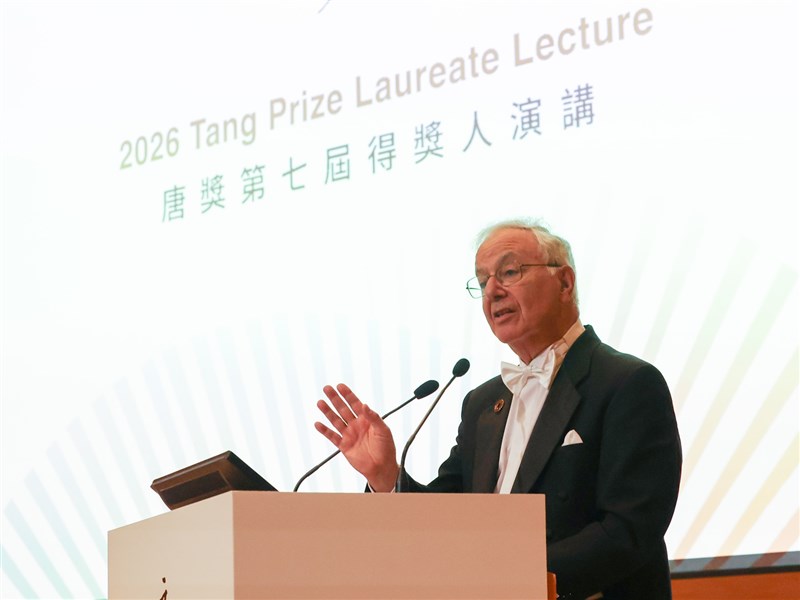
Taipei, Sept. 19 (CNA) Ge Zhaoguang (葛兆光) used his platform as the 2026 Tang Prize laureate in Sinology on Saturday to encourage historians to broaden their perspective and focus on identifying pivotal moments that shape history's course.
In a 50-minute address at the Tang Prize Laureate Lectures in Taipei, Ge said one major difference between historical and scientific research is that the latter is characterized by "continuous progress," with new findings rendering old knowledge obsolete.
"History, however, is different. Even with new findings, we still have to review history back to its ancient starting point," he said.
In his speech, he cited several key moments in Chinese history, including the 1258 Great Debate, a historical turning point that paved the way for Tibetan Buddhism to become the dominant religious force over Taoism in China.
Another example is the fact that the Ming Dynasty lost its control over Annam (today's Vietnam) in 1427.
Annam later became a stronghold in the Indochinese Peninsula and the trading hub for the whole South China Sea. It also changed China's interactions with the rising world powers in the West at that time in the Age of Discovery, he said.
The point is, Ge said, that historical research requires not only examining ancient documents through a "magnifying glass" but also through a "wide-angle lens to put historical observations, figures, and events within a broader context."
Doing so enables historians to broaden their perspectives and can help them find new paths for historical inquiries, he said.
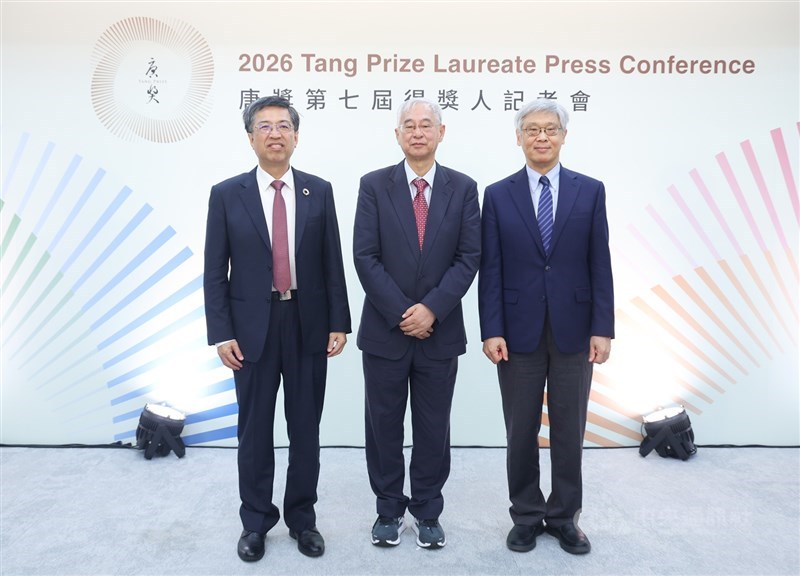
According to the Tang Prize Foundation, Ge is the first China-based scholar to receive the Tang Prize in Sinology, which recognizes research on China and related fields, including Chinese thought, history, philology, linguistics, religion, philosophy, archaeology, traditional canons, literature and art.
The renowned 76-year-old historian, who specializes in Chinese intellectual and religious history, won the prize for his mastery of ancient Chinese thought," according to the Tang Prize Selection Committee for Sinology.
"From his early work on Chan Buddhism, Daoism, and the history of philosophical thought, to his more recent series of studies on 'What is China,' he [Ge] has consistently offered original insights and groundbreaking discoveries," the committee said.
Ge's influence extends beyond the Chinese-speaking world through Japanese, Korean and English translations of his works, the Tang Prize Foundation said.
The Tang Prize is a biennial award established in 2012 by the late Taiwanese entrepreneur Samuel Yin (尹衍樑) to honor people who have made prominent contributions in four categories -- sustainable development, biopharmaceutical science, sinology, and rule of law.
![U.S. research funding cuts hurt scientific progress: Tang Prize laureates]() U.S. research funding cuts hurt scientific progress: Tang Prize laureatesThe 2026 Tang Prize laureates in Biopharmaceutical Science warned Saturday that cuts to U.S. government research funding could slow scientific progress and reduce opportunities for young researchers, with potentially long-term consequences for the scientific workforce.09/19/2026 07:39 PM
U.S. research funding cuts hurt scientific progress: Tang Prize laureatesThe 2026 Tang Prize laureates in Biopharmaceutical Science warned Saturday that cuts to U.S. government research funding could slow scientific progress and reduce opportunities for young researchers, with potentially long-term consequences for the scientific workforce.09/19/2026 07:39 PM![Ozone recovery a rare success story: Tang Prize laureate Susan Solomon]() Ozone recovery a rare success story: Tang Prize laureate Susan SolomonThe recovery of the Antarctic ozone layer represents a rare example of science and international policy successfully addressing a global environmental threat, said Susan Solomon, whose research on chlorofluorocarbons (CFCs) earned her the 2026 Tang Prize in Sustainable Development.09/19/2026 05:25 PM
Ozone recovery a rare success story: Tang Prize laureate Susan SolomonThe recovery of the Antarctic ozone layer represents a rare example of science and international policy successfully addressing a global environmental threat, said Susan Solomon, whose research on chlorofluorocarbons (CFCs) earned her the 2026 Tang Prize in Sustainable Development.09/19/2026 05:25 PM!['Sound-bite democracy' threatens elections: Tang Prize laureate Bruce Ackerman]() 'Sound-bite democracy' threatens elections: Tang Prize laureate Bruce AckermanThe internet is enabling demagogues to win democratic elections through rapid, emotionally charged messaging, posing a growing threat to constitutional government, 2026 Tang Prize laureate Bruce Ackerman said Saturday.09/19/2026 05:02 PM
'Sound-bite democracy' threatens elections: Tang Prize laureate Bruce AckermanThe internet is enabling demagogues to win democratic elections through rapid, emotionally charged messaging, posing a growing threat to constitutional government, 2026 Tang Prize laureate Bruce Ackerman said Saturday.09/19/2026 05:02 PM
- Politics
Taiwan needs a 'chain of guardian mountains' across industries: Lai
10/10/2026 01:19 PM - Business
New ECCT chair urges greater agility in Taiwan's software, energy sectors
10/10/2026 12:36 PM - Culture
BigBang throws concert in Taipei; Jay Chou shares photos with group
10/10/2026 11:50 AM - Politics
Full text of President Lai Ching-te's National Day address
10/10/2026 11:10 AM - Society
Taiwan headline news
10/10/2026 10:08 AM