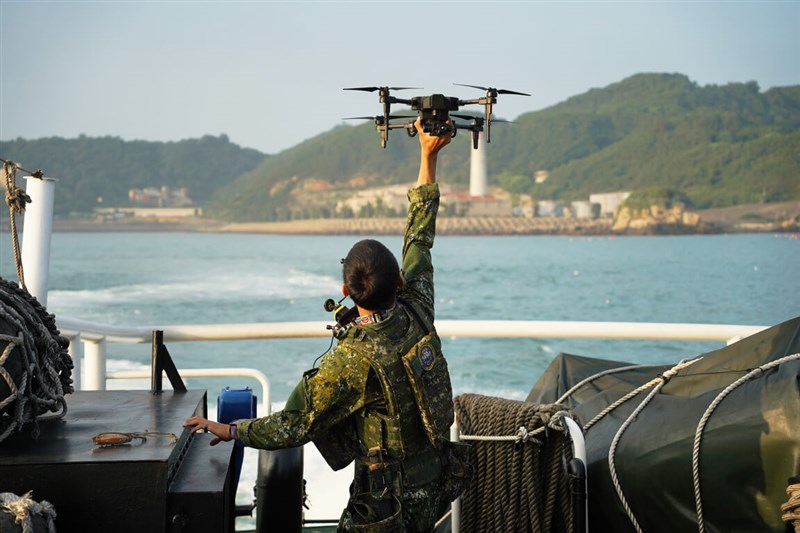
Taipei, Sept. 9 (CNA) Drones are unlikely to fundamentally alter the military balance across the Taiwan Strait despite their growing prominence in recent conflicts, an Australian security expert said Wednesday.
"I don't think drones are going to change the China-Taiwan military balance," said Sam Roggeveen, director of the International Security Program at Australia's Lowy Institute.
Speaking during a panel at the 2026 Taipei Security Dialogue, Roggeveen disputed the idea that drones are inherently asymmetric weapons through which a smaller power such as Taiwan can impose disproportionate costs on a larger adversary.
Both Taiwan and China can make use of drone technology, he said, adding that there is little reason to believe the People's Liberation Army will be significantly disadvantaged in a cross-strait drone arms race.
Drones would likewise not overturn China's advantages over the United States in a Taiwan contingency, including its proximity to the potential battlefield, greater number of regional bases and ability to concentrate on keeping U.S. forces out, Roggeveen argued.
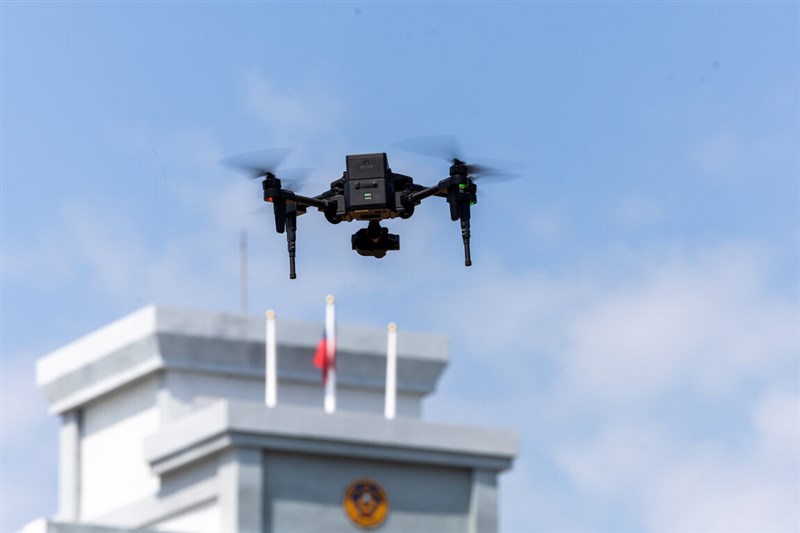
Timothy A. Walton, a senior fellow at the Hudson Institute, agreed that Taiwan should not try to match China's production scale but instead place greater emphasis on the operational value of unmanned systems.
Rather than pursuing large numbers for their own sake, Taiwan should focus on systems that solve specific operational problems and disrupt key Chinese "kill chains," he said.
Walton also highlighted the need for new classes of weapons that can be produced at greater scale and adapted rapidly through software upgrades and feedback between intelligence personnel and developers.
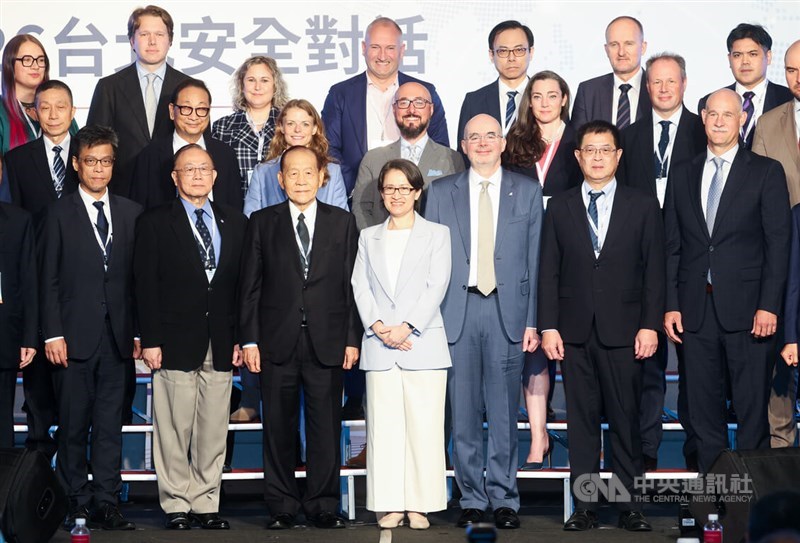
Yau Hon-min (姚宏旻), an associate professor and director of the Graduate Institute of International Security at Taiwan's National Defense University, said the issue should be viewed in terms of both capability and capacity.
Capability refers to possessing advanced autonomous weapons, technology and operational skills, while capacity means having the industrial, logistical, technological and human infrastructure necessary to keep them operating once a conflict begins, Yau said.
"Buying and making drones are not enough," he said.
Taiwan must be able to produce, repair, replace and improve its systems after a conflict begins, while integrating them into command-and-control networks under common technical standards, doctrine and procedures, Yau added.
Taiwan should not expect to produce drones more cheaply or in greater quantities than China, Yau said. Instead, it should build the industrial capacity to sustain its defenses and outlast a stronger adversary.
"The fight over the Taiwan Strait probably will not be David versus Goliath," he said. "It might be like Fabius Maximus versus Hannibal."
(By Chao Yen-hsiang)Enditem/AW
- Business
Taiwan shares open higher
09/30/2026 09:09 AM - Business
Amazon taking part in Taiwan PCB maker's private placement
09/29/2026 09:06 PM - Sports
Taiwan snatches 2 more silvers in shooting, Kurash at Asian Games
09/29/2026 08:42 PM - Business
Taiwan economic indicators stay strong for 9th straight month: NDC
09/29/2026 07:44 PM - Politics
AIDC, Corrections Agency hold counter-drone drill
09/29/2026 07:15 PM