Lithuanian edition of Wu Ming-yi's 'The Man with the Compound Eyes' released
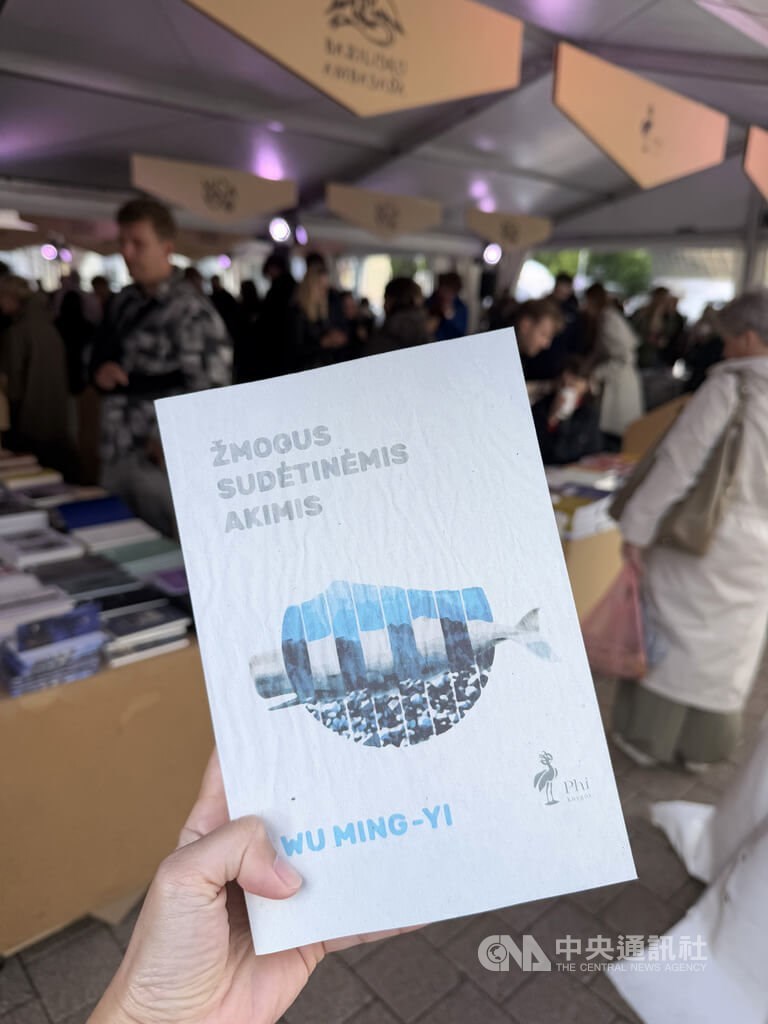
Vilnius, Sept. 20 (CNA) The Lithuanian translation of Taiwanese writer Wu Ming-yi's (吳明益) "The Man with the Compound Eyes" (複眼人) has been released in Lithuania.
The novel follows two very different people -- an outcast from a mythical island and a woman on the verge of suicide -- whose lives become unexpectedly intertwined when a tsunami sends a massive island of garbage crashing into Taiwan's coast, according to an introduction by Taiwan's Ministry of Culture.
The book was translated by Lithuanian translator Vaidotas Bačianskas, who is currently studying and living in Taiwan. In a video interview with CNA, he said the biggest challenge was not understanding the Chinese text but conveying its nuances and style in his native language.
Translating literary and cultural nuances
Bačianskas said the biggest challenge in translating his first full-length Chinese novel was conveying the subtleties and style of the original work.
"There are many subtle and beautiful expressions in Chinese," Bačianskas told CNA.
He said he spent considerable time adjusting the tone and wording to achieve natural fluency in Lithuanian while preserving the literary texture of the Chinese original.
He also added the scientific names of the many endemic Taiwanese animals and plants mentioned in the novel so that Lithuanian readers could look them up.
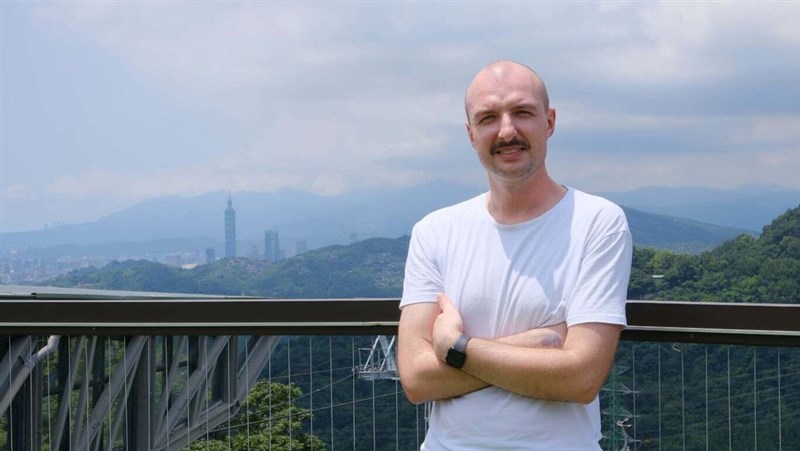
Bačianskas said he was impressed by the immersiveness of Chinese, contrasting it with European languages whose grammatical tenses can constantly remind readers that events took place in the past. He therefore intentionally rendered some chapters in the present tense in hopes of conveying a sense that "the scene was happening in front of their eyes."
He began learning Chinese somewhat incidentally after earning a bachelor's degree in theater, when he decided to take on what he considered one of the world's most difficult languages.
Bačianskas later earned a degree in Sinology in Lithuania and a master's degree in international education in China before returning to Lithuania to teach Chinese and work as an interpreter.
His desire to better understand Chinese culture eventually brought him to Taiwan, where he began studying at National Taiwan Normal University's Graduate Institute of Translation and Interpretation two years ago.
From interpreting to translating
Bačianskas first became acquainted with Wu and his work in 2023, when he served as an interpreter for the author during a visit to Vilnius, the capital of Lithuania, at the invitation of the World Federation of Taiwanese Associations.
He said it "really was fate," as he later traveled to Taiwan to study translation and happened to finish "The Man with the Compound Eyes" just as Lithuanian publisher Phi knygos contacted him. The publisher knew of his connection with Wu and invited him to translate the novel, he said.
Bačianskas said he had originally planned to translate works about Taiwan's history to help Lithuanians better understand Taiwan. He later realized, however, that a book does not have to explicitly introduce Taiwan to achieve that goal, as literature can also convey the country through imagination and the issues explored through its characters.
Connecting cultures through translation
Bačianskas has also translated the Lithuanian classic "Whitehorn's Windmill" by Kazys Boruta into Chinese as part of his master's thesis. In doing so, he deliberately retained Lithuanian cultural details while adding explanations to help Chinese readers connect with the literary world of the original work.
He believes a good literary translator should have a deep connection with the culture of the original work.
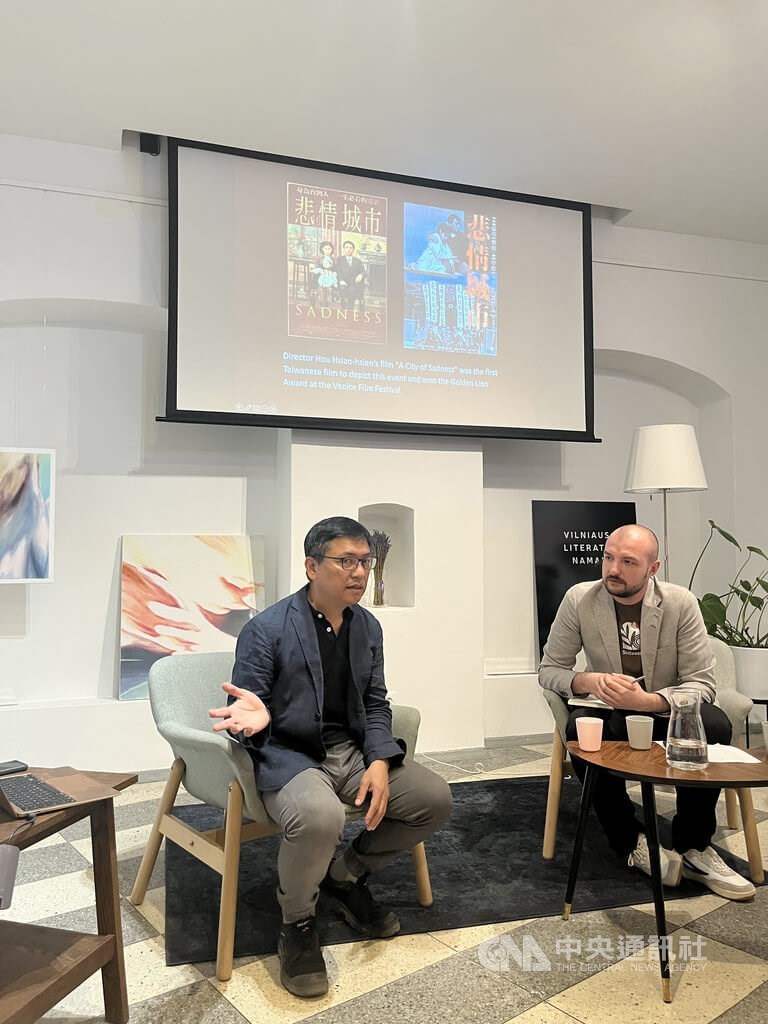
As an example, Bačianskas said he has also begun translating "Taiwan Travelogue" by Yang Shuang-zi (楊双子). To more accurately portray a scene involving the cracking and eating of sunflower seeds, he bought a bag of sunflower seeds himself so he could experience it firsthand.
He also said that seeing the scenery of Hualien County influenced his choice of words and helped with his translation work.
For Bačianskas, Taiwan's diversity within a relatively small geographic area was particularly appealing. Its combination of mountainous and coastal landscapes was a new experience for someone accustomed to Lithuania's predominantly flat terrain.
The high population density of Taiwan's cities also gave him opportunities to encounter a wide range of events and experiences in daily life, he added.
- Politics
Shen holds 1st Taipei campaign motorcade; Chiang urges debate coordination
10/11/2026 08:39 PM - Society
Firefighters work to extinguish Miaoli trash dump fire
10/11/2026 07:58 PM - Politics
Lai's National Day speech steady, avoided provoking Beijing: Scholar
10/11/2026 06:53 PM - Society
Songshan: The ups and downs of Taipei's 'other airport'
10/11/2026 06:36 PM - Society
Philippines opens largest OFW service center in Taipei, eyes expansion
10/11/2026 06:11 PM