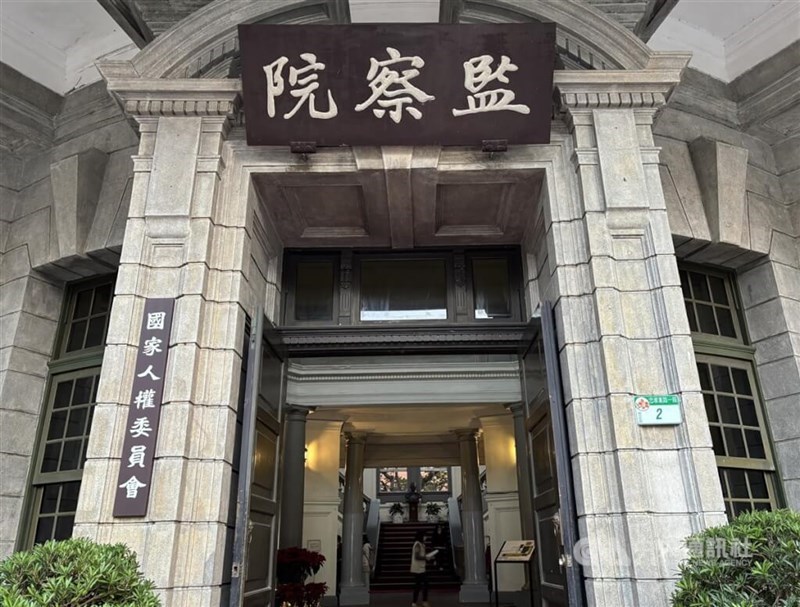
Taipei, Sept. 29 (CNA) The opposition-controlled Legislative Yuan on Tuesday voted down all 27 of President Lai Ching-te's (賴清德) nominees for the Control Yuan, Taiwan's government watchdog body.
Legislators from the main opposition Kuomintang (KMT) and the smaller Taiwan People's Party (TPP) combined to block the nominees, denying them the 57 votes in favor needed for a majority in the 113-seat chamber.
Lai named 29 nominees on June 11 for the seventh term of the Control Yuan, including Chen Yung-hsing (陳永興), former president of the Taiwan Association for Human Rights, as Control Yuan president.
Two of the nominees -- former KMT lawmaker Liao Wan-ju (廖婉汝) and former New Taipei Deputy Mayor Hsieh Cheng-ta (謝政達) -- later declined the nomination, saying they supported abolishing the Control Yuan.
The six-year terms of the previous Control Yuan members expired on July 31, with their successors originally scheduled to take office on Aug. 1.
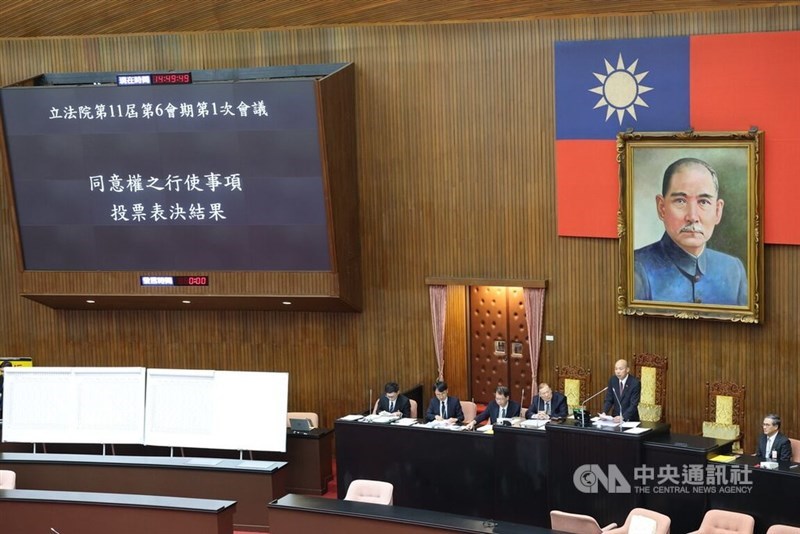
However, the Legislature did not hold a confirmation vote for the nominees during the prolonged legislative session that ended on Aug. 31. It was instead scheduled for the opening day of a new session on Tuesday.
Ahead of Tuesday's vote, Presidential Office Secretary-General Pan Men-an (潘孟安) said his office had contacted the opposition parties to try to arrange meetings with the nominees on Sept. 23 and Sept. 24, but "did not receive a positive response."
KMT legislative caucus convener Fu Kun-chi (傅崐萁) said that over the past four years, the Control Yuan had repeatedly declined to follow up on "scandals" exposed by the KMT, and instead focused on targeting the opposition.
"The KMT will cast its votes today based on this assessment," he told reporters before the session began.
Meanwhile, TPP Legislator Hung Yu-shiang (洪毓祥) said his party had decided to unanimously oppose the nominees, based on the Control Yuan's "failures" in its oversight duties and the TPP's support for abolishing the agency.
What happens to the Control Yuan now?
In a news release earlier this month, the Control Yuan said it would conduct a preliminary inquiry into the selection of Taipei Mayor Chiang Wan-an's (蔣萬安) son for an international student exchange program.
Citing a 2007 interpretation by the Ministry of Justice, the agency stated that it was still required to exercise its authority to clarify facts and conduct preliminary inquiries, even if it was unable to impose administrative fines due to the lack of Control Yuan members.
Where do the parties stand on the Control Yuan?
The decision by Hsieh Cheng-ta to decline his nomination in June sparked a round of discussion on the Control Yuan's future, with leading members of several parties expressing openness to abolishing it.
TPP legislative caucus leader Chen Ching-lung (陳清龍) said at the time that his party would press the Legislature's Constitutional Amendment Committee to begin deliberations on abolishing the Control Yuan, and would seek to reduce the body's budget to zero except for legally required expenditures.
Legislator Chuang Jui-hsiung (莊瑞雄), a member of the DPP caucus' leadership, said that while his party supports abolishing the agency, Lai, as president, is nevertheless required to nominate Control Yuan members until any constitutional amendment takes effect.
The KMT's position has been more complex.
In 2024, when legislative caucus leader Fu Kun-chi called for abolishing the Control Yuan, the KMT's Cultural Communications Committee responded that the party has long supported separation of powers between the government's five branches, and that the public expects the Control Yuan to effectively fulfill its duties.
In June, KMT Chairwoman Cheng Li-wun (鄭麗文) said the constitutional threshold for abolishing the Control Yuan made it "nearly impossible," and that the party planned to prioritize other things.
A constitutional amendment in Taiwan must be approved by a three-fourths vote in the Legislative Yuan with three-fourths of members present. It must then be ratified in a public referendum, where it must receive support from an absolute majority of all eligible voters -- not just those who cast a ballot.
- Politics
AIDC, Corrections Agency hold counter-drone drill
09/29/2026 07:15 PM - Politics
KMT, TPP legislators reject all 27 of Lai's Control Yuan nominees
09/29/2026 06:55 PM - Society
Taiwan's flu cases top 130,000 last week; drop expected in mid-October
09/29/2026 06:38 PM - Politics
- Business
Taiex ends down on higher U.S. Treasury yields, crude oil prices
09/29/2026 05:34 PM