
Taipei, Sept. 9 (CNA) A conflict across the Taiwan Strait could inflict an economic cost greater than that of World War II, American Institute in Taiwan (AIT) Director Raymond Greene said Wednesday.
Greene made the remarks in a keynote address at the 2026 Taipei Security Dialogue, organized by the Institute for National Defense and Security Research, a think tank funded by Taiwan's Ministry of National Defense.
"To deter a conflict, Taiwan doesn't need to demonstrate that it can win a war outright," Greene said.
Instead, Taiwan must convince a potential adversary that landing a large ground force on its heavily urbanized and mountainous terrain -- and sustaining it across roughly 145 kilometers of turbulent water -- would be extremely difficult, he said.
Greene said preventing such a conflict was a top priority for the administration of U.S. President Donald Trump.
Washington is pursuing that goal through high-level diplomacy, a strengthened presence and partnerships in the Indo-Pacific -- particularly along the First Island Chain -- and support for Taiwan's efforts to enhance its self-defense capabilities, he said.
Greene said an upcoming Sept. 24 U.S.-China summit in Washington, D.C., represents an opportunity to advance strategic stability based on fairness and reciprocity while reducing the risk of misunderstandings and misperceptions.
He rejected arguments that Taiwan's efforts to strengthen deterrence were provocative or that U.S. support for its defense preparations represented a policy shift.
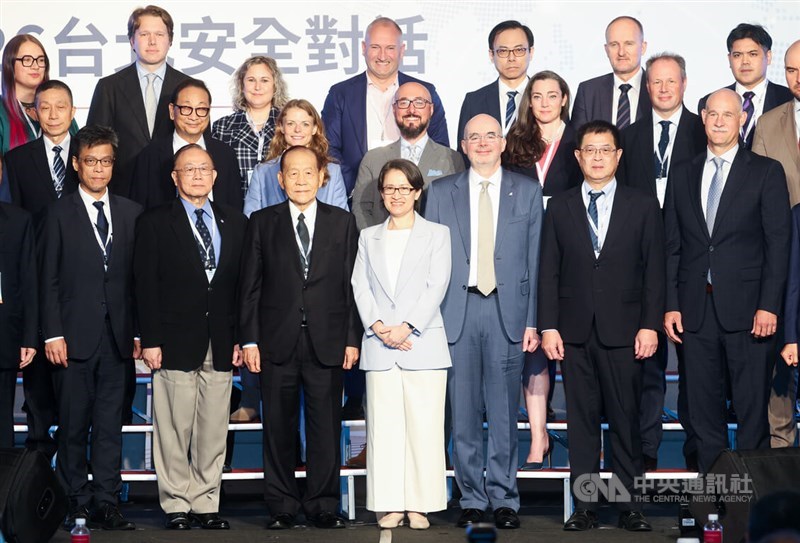
Taiwan can also learn lessons from the wars in Ukraine and the Middle East, particularly regarding asymmetric warfare, new technologies, mission command and societal resilience, Greene said.
He highlighted Ukraine's use of mission command, which delegates operational decisions to the tactical level, allowing personnel to act without waiting for instructions from above.
As a democracy, Taiwan shares Ukraine's advantage of being able to trust the loyalty of its armed forces, Greene said, adding that Taiwan's latest Han Kuang exercises demonstrated its adoption of mission-command concepts.
The exercises also reflected broader changes Taiwan has made since Russia's full-scale invasion of Ukraine in 2022, including scenarios involving Patriot missile batteries and armored units operating on city streets, he said.
"This is not an incremental change. This is a fundamental shift in how seriously Taiwan approaches its own defense, and it deserves real recognition," Greene said.
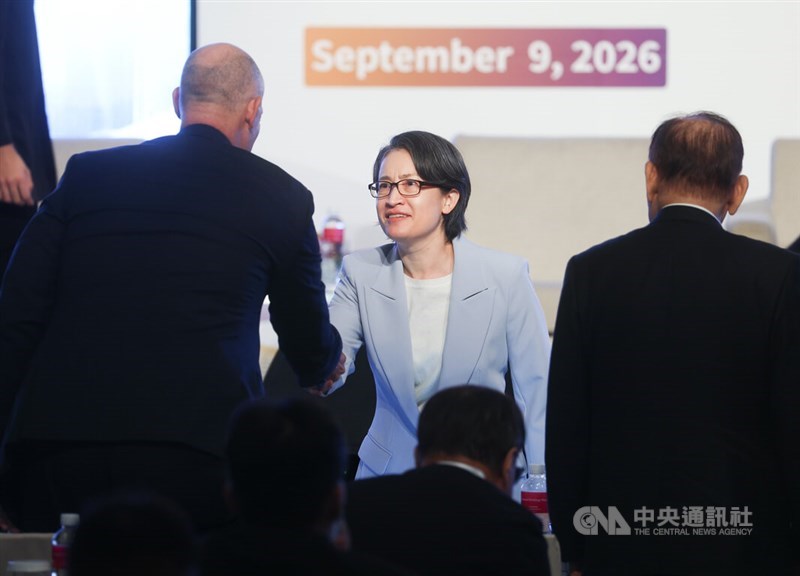
Echoing Greene's emphasis on applying lessons from recent conflicts, Vice President Hsiao Bi-khim (蕭美琴) said Taiwan must develop layered defense capabilities and a rapid technological feedback loop that enables it to adapt to different threats at a sustainable cost.
Hsiao said coastal reconnaissance and attack drones and small unmanned attack vessels included in a proposed supplementary budget would be manufactured domestically.
She was referring to a supplementary budget approved by the Cabinet last Thursday and awaiting legislative review. It allocates NT$145.7 billion (US$4.63 billion) to defense, including NT$55.9 billion for the three unmanned-system programs.
Government drone production and procurement, including civilian procurement, must use fully non-red supply chains -- a term meaning supply chains free of Chinese components -- to reduce risks and dependencies as Taiwan works toward greater domestic production, she added.
- Society
Taiwan headline news
09/30/2026 10:14 AM - Business
U.S. dollar up in Taipei trading
09/30/2026 10:12 AM - Business
Taiwan shares open higher
09/30/2026 09:09 AM - Business
Amazon taking part in Taiwan PCB maker's private placement
09/29/2026 09:06 PM - Sports
Taiwan snatches 2 more silvers in shooting, Kurash at Asian Games
09/29/2026 08:42 PM