U.S. arms sales to Taiwan may face further delays, but unlikely to stop: Scholar
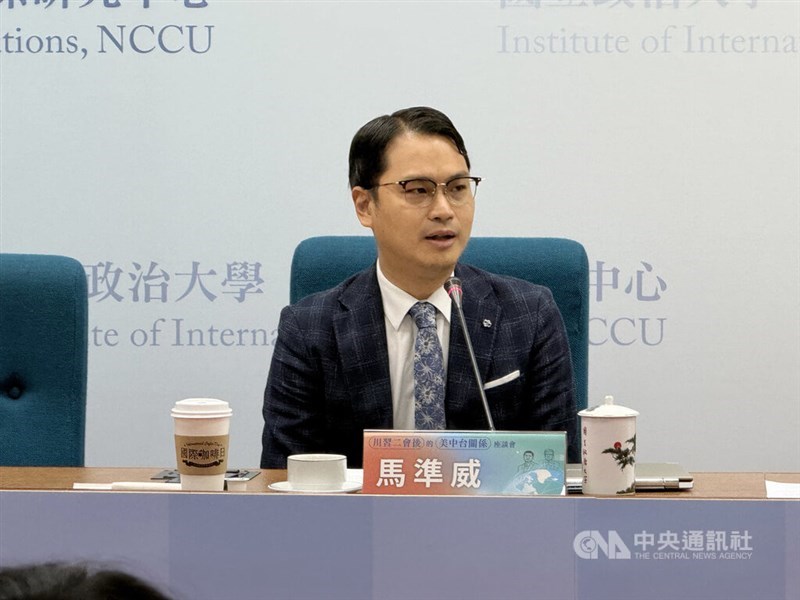
Taipei, Sept. 29 (CNA) U.S. arms sales to Taiwan could face further delays as Washington continues talks with Beijing, but are unlikely to stop, a researcher told a Taipei forum Tuesday.
Ma Chun-wei (馬準威), an assistant professor at Tamkang University's Graduate Institute of International Affairs and Strategic Studies, said he encountered several explanations for the delay during a recent research stay at the Hudson Institute in Washington.
Some pointed to limits on U.S. weapons production, while others believed Washington wanted to avoid disrupting talks with China or thought Taiwan needed more time to prepare to absorb new weapons, Ma said.
He said those explanations rested in part on a broader assessment of the risk of war.
"The view in U.S. policy circles is that the Chinese Communist Party is unlikely to invade Taiwan in the near term, or even the medium term," Ma said at the forum, hosted by National Chengchi University's Institute of International Relations.
However, this does not mean Taiwan should ease its defense preparations because the risk of an imminent attack was considered low, he said.
Ma expected arms sales to continue, particularly if Chinese pressure on Taiwan increased. Further meetings between U.S. President Donald Trump and Chinese President Xi Jinping (習近平), however, could make new announcements difficult before the end of this year, he said.
Chen Chih-chieh (陳至潔), deputy director of the NCCU institute, said arms sales could become a bargaining chip as Washington and Beijing sought to stabilize relations after Thursday's Trump-Xi meeting at the White House.
Citing Ministry of National Defense data, Chen presented figures showing 1,402 Chinese military aircraft entries into Taiwan's air defense identification zone so far this year. His slide listed 3,002 entries for January through September 2025.
Chen said the figures pointed to a reduction in military flights, which could partly reflect Beijing easing some military pressure amid its talks with Washington. Changes within China's military were another possible explanation, he said.
A reduction in flights would not necessarily mean Beijing was easing other forms of pressure, Chen said.
"Its gray-zone activities will not decrease, because they do not cost it much," he said.
Chen cautioned that any easing of military pressure could prove temporary. Beijing might also seek further U.S. concessions, including an end to arms sales to Taiwan, he said.
- Politics
- Business
Taiex ends down on higher U.S. Treasury yields, crude oil prices
09/29/2026 05:34 PM - Politics
KMT proposes NT$20,000 universal cash handout
09/29/2026 05:27 PM - Society
2 indicted after paint, feces thrown at stand-up show mocking Xi Jinping
09/29/2026 05:07 PM - Politics
Xi's WWII account obscures ROC role, evokes Japan tensions: Scholars
09/29/2026 04:30 PM