ANALYSIS/Analysts see passage of scaled-down defense bill as 'positive first step'
By Sean Lin, CNA Staff reporter
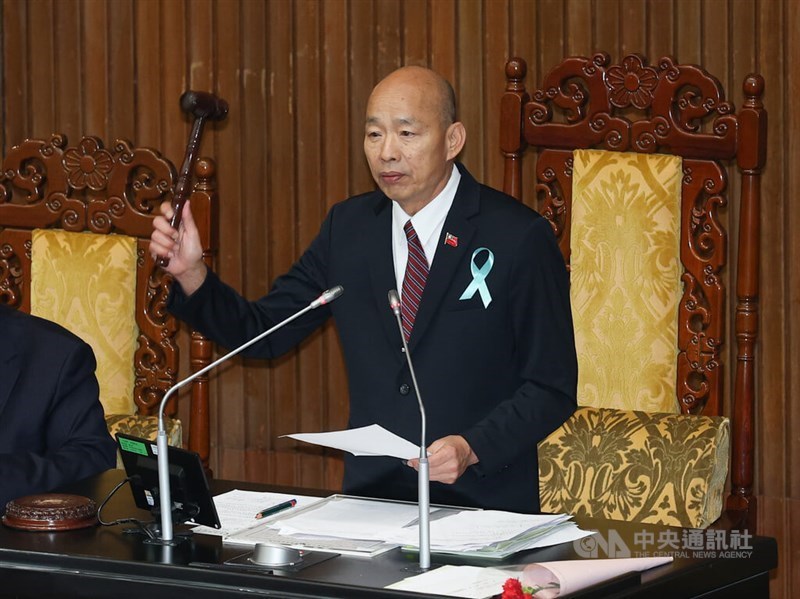
Taipei, May 9 (CNA) Taiwan's opposition-controlled Legislature approved a scaled-down defense budget on Friday, a move analysts viewed as a "positive first step" despite concerns that delays to local defense programs could hurt Taiwan's long-term military buildup.
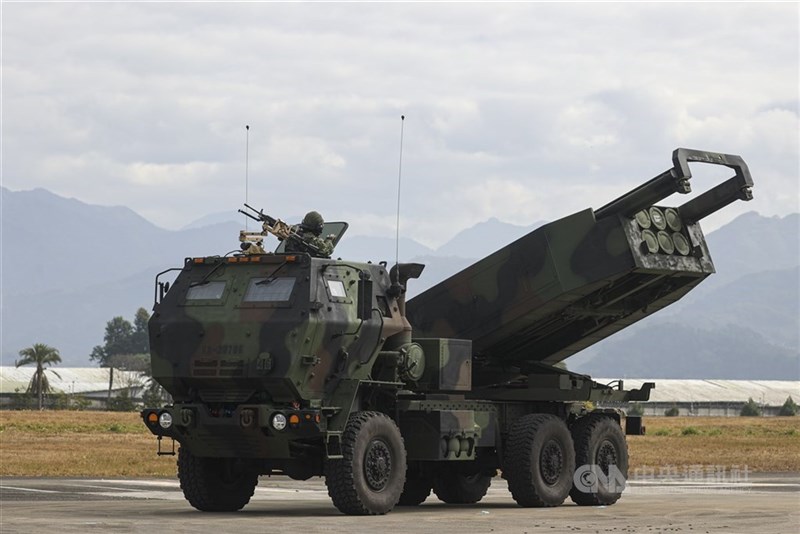
The Legislative Yuan passed an opposition-backed bill with a spending cap of NT$780 billion (US$24.9 billion), while rejecting the Cabinet's larger NT$1.25 trillion proposal.
The bill includes two key funding provisions for U.S. weapons systems. One allocates NT$300 billion for arms sales approved by the United States for Taiwan on Dec. 17, 2025, while the other earmarks NT$480 billion for a future arms package expected to be announced by Washington.
• Taiwan passes U.S. arms bill with spending ceiling of US$24.8 billion
Under the bill, both approved and future arms sales must still receive legislative approval before funding can be disbursed.
Su Tzu-yun (蘇紫雲), a research fellow at Taiwan's government-funded Institute for National Defense and Security Research (INDSR), described the passage of the bill as a "good start."
Defense bill reflects U.S.-China rivalry
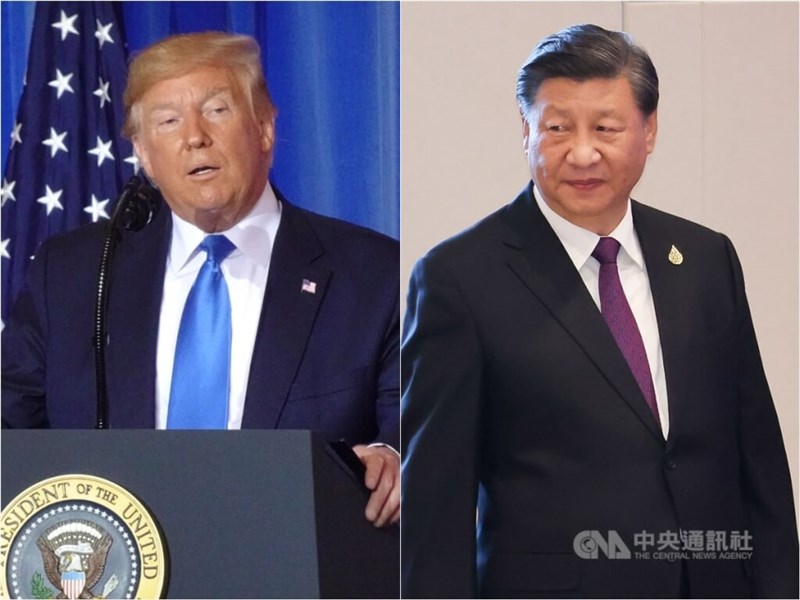
The defense bill reflected the broader power struggle between China and the U.S., Su said.
"Beijing hoped to portray Taiwan as reluctant to strengthen its self-defense capabilities in an effort to convince the U.S. to halt future arms sales," Su said. "Meanwhile, the U.S. wanted Taiwan to demonstrate its commitment to self-defense through concrete actions, not just slogans."
Amid the U.S.-China rivalry, Taiwan had assumed the role of a "chess player" rather than a "chess piece" by demonstrating its willingness to support self-defense despite intense partisan wrangling over the bill, Su said, adding that the process had strengthened Taiwan's democratic system.
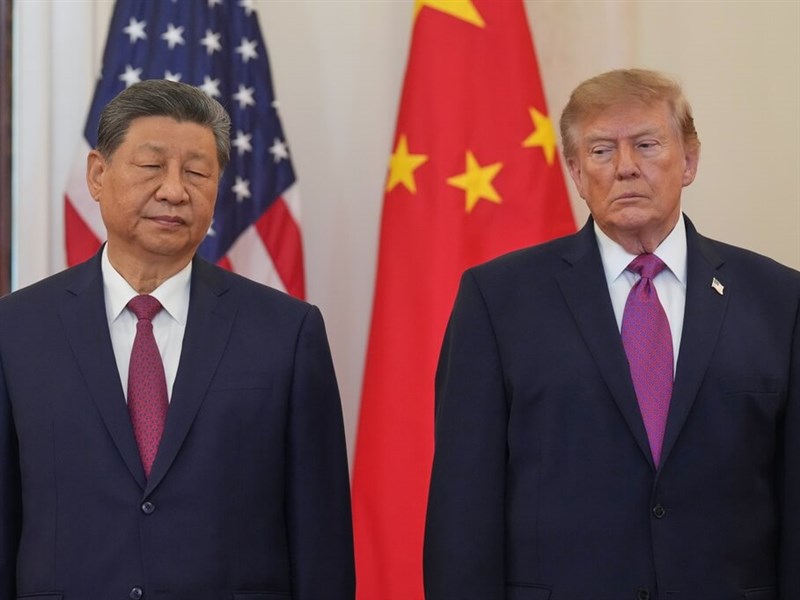
According to China's Ministry of Foreign Affairs, Chinese President Xi Jinping (習近平), during a telephone call with U.S. President Donald Trump in February, advised Trump to "exercise caution" in handling arms sales to Taiwan.
Bonnie Glaser, managing director of the German Marshall Fund's Indo-Pacific Program, told CNA that the U.S. government would likely view the bill as a "good step" and would "expect the KMT to support the additional funding" when future arms sales are announced.
The KMT had previously sponsored a bill that set the spending cap for U.S. weapons systems at NT$380 billion and directed the Ministry of National Defense (MND) to submit new supplementary budget requests after receiving letters of offer and acceptance (LOAs) from the U.S. government.
Local defense industry faces uncertainty
Su, however, expressed hope that both the ruling and opposition parties would also support Taiwan's local defense industry, preferably through future supplementary defense budgets.
"This is not for the government's own convenience, but to offer manufacturers greater stability when investing in R&D, equipment, and raw materials," he said.
Without stable financing, Taiwan's efforts to achieve "defense autonomy" could be hampered, Su said, citing Taiwan's experience developing the F-CK-1 "Ching Kuo" fighter jet program, which he said suffered from sporadic funding.
The rejection of the Cabinet's bill eliminated supplementary budget funding for major local defense industry initiatives, including plans to expand Taiwan's drone production capacity.
• DPP regrets defense budget cuts, warns of gap in Taiwan's defensive capabilities
Chieh Chung (揭仲), another researcher at INDSR, said that with funding for local defense initiatives excluded from the supplementary budget, those items would now have to be included in the general budget, potentially crowding out planned investments and operational expenditures under the MND's ongoing "Five-Year Force Buildup Plan."
The exclusion of those initiatives from the special budget has created greater uncertainty and could delay implementation or even result in funding being cut or removed entirely by the Legislature, Chieh said.
Chieh added that he agreed with the general direction of the Cabinet's supplementary defense budget bill, including provisions related to foreign military sales, direct commercial sales, and local contract production.
"The opposition parties should support initiatives that align with the general direction of the bill, even though specific items can -- and should -- be scrutinized and debated," Chieh said.
Enditem/cs
![Xi's WWII account obscures ROC role, evokes Japan tensions: Scholars]() Xi's WWII account obscures ROC role, evokes Japan tensions: ScholarsWhen Chinese President Xi Jinping (習近平) recalled U.S.-China cooperation during World War II at a White House state dinner Thursday, he left out a name central to that history: the Republic of China (ROC).09/29/2026 04:30 PM
Xi's WWII account obscures ROC role, evokes Japan tensions: ScholarsWhen Chinese President Xi Jinping (習近平) recalled U.S.-China cooperation during World War II at a White House state dinner Thursday, he left out a name central to that history: the Republic of China (ROC).09/29/2026 04:30 PM![Okinawa vote likely to boost Japan's defense buildup, Taiwan security: Scholars]() Okinawa vote likely to boost Japan's defense buildup, Taiwan security: ScholarsThe anti-Henoko "All Okinawa" camp's 12-year hold on the Okinawa governorship ended Sunday when former Naha Deputy Mayor Genta Koja unseated two-term incumbent Denny Tamaki in a six-candidate race.09/15/2026 09:34 PM
Okinawa vote likely to boost Japan's defense buildup, Taiwan security: ScholarsThe anti-Henoko "All Okinawa" camp's 12-year hold on the Okinawa governorship ended Sunday when former Naha Deputy Mayor Genta Koja unseated two-term incumbent Denny Tamaki in a six-candidate race.09/15/2026 09:34 PM![Taiwan, U.S. must counter China gray-zone pressure: Stanford scholar]() Taiwan, U.S. must counter China gray-zone pressure: Stanford scholarTaiwan and the United States need to prepare for a crisis triggered by China's intensifying gray-zone pressure rather than focus only on deterring a full-scale conflict, a Stanford University scholar said Wednesday at a symposium in Taipei.09/09/2026 07:50 PM
Taiwan, U.S. must counter China gray-zone pressure: Stanford scholarTaiwan and the United States need to prepare for a crisis triggered by China's intensifying gray-zone pressure rather than focus only on deterring a full-scale conflict, a Stanford University scholar said Wednesday at a symposium in Taipei.09/09/2026 07:50 PM

- Society
Man detained after daughter seen in public with vulgar sign
09/30/2026 01:03 PM - Politics
Military holds half-scale National Day aerial rehearsal in Taipei
09/30/2026 12:12 PM - Society
Taiwan headline news
09/30/2026 10:14 AM - Business
U.S. dollar up in Taipei trading
09/30/2026 10:12 AM - Business
Taiwan shares open higher
09/30/2026 09:09 AM