DPP regrets defense budget cuts, warns of gap in Taiwan's defensive capabilities
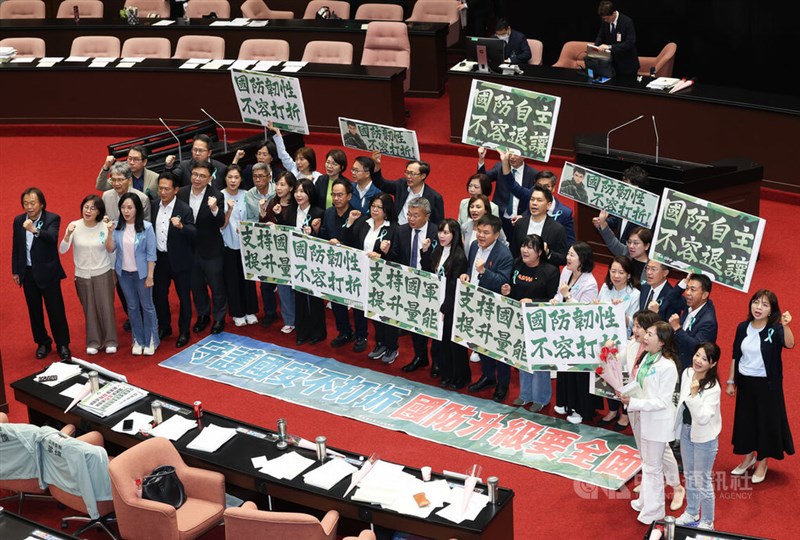
Taipei, May 8 (CNA) The ruling Democratic Progressive Party (DPP) on Friday expressed regret over a lower-than-it-had-hoped-for NT$780 billion (US$24.8 billion) budget passed earlier in the day by the opposition-controlled Legislature, warning that it could create a gap in Taiwan's defense capabilities.
Opposition parties, however, argued lawmakers must exercise their duty to prevent inflated spending.
DPP spokesperson Lee Kun-cheng (李坤城) said it was regrettable that the opposition parties ignored the government's repeated explanations of its proposed NT$1.25 trillion budget -- for the purchase of U.S. and domestically-developed weapons -- and instead passed the much-reduced NT$780 billion version.
Lee said the significant budget cuts could undermine mutual trust between Taiwan and the U.S., as well as Taiwan's commitment to maintaining its self-defense capability and regional peace, while hampering the development of its indigenous defense industry and creating gaps in future national defense.
• Taiwan passes U.S. arms bill with spending ceiling of US$24.8 billion
According to the DPP, some of the cuts would have been used to fund cooperative projects between Taiwan and the U.S. in building a multilayered air defense network, or "T-Dome," as well as unmanned vehicle systems and counter-UAV capabilities.
The "gutted" version of the defense budget raised concerns that it could stall Taiwan-U.S. defense cooperation, said Fan Yun (范雲), secretary-general of the DPP legislative caucus.
The opposition Kuomintang (KMT) and Taiwan People's Party (TPP), which used their combined legislative majority to reduce the defense spending portion of the budget, argued that the Legislature must not become a rubber stamp for the executive branch and should not simply hand over a "massive blank check" to the ruling party, potentially creating opportunities for corruption, rather than genuinely strengthening Taiwan's defense capabilities.
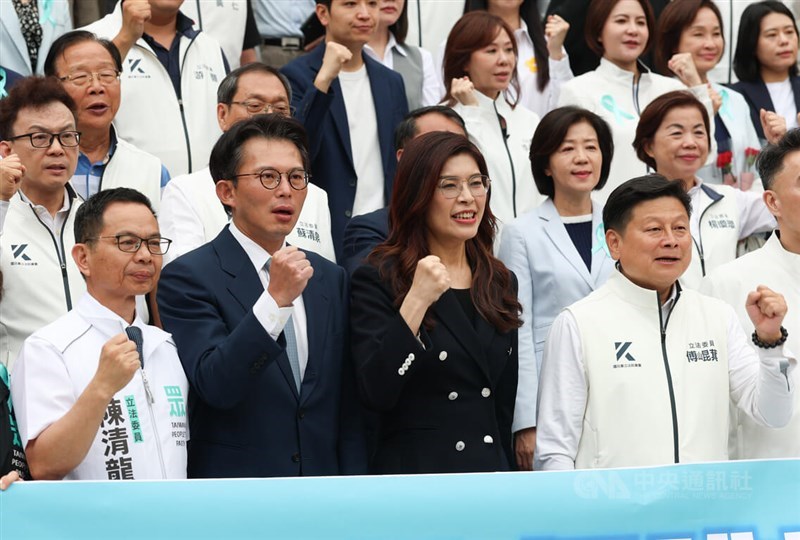
KMT Chairperson Cheng Li-wun (鄭麗文) and TPP Chairman Huang Kuo-chang (黃國昌) held a joint press conference outside the Legislative Yuan building, with Cheng highlighting that the opposition parties supported prioritizing the purchase of U.S. government-approved arms packages because the approach provided assurance for Taiwan, while excluding disputed items unrelated to defense procurement.
Huang said the TPP supported strengthening national defense, but stressed the need to uphold democratic values and safeguard taxpayers' money.
The budget included a bill jointly proposed by the two opposition parties, with two main funding provisions, including one for NT$300 billion for arms sales already approved by the U.S. for Taiwan on Dec. 17, 2025. The other was for NT$480 billion for an arms package expected to be announced by Washington in the future.
Under the approved bill, legislative approval for disbursing the funding for both provisions is contingent on a legislative review after Taiwan receives letters of offer and acceptance (LOAs) from the U.S. for specific weapons systems.
The package of weapons already approved by the U.S. included High Mobility Artillery Rocket Systems (HIMARS), M109A7 self-propelled howitzers, TOW 2B missiles, Altius-700M and 600 drones, and Javelin anti-armor missiles.
It is unclear what items will be included in the other arms package.
- Sports
Hurdler Lin wins bronze as Taiwan adds four Asian Games medals Monday
09/28/2026 07:45 PM - Sports
EASL to tip off 2026-27 season Oct. 3 with PLG's Braves
09/28/2026 07:14 PM - Society
High-speed rail adds extra northbound trains as holiday crowds swell
09/28/2026 06:58 PM - Business
TSMC, others hold recruitment campaign in Silicon Valley
09/28/2026 06:40 PM - Society
Light rail train hit by car after likely making illegal turn: Police
09/28/2026 05:44 PM