DEFENSE/Taiwan passes U.S. arms bill with spending ceiling of US$24.8 billion (update)
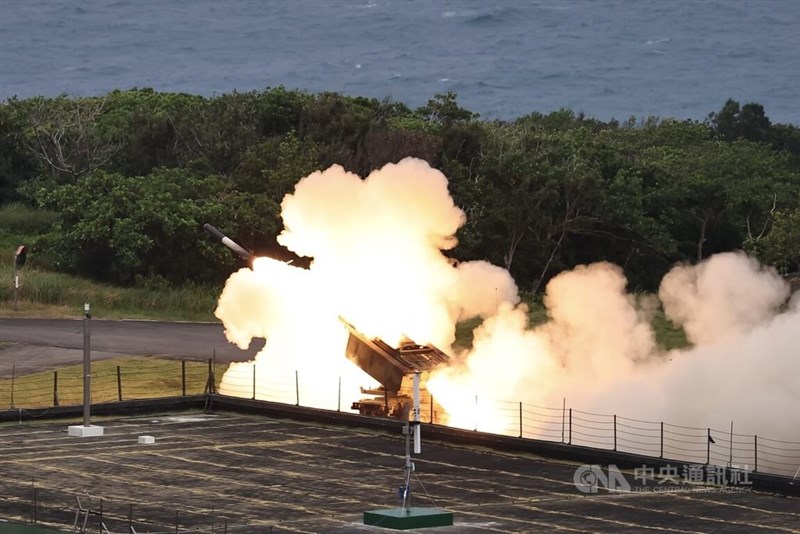
Taipei, May 8 (CNA) Taiwan's Legislative Yuan has passed a supplementary budget bill to fund the purchase of separate packages of United States military equipment, with the combined amount of spending capped at NT$780 billion (US$24.8 billion).
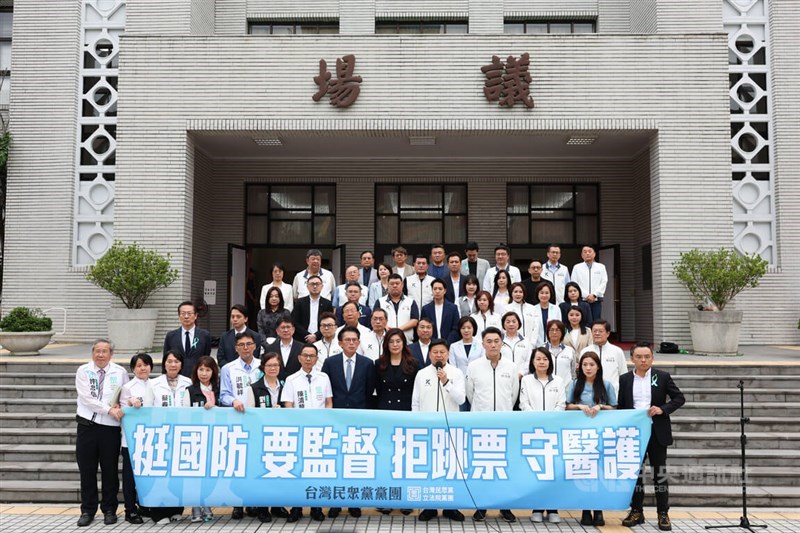
The opposition Kuomintang (KMT) and Taiwan People's Party (TPP) used their legislative majority on Friday to pass the bill, which runs from 2026 to 2033 and has two main funding provisions.
One was for NT$300 billion for arms sales already approved by the U.S. for Taiwan on Dec. 17, 2025; the other was for NT$480 billion for an arms package expected to be announced by Washington in the future.
The bill, which fell short of the NT$1.25 trillion requested by the Democratic Progressive Party (DPP) government, passed by a 59-0 margin with 48 abstentions in the 113-seat Legislature.
Legislative approval for disbursing the funding for both provisions is contingent on a legislative review after Taiwan receives letters of offer and acceptance (LOAs) from the U.S. for specific weapons systems.
Under the bill, the funding stipulated in both provisions will be allocated through annual drawdowns, with budgets and implementation schedules for each year being subject to the approval of the Legislative Yuan.
The package of weapons already approved by the U.S. included High Mobility Artillery Rocket Systems (HIMARS), M109A7 self-propelled howitzers, TOW 2B missiles, Altius-700M and 600 drones, and Javelin anti-armor missiles.
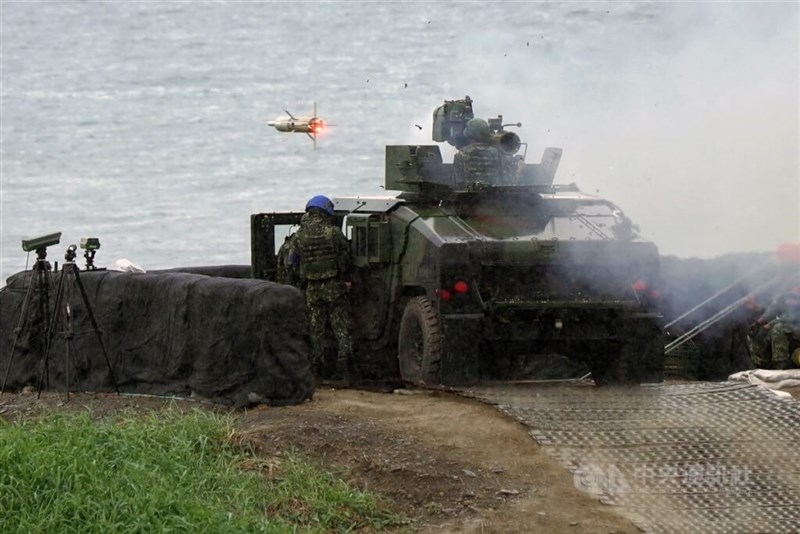
The bill did not specify the items that Taiwan anticipates acquiring from the U.S. government in the future, but it did delineate broad categories into which the weapons should fall.
They include "soft- and hard-kill integrated counter-drone systems," anti-ballistic and air defense missiles, medium- and low-altitude air defense systems, and a replenishment program for wartime stockpiles of anti-armor missiles.
Though it was not clear if the opposition-controlled Legislature would approve proposals for an additional weapons package, given the intense partisan wrangling over the bill that has taken place, KMT and TPP legislators on Friday morning voiced support for upcoming arms sales.
The combined NT$780 billion in funding was a significant increase compared with the previous versions proposed by the KMT caucus that set the amount at "NT$380 billion + n" and an alternate version proposed by TPP lawmakers that set the amount at NT$400 billion.
The "+ n" in the KMT bill referred to a provision that directed the Ministry of National Defense to submit further supplementary budget requests after receiving LOAs for future arms sales from the U.S. government.
Under the bill passed Friday, the "n" has been defined as NT$480 billion.
Taiwan is anticipating a second U.S. arms sales package to be approved by Washington, which, according to foreign media reports, has not been announced to avoid complicating U.S. President Donald Trump's planned trip to China.
The second package reportedly will cost around US$14 billion and include PAC-3 MSE interceptors and National Advanced Surface-to-Air Missile Systems (NASAMS), among other systems.
The rejection of the Cabinet's bill, however, meant there will be no funding in this budget for major initiatives involving the local defense industry, including plans to ramp up Taiwan's drone production capacity.
It also meant Taiwan will face challenges in acquiring military equipment from foreign manufacturers through direct commercial sales (DCS).
Friday's passage of the bill came amid internal division within the KMT.
Local media reported that a majority of KMT lawmakers who attended an April 29 caucus meeting voiced support for an NT$800 billion spending cap, first proposed by KMT Legislator Hsu Chiao-hsin (徐巧芯) last month, instead of the "NT$380 billion + n" bill backed by KMT headquarters.
The passage of the KMT's bill ended, at least temporarily, the political wrangling between the ruling DPP and the opposition parties that began in November last year shortly after President Lai Ching-te (賴清德) unveiled the NT$1.25 trillion spending plan.
Before allowing the Cabinet's bill to advance to committee review in March amid pressure from Washington, the KMT and TPP blocked its review 10 times, saying it lacked transparency on budget items and that past DCS transactions were often plagued by corruption and sparked major scandals.
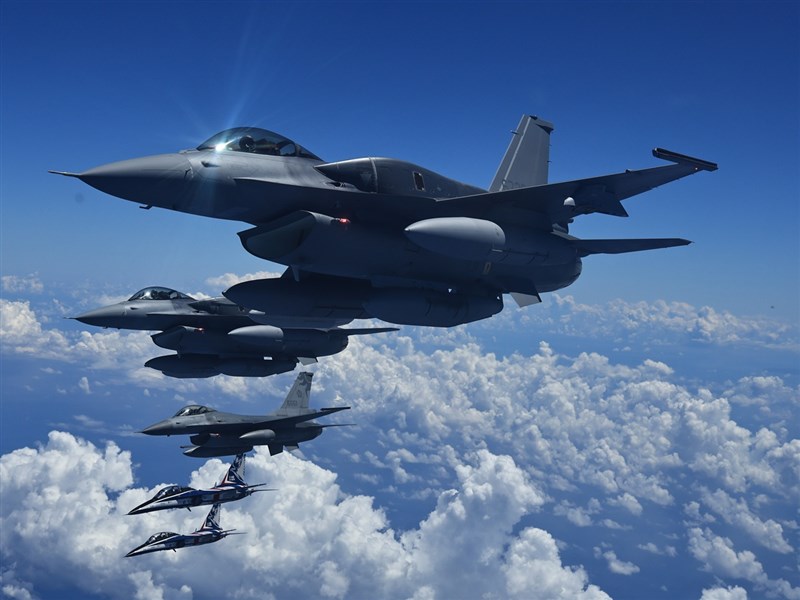
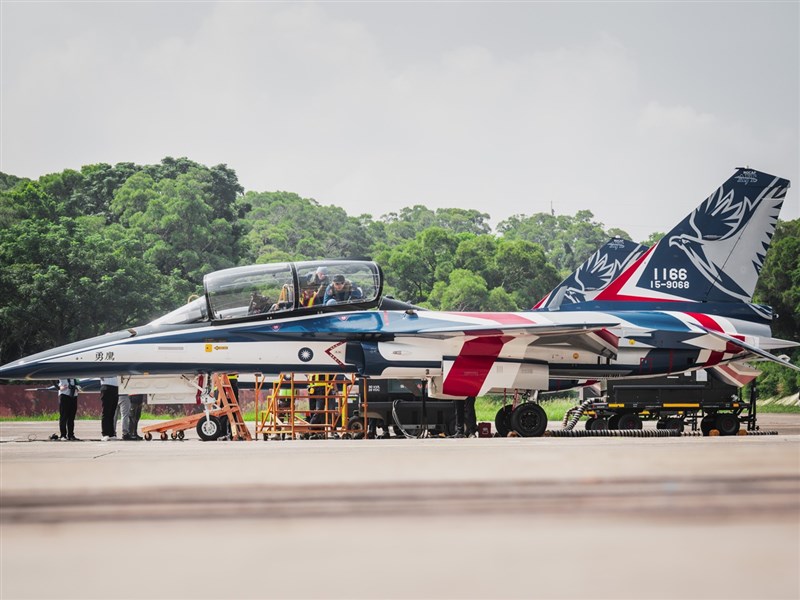
![Defense ministry releases images of jets escorting new F-16Vs]() Defense ministry releases images of jets escorting new F-16VsThe Ministry of National Defense on Saturday released footage and photos of an F-16V Block 20 and Brave Eagle advanced jet trainers escorting two F-16V Block 70s that Taiwan received a day earlier.10/03/2026 03:05 PM
Defense ministry releases images of jets escorting new F-16VsThe Ministry of National Defense on Saturday released footage and photos of an F-16V Block 20 and Brave Eagle advanced jet trainers escorting two F-16V Block 70s that Taiwan received a day earlier.10/03/2026 03:05 PM![Taiwan completes production of 66 Brave Eagle advanced jet trainers]() Taiwan completes production of 66 Brave Eagle advanced jet trainersTaiwan completed production of all 66 domestically developed Brave Eagle advanced jet trainers Thursday, with Aerospace Industrial Development Corp. (AIDC) Chairman Tsao Chin-pin (曹進平) personally piloting one of the final two aircraft to the Air Force Academy in Kaohsiung's Gangshan District.09/24/2026 03:18 PM
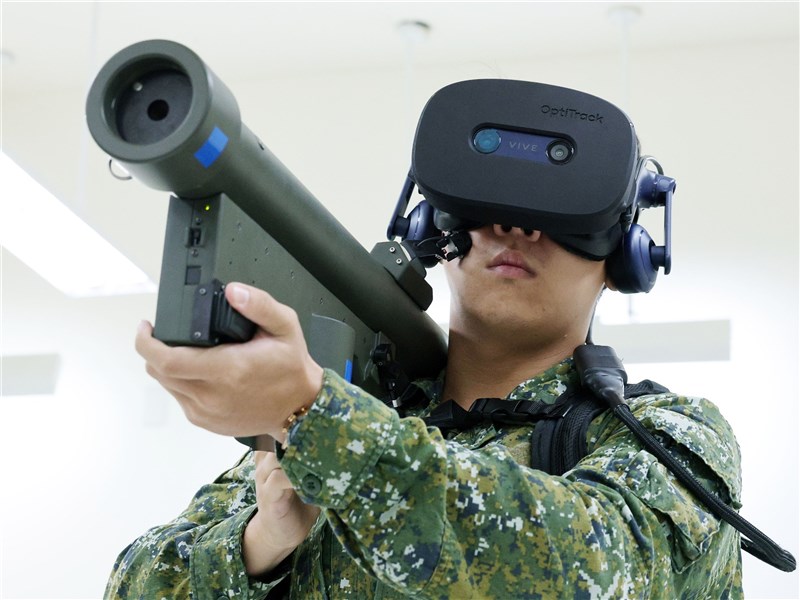
Taiwan completes production of 66 Brave Eagle advanced jet trainersTaiwan completed production of all 66 domestically developed Brave Eagle advanced jet trainers Thursday, with Aerospace Industrial Development Corp. (AIDC) Chairman Tsao Chin-pin (曹進平) personally piloting one of the final two aircraft to the Air Force Academy in Kaohsiung's Gangshan District.09/24/2026 03:18 PM![Army unveils Stinger simulators, highlights counter-drone role]() Army unveils Stinger simulators, highlights counter-drone roleTaiwan's Army unveiled simulators for United States-made Stinger missile systems Tuesday, highlighting their use in training personnel to engage airborne targets, including drones.09/22/2026 07:39 PM
Army unveils Stinger simulators, highlights counter-drone roleTaiwan's Army unveiled simulators for United States-made Stinger missile systems Tuesday, highlighting their use in training personnel to engage airborne targets, including drones.09/22/2026 07:39 PM
- Politics
Shen holds 1st Taipei campaign motorcade; Chiang urges debate coordination
10/11/2026 08:39 PM - Society
Firefighters work to extinguish Miaoli trash dump fire
10/11/2026 07:58 PM - Politics
Lai's National Day speech steady, avoided provoking Beijing: Scholar
10/11/2026 06:53 PM - Society
Songshan: The ups and downs of Taipei's 'other airport'
10/11/2026 06:36 PM - Society
Philippines opens largest OFW service center in Taipei, eyes expansion
10/11/2026 06:11 PM