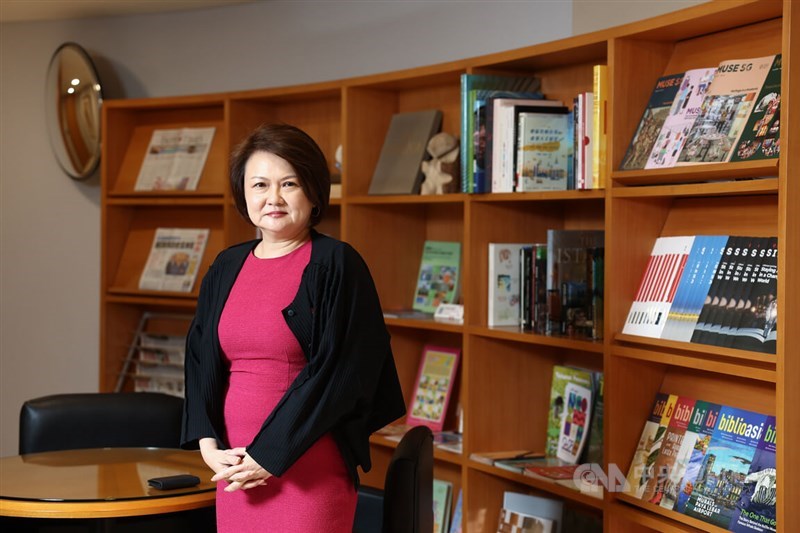
By Sean Lin, CNA staff reporter
As countries seek to ride the global AI tide, Singaporean Representative to Taiwan Foo Teow Lee (符秀麗) sees an opportunity for a "complementary partnership" between Taiwan and her country, citing Taiwan's world-leading expertise and shared cultural affinity.
Foo, who assumed her current post in January, was commenting on ways Taiwan and Singapore could strengthen bilateral cooperation in a recent interview with CNA to mark her first 100 days in office.
Singaporean Prime Minister Lawrence Wong (黃循財) recently announced that his administration plans to invest S$800 million (US$628.36 million) in the Semiconductor Research, Innovation and Enterprise (RIE) Flagship initiative to position Singapore as a key R&D hub in the semiconductor industry, she said.
Taiwan produces over 60 percent of the world's semiconductors and more than 90 percent of advanced chips, she noted, and some Taiwanese semiconductor manufacturers, most notably MediaTek, have established operations in Singapore.
The people of Taiwan and Singapore both speak Mandarin and share cultural similarities, making Taiwan a "natural partner" for nurturing Singapore's semiconductor talent, she said.
Describing the semiconductor supply chain as "very long," Foo added that Singapore holds strengths in areas such as packaging.
"I believe we can identify our respective strengths and form a complementary partnership in the semiconductor ecosystem," she said.
Defense budget reflects 'self-reliance'
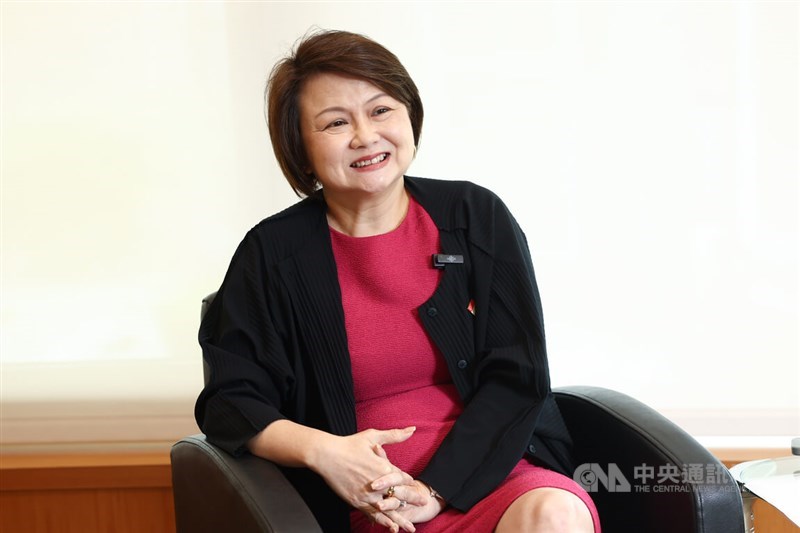
Asked why Singapore, despite being a peaceful city-state, has spent more than 3 percent of its GDP on defense for two consecutive years -- higher than most NATO members -- Foo said the majority of Singaporeans have no illusions about relying on others for survival.
Singapore was ranked the most peaceful country in Asia and sixth in the world on the 2025 Global Peace Index.
"We have always believed that peace and security cannot be taken for granted. Because we cherish peace, we know well that peace is maintained through credible deterrence," Foo said.
"We do not assume threats will arise or present themselves, but we must plan for a rainy day and ensure that we can safeguard our people's interests and safety under all circumstances," she said.
"Singapore's defense expenditure is expected to hold steady at around 3 percent [of GDP]," she said, and the country is ready to further increase spending if necessary.
"The survival and security of Singapore ultimately rely on ourselves. We cannot expect the help of others in times of crisis or emergency," she added.
Meanwhile, in Taiwan, a proposed NT$1.25 trillion (US$39.69 billion) special defense budget to pay for American weapons systems and major local initiatives, including drones and a multi-layered air defense system, remains under review after President Lai Ching-te (賴清德) unveiled it in November 2025.
The opposition Kuomintang (KMT) and Taiwan People's Party (TPP) blocked the review of the bill 10 times using their combined legislative majority, and only in March allowed it to advance to committee review amid pressure from Washington.
The KMT and the TPP, which disagree with the budget's scope, have proposed their own versions of the spending bill, which exclude local initiatives and anticipated U.S. arms sales packages that have not been notified to Congress.
Enditem/AW
- Society
DPP township council candidate dies after collapsing on stage
09/23/2026 11:52 AM - Science & Tech
Taiwan part of WorldSkills Competition opening ceremony in China
09/23/2026 10:53 AM - Business
U.S. dollar down in Taipei trading
09/23/2026 10:17 AM - Society
Taiwan headline news
09/23/2026 10:05 AM - Business
Taiwan shares open higher
09/23/2026 09:15 AM