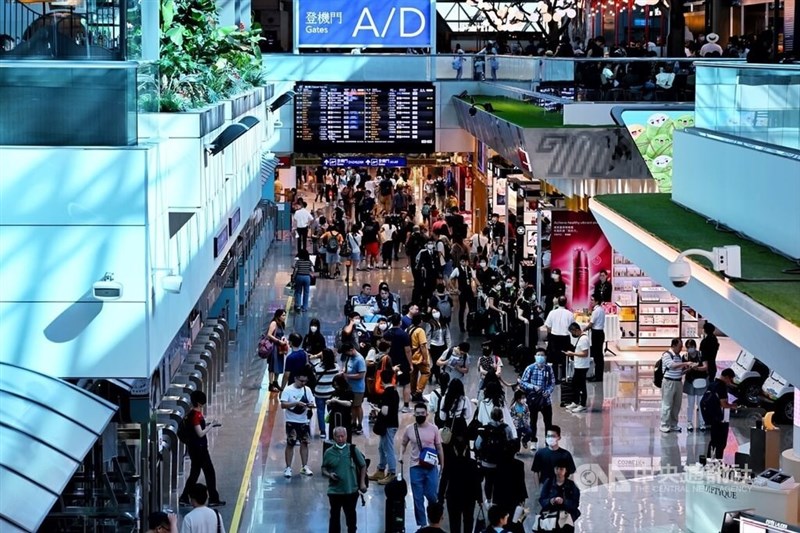
Taipei, May 3 (CNA) Taiwan Taoyuan International Airport has strong potential to become a major transfer hub between Southeast Asia and North America, but still faces constraints in route diversity, airline density and terminal capacity, experts said.
Taoyuan handled 22.1 percent of the 9.82 million passengers traveling from Southeast Asia to nine destinations in North America directly connected to the airport, the Institute of Transportation under the Ministry of Transportation and Communications said in a report released in March.
The figure was second only to Incheon International Airport's 23.6 percent and ahead of rivals including Tokyo's Haneda and Narita airports and Hong Kong International Airport, the report said.
However, Hwang Tay-lin (黃泰林), a professor of aviation management at Chang Jung Christian University, said that transfer passengers account for only about 15 percent of total traffic at Taoyuan Airport.
Compared with established hubs such as Singapore Changi, Incheon and Hong Kong, Taoyuan still lags in route diversity, airline density and terminal capacity, Hwang said.
Nevertheless, he said airlines are more likely to expand their destination networks once passenger volumes reach a larger scale.
Providence University tourism professor Huang Cheng-tsung (黃正聰) said Taoyuan remains attractive to transfer passengers, particularly compared with more congested hubs such as Hong Kong and Singapore Changi.
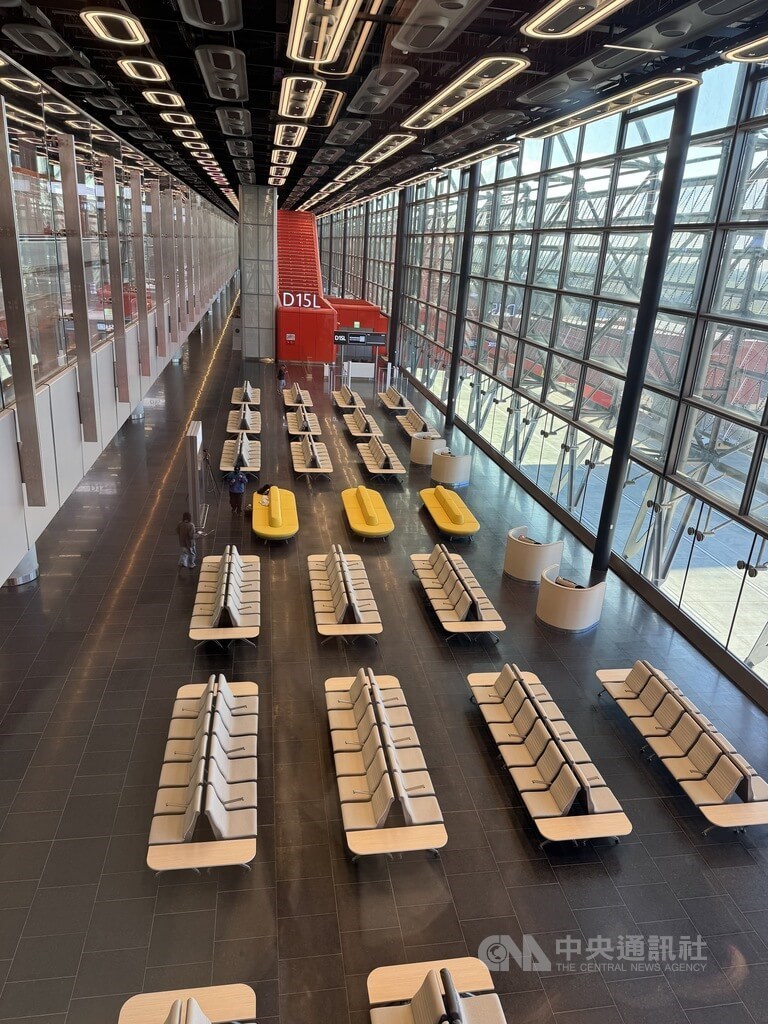
The expected completion of Terminal 3 and a third runway will increase capacity by around 50 percent, improving service quality and competitiveness, Huang said.
Taiwan: A natural transportation hub
From an airline perspective, EVA Air sees Taiwan's geographic position as a key advantage.
Chung Kai-cheng (鍾凱成), executive vice president of EVA Air's corporate planning division, told CNA that Taiwan sits at the heart of East Asia and serves as a natural hub linking North America with the region.
Flights between Taiwan and North America typically take 11 to 16 hours, while flights to major Southeast Asian cities are generally under four hours, Chung said.
That allows for transfer times of about two to four hours, giving passengers enough time to rest before continuing long-haul journeys, he said.
Chung added that Taiwan's advanced semiconductor industry is also driving business travel demand between Taiwan and the United States, with spillover effects extending to Southeast Asia.
Airlines are already moving to capitalize on that potential by expanding their networks.
EVA Air is set to launch direct flights to Washington, D.C., in July, while Starlux Airlines will begin direct service to Prague in August, its first European destination.
Starlux Chief Strategy Officer Simon Liu (劉允富) told CNA that Prague was chosen for its central location in Europe, offering connections to Germany, Austria and Poland, while also growing in popularity among Taiwanese travelers.
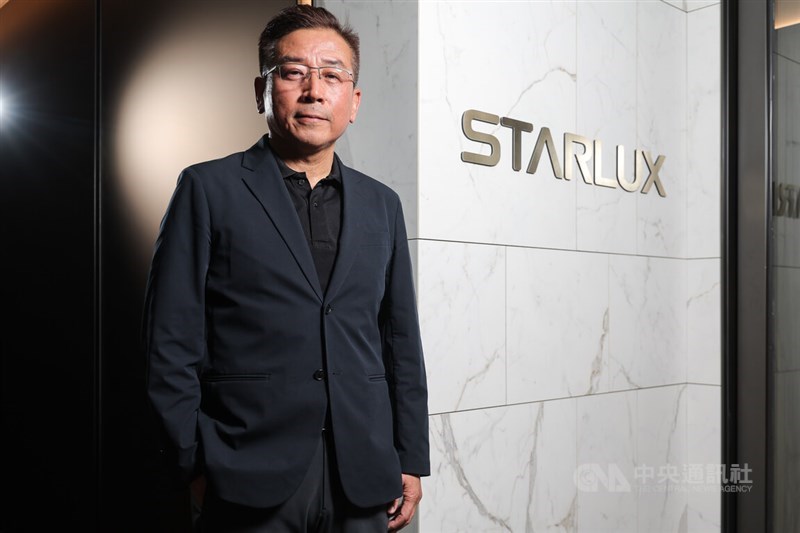
Liu said demand for business travel is expected to grow as Taiwan strengthens economic and technological ties with the Czech Republic.
He noted that Taiwan Semiconductor Manufacturing Co.'s first European fab, now under construction in Dresden, Germany, along with other technology firms expanding into the region, is expected to help create a semiconductor cluster in Central Europe.
Liu added that Prague currently has direct air links to only four Asian cities -- Beijing, Seoul, Tokyo and Taipei. Through flight scheduling, Starlux expects to attract connecting passengers from Southeast Asia, Japan, South Korea, Hong Kong and Macau via Taipei, with transfer travelers projected to account for about 20 percent of traffic on the Prague route, he said.
Government optimism
Government officials also see strong growth ahead.
Chen Chao-yu (陳昭諭), a division chief at the Civil Aviation Administration, said Taiwan's international passenger traffic is projected to reach a record 62 million in 2026, driven by fleet expansion, increased transfer traffic between North America and Southeast Asia, and additional routes by foreign carriers.
Tourism Administration Deputy Director Huang Ho-ting (黃荷婷) said increasing flight volume is crucial for Taiwan's tourism sector, noting that more than 94 percent of visitors arrive by air.
To further attract transit passengers, the agency plans to introduce half-day transit incentives aimed at encouraging stopovers and stimulating airport-area businesses, Huang said.
- Society
DPP township council candidate dies after collapsing on stage
09/23/2026 11:52 AM - Science & Tech
Taiwan part of WorldSkills Competition opening ceremony in China
09/23/2026 10:53 AM - Business
U.S. dollar down in Taipei trading
09/23/2026 10:17 AM - Society
Taiwan headline news
09/23/2026 10:05 AM - Business
Taiwan shares open higher
09/23/2026 09:15 AM