
Taipei, April 13 (CNA) The potential introduction of Indian migrant workers to Taiwan will proceed only after careful review, Minister of Labor Hung Sun-han (洪申翰) said Monday, amid growing public debate over the policy.
In a Facebook post, Hung said any implementation would "depend on demand from industries" and "whether India's proposed framework meets Taiwan's requirements."
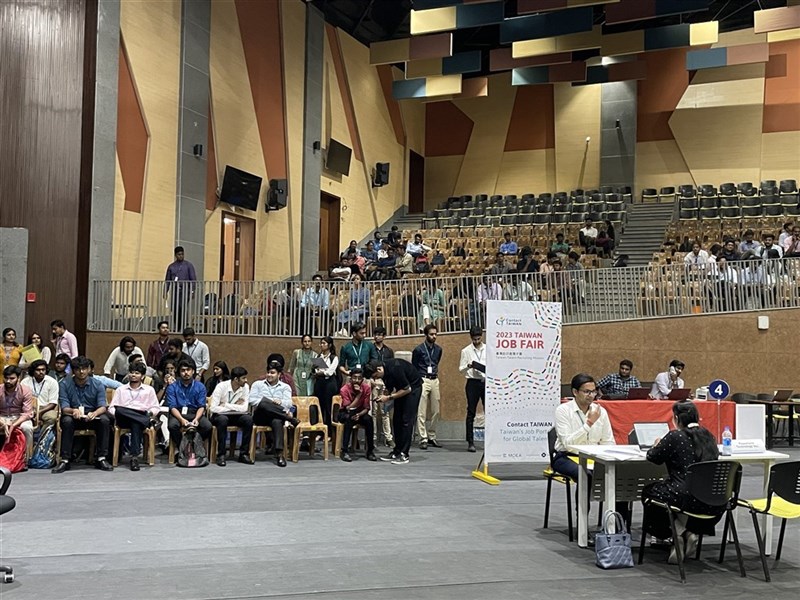
Hung told the Legislature on Thursday that the first group of Indian workers could arrive as early as the end of 2026.
Taiwan and India signed a memorandum of understanding (MOU) in February 2024 to address Taiwan's labor shortage.
The MOU was sent to the Legislative Yuan for review in mid-2024 and received cross-party backing, prompting the Ministry of Labor (MOL) to begin follow-up negotiations with India, Hung said.
As Taiwan faces ongoing labor shortages, Hung said the ministry has a responsibility to diversify sources of foreign labor -- a move anticipated by many industries -- and has spent the past two years assessing relevant conditions.
Public concerns
Public concern has also surfaced. A petition launched on the National Development Council's public policy participation platform on April 3 called on the MOL to halt the plan and prioritize "public safety and gender equality."
The petition had garnered more than 34,000 signatures as of 4 p.m. Monday.
A statement in the petition says that according to international news and reports from India (such as recent cases involving sexual assault in an ambulance and attacks on foreign tourists), many perpetrators of serious sexual offenses had no prior criminal records before committing their crimes in the South Asian country.
"This demonstrates that police clearance certificates are wholly incapable of filtering out potential risks related to sexual offenses or cultural differences," it says.
The statement adds that the government has yet to present any concrete assessment on whether the credibility of India's administrative system and the rigor of its document issuance procedures are sufficient to meet Taiwan's high standards for public safety.
"We refuse to place the personal safety of Taiwanese women on a labor source country that lacks transparency and exhibits significant disparities from our own values regarding gender equality," it says.
The language of the petition referenced fears among some in Taiwan about the risk of Indian workers engaging in sexual violence.
A 2018 Thompson Reuters Foundation survey of 550 experts on women's issues ranked India as the world's most dangerous country for women, ahead of Afghanistan and Syria.
Political parties' stance
Lin Pei-hsiang (林沛祥), secretary-general of the opposition Kuomintang's (KMT) legislative caucus, said Monday that the party "fully opposes" the policy, citing what he described as high risks.
Lin argued that Taiwan already faces serious issues with undocumented migrant workers and should not expand labor sources without first addressing those problems.
The lawmaker also questioned whether the issue is a genuine labor shortage or a demand for lower-cost labor.
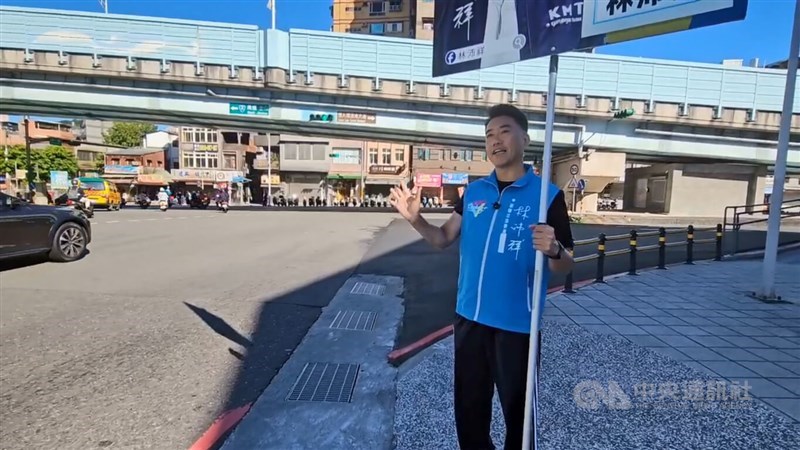
He called on the Cabinet to provide a comprehensive explanation of the policy rationale and industry demand, while other KMT lawmakers urged stronger supporting measures and better public communication.
Meanwhile, the ruling Democratic Progressive Party's (DPP) legislative caucus said the government has taken note of differing views and called for rational discussion.
According to DPP lawmakers, the policy is intended to address labor shortages. They stressed that while the government should respond to public concerns, such concerns should not lead to discrimination.
The MOL should thoroughly evaluate the policy, taking into account industry needs, public opinion, and supporting measures, they added.
- Politics
- Society
Scattered showers expected in Greater Taipei, eastern Taiwan Saturday
10/03/2026 10:41 AM - Society
Taiwan headline news
10/03/2026 10:22 AM - Sports
'Hao-yu like that?' A deep dive into Lee's rookie MLB season
10/03/2026 10:00 AM - Sports
Taiwan boosts medal haul in multiple events at Asian Games on Friday
10/02/2026 08:55 PM