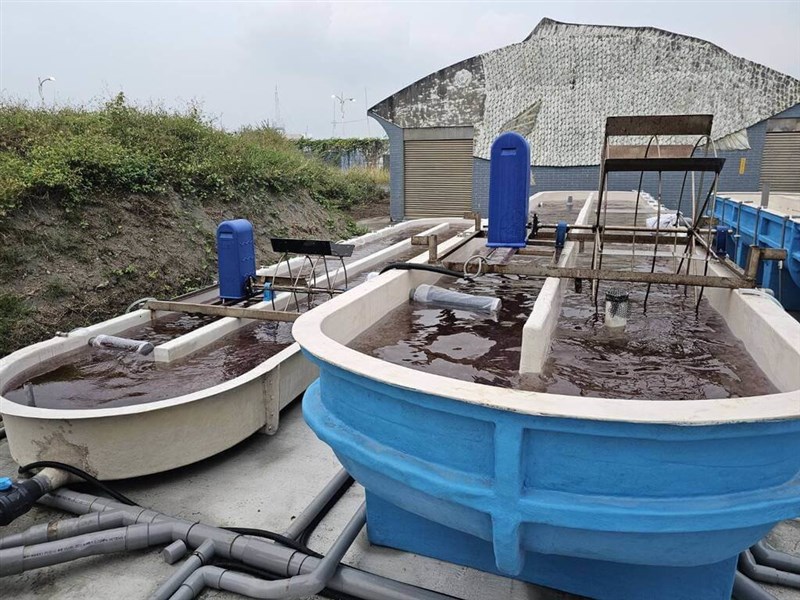
Taipei, July 3 (CNA) The Fisheries Research Institute has developed a technology that reduces the power needed to cultivate a methane-cutting alga by over 90 percent, making the process more economical, the Ministry of Agriculture (MOA) said Friday.
The alga, called Asparagopsis, is typically cultivated by using blowers to continuously mix air into water tanks to keep it afloat, a process that consumes large amounts of electricity.
In a statement, the MOA said the institute developed a system that uses solar panels to generate power and replaces conventional blowers with an energy-saving variable-frequency waterwheel, which cuts energy consumption during the cultivation process by more than 90 percent.
Though the battle to combat climate change has focused primarily on reducing carbon dioxide emissions, cutting methane emissions is considered among the fastest opportunities available to slow the rate of global warming immediately.
A major source of methane is livestock, but the institute said that adding 5 percent Asparagopsis powder to cattle and sheep feed reduced methane emissions by 99.78 percent in an in vitro bovine rumen fermentation test.
The institute said it plans to promote its new power-saving system to private aquaculture farmers, hoping to foster a green transition in Taiwan's livestock sector toward a low-emissions environment.
- Business
Taiwan shares close lower as tech stocks fall on AI concerns
09/15/2026 04:33 PM - Society
Over 1,000 apply for 15 new Taiwan High Speed Rail driver positions
09/15/2026 04:28 PM - Business
U.S. dollar closes sharply higher on Taipei forex market
09/15/2026 04:11 PM - Culture
Tamkang, Sorbonne academics receive Taiwan-France Cultural Award
09/15/2026 04:09 PM - Business
Micron Taiwan union rejects one-time reward package
09/15/2026 03:23 PM