Tibet supporters in Taipei mourn activist, protest China's ethnic unity law
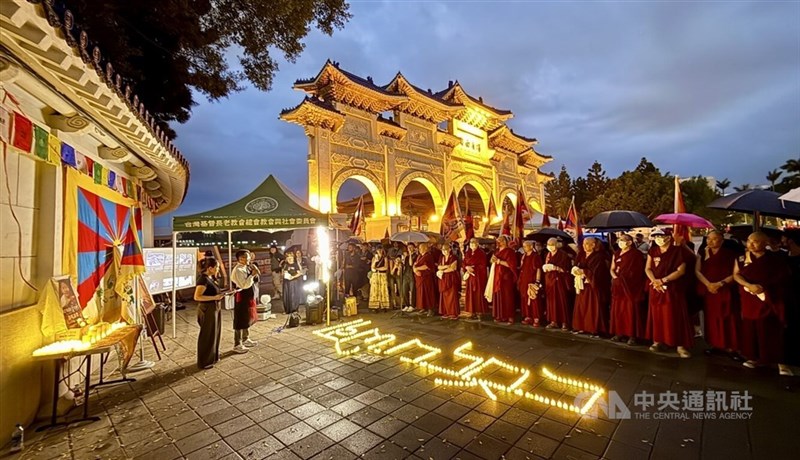
Taipei, July 15 (CNA) Around 300 people gathered at Liberty Square in Taipei on Wednesday evening to commemorate Tibetan activist Lobga Rangzen, who died after self-immolating outside the United Nations (U.N.) headquarters in New York earlier this month.
The gathering also protested China's Ethnic Unity and Progress Promotion Law, which took effect on July 1 and has been criticized by rights groups as threatening the languages, cultures and identities of ethnic minority groups in China.
The organizers, including the Tibet Religious Foundation of His Holiness the Dalai Lama, said around 300 people had attended the gathering by about 7:30 p.m. The crowd included Tibetans living in Taiwan, human rights advocates and Taiwanese supporters.
One Taiwanese participant, Tess Cheng, said Taiwan, Tibet, Hong Kong and Xinjiang had long faced threats from "a very powerful and evil regime," referring to China.
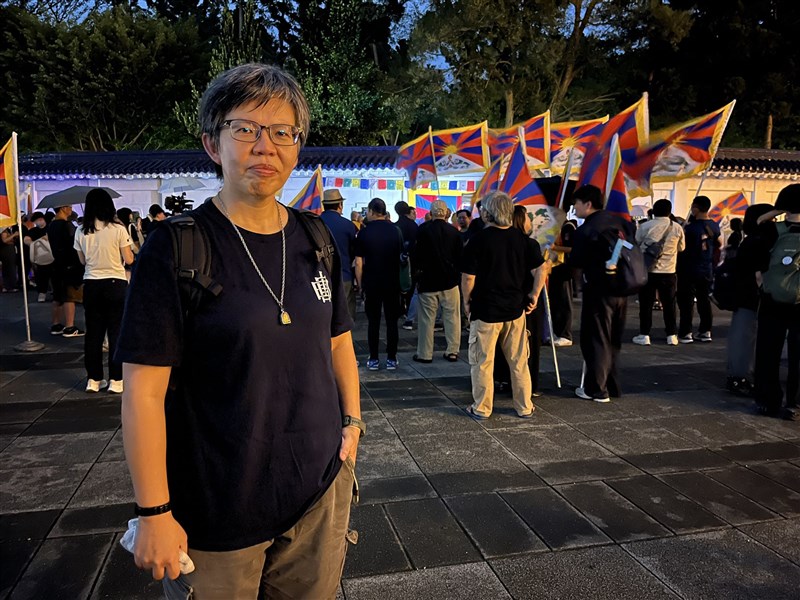
"Even though this incident happened overseas, I believe the threats we face are essentially the same," Cheng said. "As a Taiwanese, I deeply sympathize with what happened."
Kelsang Gyaltsen Bawa, chairman of the foundation, said Lobga Rangzen had set only his own body ablaze, "but what he illuminated was the darkness Tibet has still been unable to escape for more than 70 years."
As head of the Tibetan government-in-exile's representative office in Taipei, he described China's new law as "a totalitarian tool packaged as legislation" that sought to impose thought control and erase cultures.
During the event, participants sang the Tibetan national anthem, observed a moment of silence, offered khatas -- traditional Tibetan ceremonial scarves -- and listened as monks recited prayers. They later tore up copies of China's new law before walking around Liberty Square three times.
Lobga Rangzen, whose birth name was Lobsang Palden, died from severe burns on July 2 after setting himself on fire outside the U.N. headquarters in New York. Tibetan activists said he livestreamed the act to protest Chinese oppression and call for greater international attention to Tibet.
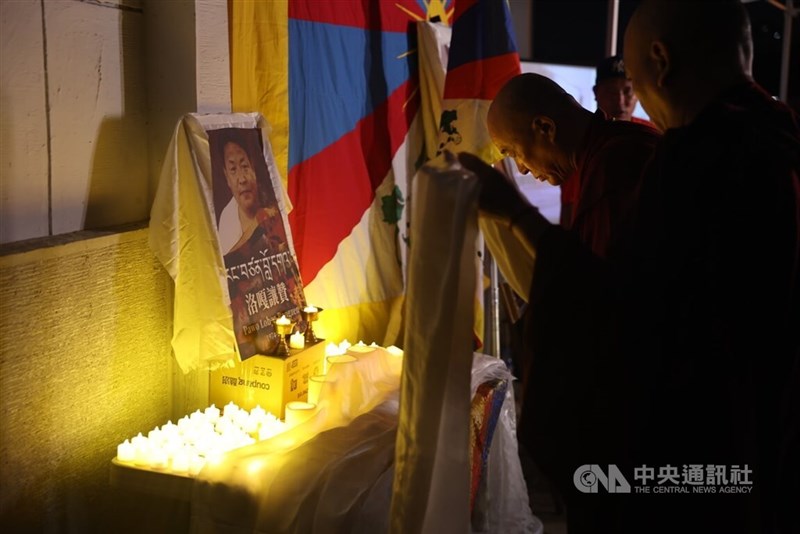
In a prerecorded message cited by the Taipei organizers, Lobga Rangzen urged Tibetans to preserve their language and culture and continue working for the Tibetan cause rather than limiting their response to mourning his death.
His self-immolation came one day after China's new law took effect, with the Taipei organizers saying his final message also reflected opposition to the legislation and its impact on Tibetan culture.
The law, which aims to "forge a strong sense of community for the Chinese nation," also promotes Mandarin in schools and allows legal responsibility to be pursued against overseas organizations and individuals accused of undermining ethnic unity or promoting ethnic division.
China says the legislation is intended to promote ethnic equality and unity, as well as common prosperity and development, while critics say its broadly worded provisions could facilitate cultural assimilation and suppress minority identities.
According to the International Campaign for Tibet, 159 Tibetans have self-immolated in Tibet and China since 2009, while 11 such cases have occurred overseas.
- Politics
Taipei Mayor Chiang agrees to at least one televised debate with Shen
10/13/2026 08:45 PM - Society
Animal groups renew push for referendum on full ban of wild boar snares
10/13/2026 08:36 PM - Science & Tech
NTHU study finds plant compound may help treat brain injuries
10/13/2026 07:50 PM - Business
Economists see AI boom sustaining Taiwan growth, urge diversification
10/13/2026 07:25 PM - Society
Northern Taiwan to see heavier rain Thursday before weather stabilizes
10/13/2026 07:04 PM