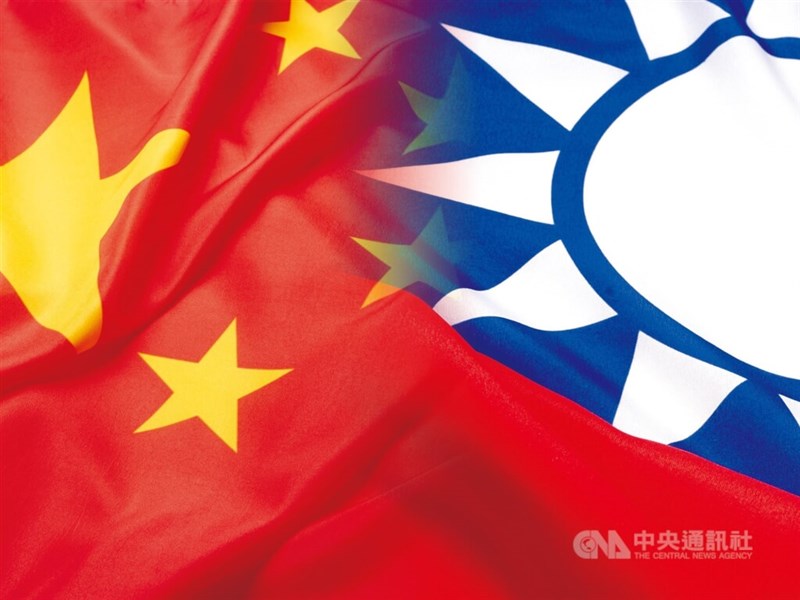
Taipei, June 15 (CNA) A majority of people in Taiwan still reject Beijing's "one China principle" as a precondition for political negotiations across the Taiwan Strait in 2026, though the proportion rejecting the principle fell sharply from previous surveys, according to a poll released by a foundation formed by cross-strait experts.
The poll, released by the National Development Foundation at a press conference in Taipei on Monday, found that 58.0 percent of respondents said they could not accept the condition, down from 72.4-76.9 percent in the four previous surveys conducted from 2019 to 2023.
Meanwhile, 25.8 percent said they could accept the "one China principle" as a precondition for talks, up from between 17 percent and 19.1 percent in those four surveys.
The latest figure, 25.8 percent, was also the second highest recorded in the long-running survey series -- which began in 2015 and has had nine rounds so far -- behind only the 32.1 percent registered in 2018.
Kelly Yang (楊喜慧), a researcher with the foundation who helped oversee the poll, described 2018 as the final year of "Peak China," when China's stronger economic pull made people in Taiwan more willing to accept the "one China principle" as a condition for talks.
Robert Tsai (蔡季廷), executive director of the Center for China Studies at National Taiwan University (NTU), said that while acceptance of the "one China principle" has risen this year, it remains below the level recorded in 2018, meaning the change was "not yet clear enough" to indicate a firm upward trend.
He said the figures should be tracked over a longer period, with more attention paid to younger respondents, as some recent polls have suggested rising openness among people aged 20-29 toward "one China" or even "one country, two systems" proposals.
Whether that shift, if confirmed, is linked to cultural influences such as TikTok remains unclear, he said.
However, he noted that long-term surveys by National Chengchi University still show Taiwanese identity, rather than Chinese identity, as the dominant form of identification among people in Taiwan.
Meanwhile, other questions in the survey also pointed to growing hesitation among respondents about cross-strait political talks, even as a majority continued to support them.
Support for such talks fell to 61.6 percent in the 2026 poll, the lowest level in the survey series, while the share of respondents who did not express a clear position rose to 16.3 percent, a record high.
The share of respondents who said the timing of negotiations would "depend on the circumstances" also rose to 18.4 percent, the highest level recorded.
The long-running survey series was commissioned by NTU's Center for China Studies from 2015 to 2023, before being taken over by the foundation for the 2026 edition.
The 2026 poll was conducted in May by polling company Rwindex through telephone interviews with adults aged 20 and above in Taiwan.
According to the foundation, which relies on private donations for funding, the 2026 poll collected 1,068 valid samples and had a margin of error of plus or minus 3 percentage points at a 95 percent confidence level.
- Society
Court approves detention of man who held intern at knifepoint at airport
09/13/2026 10:13 PM - Business
Mandarin Airlines A321neo makes domestic debut on domestic route
09/13/2026 07:31 PM - Sports
Dwight Howard headlines New Taipei Kings charity event
09/13/2026 06:07 PM - Society
Western Taiwan sees hot weather Sunday
09/13/2026 05:38 PM - Culture
French film critic helped bring Taiwan New Cinema to world: Minister
09/13/2026 05:17 PM