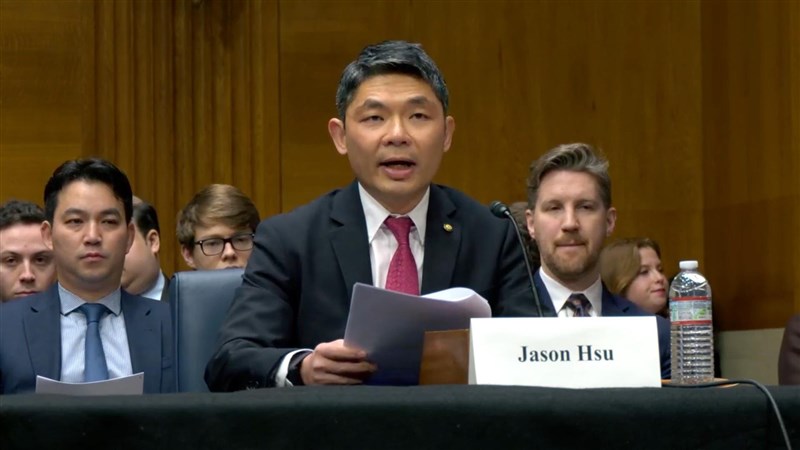
Taipei, March 25 (CNA) A NT$380 billion (US$11.89 billion) Kuomintang (KMT)-proposed spending cap on weapons systems approved by Washington for sale to Taiwan is "highly unfeasible" and should be raised to at least NT$800 billion, former KMT lawmaker Jason Hsu (許毓仁) said Wednesday.
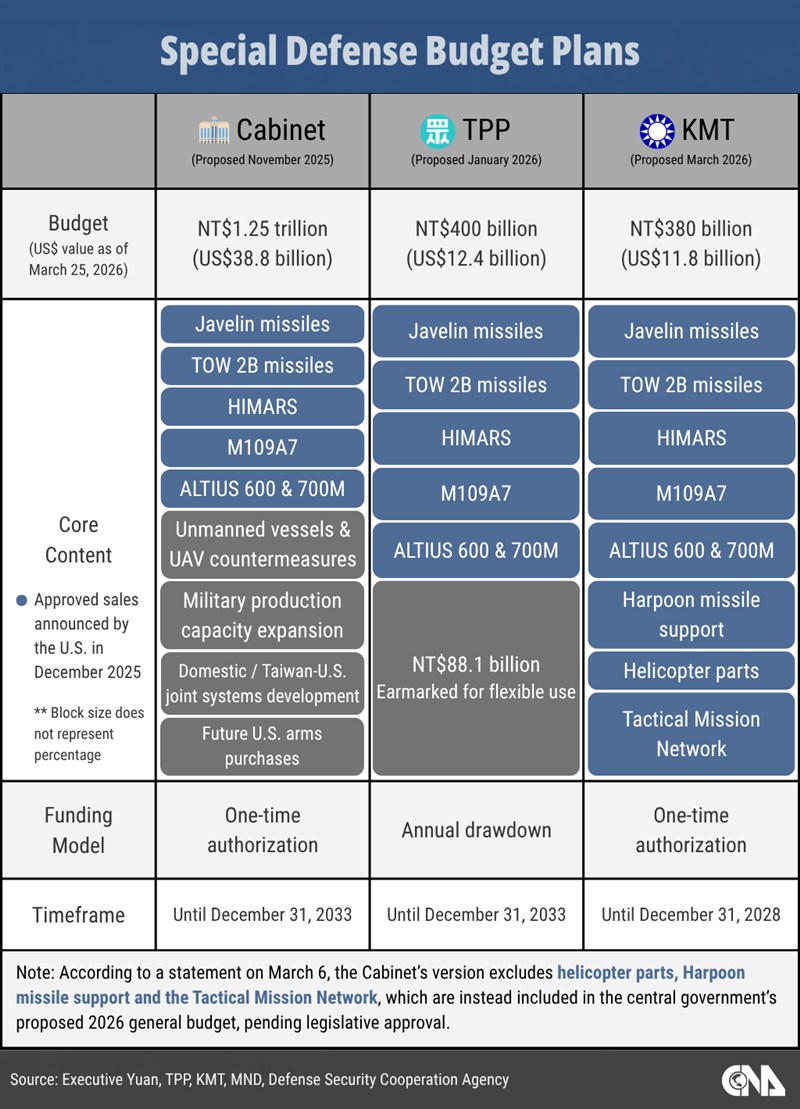
The KMT's defense bill, currently under review at the Legislature's Foreign Affairs and National Defense Committee, would fund eight systems announced by the United States in December, with a follow-on budget proposed by the Ministry of National Defense in the event of new U.S. arms sale packages.
It is being considered alongside the Cabinet's and the Taiwan People's Party's versions, which set the spending cap at NT$1.25 trillion and NT$400 billion, respectively.
In a social media post, Hsu said that as a former ruling party, the KMT should have known better than to propose a "highly unfeasible" budget for foreign arms procurement.
The bill's phased budget planning approach contradicts the nature of foreign arms procurement packages, which are not made at random but require a lengthy negotiation and assessment period between Taiwan and the U.S., said Hsu, a senior fellow at the Hudson Institute, a Washington-based think tank.
With U.S. President Donald Trump and Chinese leader Xi Jinping (習近平) scheduled to meet in just over a month, Hsu warned that time is not on Taiwan's side.
If the Legislature has not passed the special defense budget by then, Trump could make concessions on planned arms sales to Taiwan that Congress has yet to be notified of to secure certain terms with Xi, Hsu said.
If that happens, Taiwan will not even receive letters of acceptance from the U.S., effectively denying the follow-on budget proposal route espoused by the KMT, he added.
• Legislature authorizes Cabinet to sign letters securing U.S. weapons
Hsu recommended that the KMT raise the amount stipulated in its bill to between NT$800 billion and NT$900 billion, which would have been more "practical."
As for the remaining NT$300 billion gap between the KMT's and the Cabinet's bills, Hsu said that could be gradually offset by adopting a general budget planning route.
"The last thing I want to see is the review being stymied by an excessive gap between the ruling and opposition proposals," Hsu said, adding that this could "lead to the Cabinet's version being rejected in a floor vote through a joint opposition effort."
"Such an outcome would be a true disaster for Taiwan," he said.
Hsu also said that the KMT bill's exclusion of drone procurement, which is covered by the Cabinet's bill, was "extremely dangerous" given China's escalating "gray zone" coercion and other potential military actions to take Taiwan.
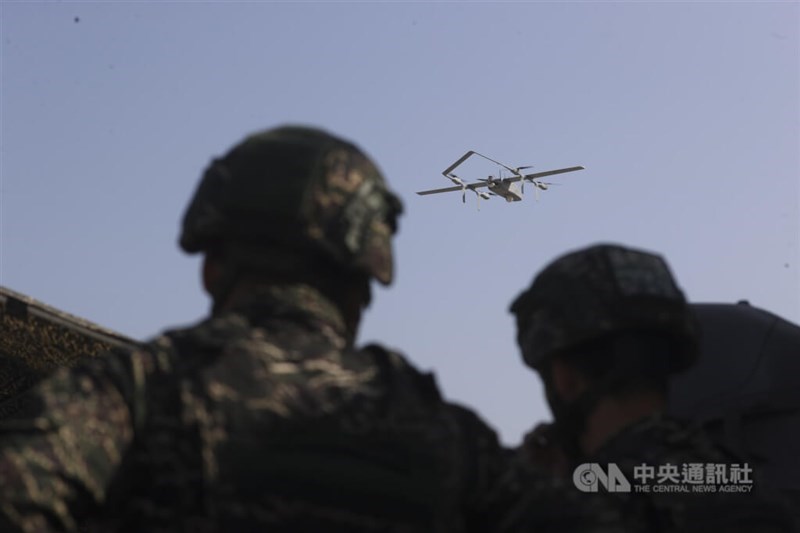
Later in the day, President Lai Ching-te (賴清德) also noted the omission of drones and AI-assisted command and control systems in the KMT's and the TPP's bills.
Excluding these critical systems shows the opposition's lack of understanding of modern warfare, Lai said at the Democratic Progressive Party's Central Standing Committee meeting in Taipei, calling on nonpartisan support for the Cabinet's "comprehensive" special defense budget bill.
- Sports
Japan defeats Taiwan in U-12 Asian Baseball Championship final
08/16/2026 05:03 PM - Society
CWA issues heavy rain advisories for most of Taiwan proper
08/16/2026 04:40 PM - Business
Taiwan average annual income hits record high in 2025: DGBAS
08/16/2026 04:07 PM - Culture
Taiwan wins 1 gold, 2 silvers in International Olympiad in Informatics
08/16/2026 03:41 PM - Sports
Tigers' Lee ties Taiwanese MLB player single-season record for hits at 54
08/16/2026 01:50 PM