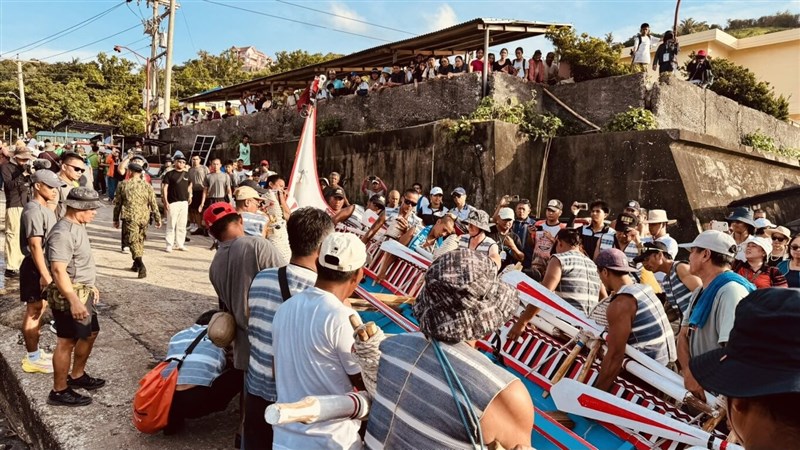
Taipei, June 17 (CNA) A traditional Indigenous boat that departed from Orchid Island (Lanyu) on Monday arrived in the Philippine archipelago of Batanes on Tuesday afternoon, according to Maraos, a board director of the Indigenous Peoples Cultural Foundation.
The Ovayan, a traditional wooden plank vessel known as an ipanitika, set out from Orchid Island with 20 rowers aboard to retrace an ancient sea route that once linked the Tao people of Orchid Island and the Ivatan people of Batanes.
Another 40 Tao individuals were on support vessels accompanying the Ovayan, ready to take turns with the rowing.
• Lanyu boat sets sail on historic journey to Philippines' Batanes
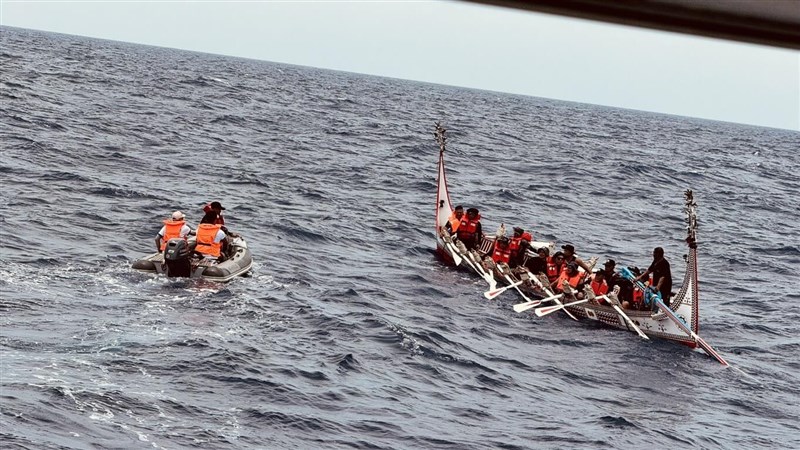
The journey ran into problems almost immediately, however, when it encountered strong winds and rough seas about two kilometers off Little Orchid Island, located roughly three nautical miles south of Orchid Island.
The conditions hampered its progress and caused water to enter the boat, prompting accompanying vessels to begin towing it, said Maraos, himself a Tao who was on the voyage.
Later, when much of the vessel was submerged in waves reaching 4 meters high as it approached Y'ami Island, the northernmost island of the Batanes archipelago about 100 kilometers south of Orchid Island, the team again decided to tow the vessel, Maraos said.
No one was injured in the ordeal, he added.
After being towed overnight, the Ovayan arrived at Mahatao Port at around 10 a.m. Tuesday for emergency repairs and inspection.
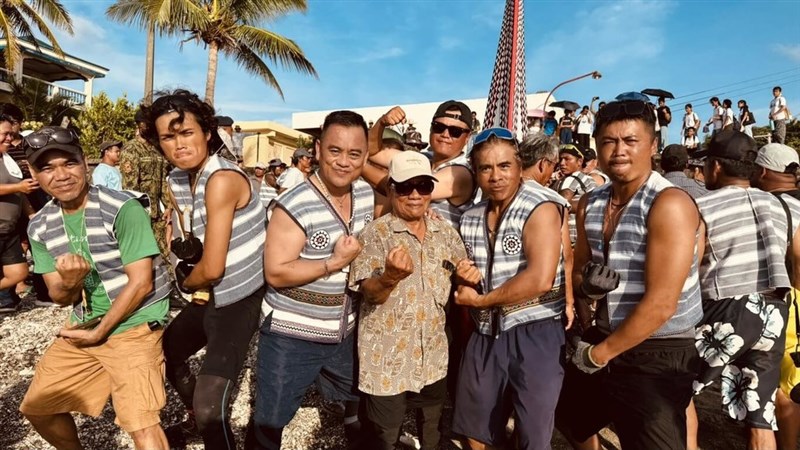
Once the vessel was reinforced, Indigenous Tao individuals rowed the vessel to another point along the coast where they had been expected and were welcomed by about 300 residents of Batanes as "family from Lanyu."
One Tao participant said the food served at the welcoming feast tasted "90 percent similar" to that of Orchid Island, affirming elders' long-held belief that "Lanyu and Batanes came from the same blood."
Maraos said the Ovayan will remain on display in Batanes for six months before being rowed back to Orchid Island by Batanes residents as part of next year's cultural exchange.
Built by the Tao people, the vessel is named after the golden breast ornaments traditionally worn by Tao men and symbolizes the maritime trading heritage shared by Orchid Island and the Batanes Islands.
The two communities historically maintained close ties through trade, marriage and migration, but those connections were severed about 300 years ago following a misunderstanding.
Despite the separation, the languages spoken by the two communities remain about 60 percent mutually intelligible.
- Sports
Taiwan boosts medal haul in multiple events at Asian Games on Friday
10/02/2026 08:55 PM - Society
Workers at Taiwan snack maker Kuai Kuai extend strike over relocation
10/02/2026 08:45 PM - Business
Chain businesses association seeks more foreign workers
10/02/2026 08:04 PM - Politics
Shen unveils Taipei education platform, Chiang defends free lunches
10/02/2026 06:45 PM - Politics
Taiwan receives first 2 F-16V Block 70s (update)
10/02/2026 06:39 PM