Taipei, April 13 (CNA) Beijing's new economic proposals targeting Kinmen and Matsu merit special attention because they may be aimed at turning the outlying islands into a showcase for cross-Taiwan Strait integration while deepening divisions in Taiwan, scholars said Sunday.
China announced a package of 10 measures on the final day of Kuomintang (KMT) Chairperson Cheng Li-wun's (鄭麗文) six-day visit there, aimed at benefiting certain sectors in Taiwan while also offering deeper integration with the Kinmen and Matsu Islands.
Kinmen and Matsu are Taiwan-held island groups located just off the coast of China's Fujian Province. Because of their location, they have closer links with China than the island of Taiwan.
Tzeng Wei-feng (曾偉峯), an associate research fellow at National Chengchi University's Institute of International Relations, told CNA that the proposed "four links" -- water, electricity, gas, and bridges -- between Fujian and Kinmen and Matsu could have a major impact in terms of physical integration.
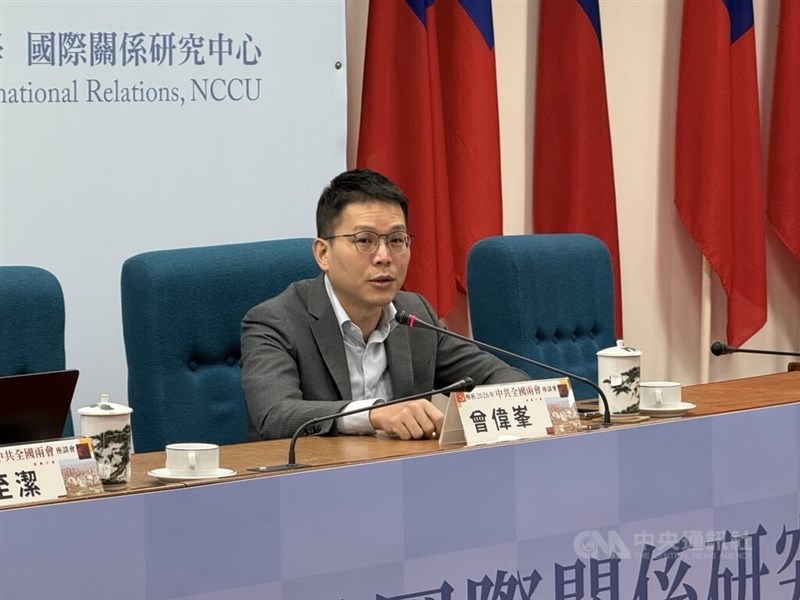
Currently, Kinmen relies mainly on water imported from China for its freshwater supply, while Matsu depends primarily on reservoirs and other local water sources.
There are currently no electricity and gas links or bridges between China and the two island groups, though passenger ferry services operate under the so-called "Mini Three Links."
Tzeng said the proposed "four links" reflected China's desire to deepen interdependence between Fujian and Kinmen and Matsu and turn them into a showcase for cross-strait integration meant to convince Taiwanese that peace is possible and can bring prosperity.
Combined with expanded film, television and youth exchanges, he said, the broader aim behind the proposed "four links" could be to foster a stronger sense of identification with China among Taiwanese.
The measure could also pose national security risks, Tzeng warned, such as increasing China's capacity for infiltration in Taiwan or generating bottom-up pressure on the Taiwanese government to shift policy.
Because of the proximity of the Kinmen and Matsu islands to China and their small populations, however, it is unlikely that many Taiwanese would be more inclined to support Beijing because of the Chinese initiatives related to those islands.
But Tzeng cautioned that China is not that concerned with whether people on Taiwan proper are actually influenced by this "showcase." Instead, Beijing's goal is "to unilaterally push forward the unification process."
"It may start with Kinmen and Matsu, then perhaps move on to Penghu, and eventually to Taiwan proper," he said.
Tzeng said the actual effect of Beijing's policy was "uncertain," but its logic was to advance its goals from the bottom up -- moving from the outlying islands to Taiwan proper, from the grassroots to higher levels, and from economics to politics.
Deepen divisions
Chang Hung-yuan (張弘遠), a professor in Chihlee University of Technology's Department of International Trade, warned that, given the lack of formal bilateral contact, China's announced measures could be used to create internal divisions in Taiwan.
If Kinmen or Matsu were to face shortages of water, electricity or gas, he argued, Beijing could frame the situation as the result of Taiwan's unwillingness to negotiate.
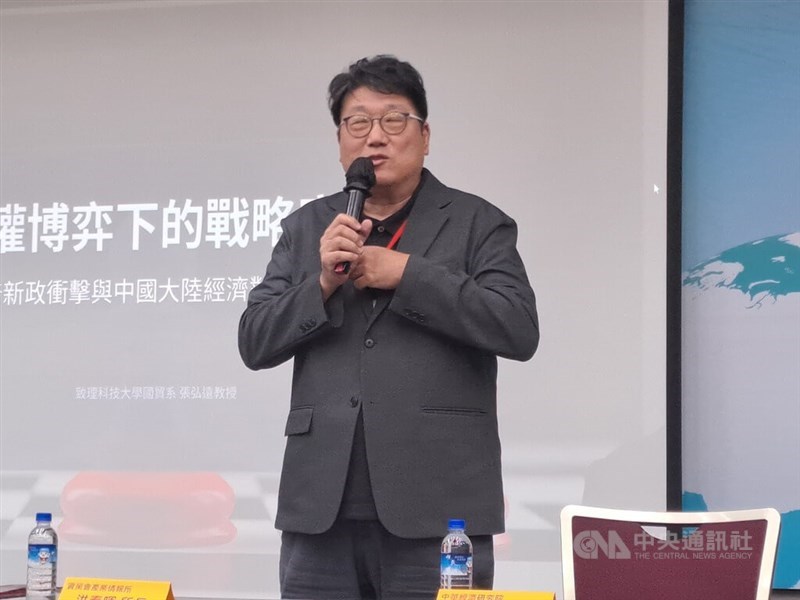
Chang's remarks appeared to find some resonance in the Kinmen County Council on Monday, where independent Councilor Tsai Shui-yu (蔡水游), commenting on the proposed bridge, said Chinese authorities had already built it "to Kinmen's doorstep."
"It would not be a bad thing" if the link could be completed first, he said.
In response, Kinmen County Magistrate Chen Fu-hai (陳福海), an independent, said "there is not much we can do" regarding Beijing's 10 measures without the central government's approval.
Chen's remarks were broadly in line with the stance of Taiwan's Mainland Affairs Council. It said Sunday that matters involving cross-border infrastructure are subject to the evaluations and participation of government agencies and formal negotiations between the two sides.
- Sports
Taiwan boosts medal haul in multiple events at Asian Games on Friday
10/02/2026 08:55 PM - Society
Workers at Taiwan snack maker Kuai Kuai extend strike over relocation
10/02/2026 08:45 PM - Business
Chain businesses association seeks more foreign workers
10/02/2026 08:04 PM - Politics
Shen unveils Taipei education platform, Chiang defends free lunches
10/02/2026 06:45 PM - Politics
Taiwan receives first 2 F-16V Block 70s (update)
10/02/2026 06:39 PM