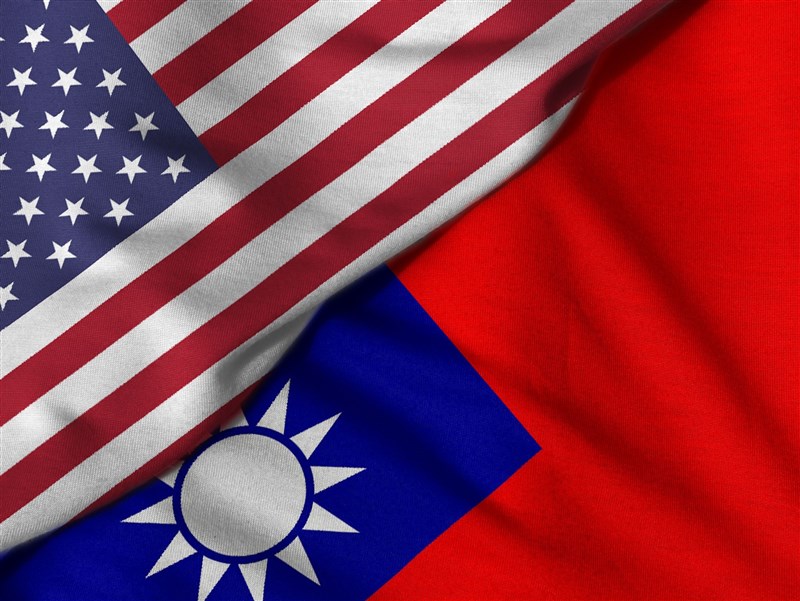
Washington, May 28 (CNA) The United States on Thursday formally announced preferential tariff treatment for certain Taiwanese exports under Section 232 tariffs, fulfilling a part of a bilateral investment memorandum of understanding (MOU) signed earlier this year.
The measures, published in the Federal Register by the U.S. Department of Commerce and the Office of the U.S. Trade Representative (USTR), cap Section 232 tariffs on Taiwan-made automobile parts, timber, lumber and wood derivative products at 15 percent.
They also exempt certain aircraft components from derivative steel, aluminum and copper tariffs, but they did not make any mention of semiconductors, which the U.S. said were under consideration as part of the Section 232 review.
The changes to the Section 232 tariffs, which are aimed at protecting the U.S.' national security, are retroactive to May 1.
● Taiwan seeks reassurances as U.S. weighs potential semiconductor tariffs
According to the notice, the U.S. secretary of commerce and trade representative are "taking necessary and appropriate action" to implement the MOU.
The announcement follows the signing in January of the Taiwan-U.S. Investment MOU, under which Taiwan became the first economy to secure preferential treatment under the Donald Trump administration's Section 232 tariff regime.
The tariff concessions will lower duties on Taiwanese automobile parts from 26.71 percent to 15 percent, matching the rate applied to competitors such as the European Union, Japan and South Korea, which also have received preferential Section 232 tariff rates.
Tariffs on certain wood products will likewise fall from 25 percent to 15 percent, while derivative Section 232 duties on some steel-, aluminum- and copper-based aircraft components, which previously faced combined tariffs of up to 50 percent, will be eliminated.
Riley Walters, a senior fellow at the Hudson Institute specializing in international economics and national security, said the move showed Washington was honoring the MOU.
"The U.S. side is moving ahead with implementing its part of the agreement," Walters told CNA. "This reflects an expectation that Taiwan will also commit to its part of the agreement once the Section 301 adjustments are made later this year."
Under the Section 301 provision, economies found to have adopted "unreasonable or discriminatory" measures against the U.S. that "burden or restrict" its commerce could be subject to heavy tariffs.
During his first term, Trump invoked the provision as the basis for imposing a 25 percent tariff on many Chinese imports, on the grounds of forced technology transfers and intellectual property theft.
It is unclear if Taiwan is a target for any Section 301 changes.
The Taiwan-U.S. investment MOU includes commitments to facilitate two-way investment in high-tech sectors and support what officials have described as a "Taiwan model" for helping manufacturers establish supply-chain clusters in the United States.
The agreement also envisions up to US$250 billion in additional Taiwanese investment in the U.S.
Vice Premier Cheng Li-chiun (鄭麗君) said in Taipei on Thursday that Taiwanese companies had pledged to invest US$250 billion in the U.S., with some companies already submitting first-phase investment plans.
National Development Council Minister Yeh Chun-hsien (葉俊顯) said the Cabinet had approved a program to support those investments and is expected to sign MOUs with participating banks by mid-June, enabling companies to begin applying for financing.
- Business
NT$10 receipts win NT$10 million prizes
10/05/2026 09:02 PM - Politics
OCAC minister, family accused of misusing public resources overseas
10/05/2026 08:58 PM - Politics
New Eswatini envoy pledges support for Taiwan's int'l participation
10/05/2026 08:17 PM - Politics
Taichung mayoral rivals Ho, Chiang visit transport project sites
10/05/2026 07:41 PM - Society
6 Taipei police officers disciplined over misconduct in gay bar raid
10/05/2026 07:04 PM