Taipei, May 10 (CNA) Unions representing nurses at six hospitals criticized the Ministry of Health and Welfare (MOHW) on Saturday for postponing implementation of newly legislated three-shift nurse-to-patient ratios until 2028, accusing it of "shirking responsibility."
The criticism came a day after amendments to the Medical Care Act were passed, formally incorporating nurse-to-patient ratios introduced by the MOHW in 2024 into law, and establishing penalties for hospitals that fail to comply.
Under the amendments, non-compliant district hospitals may face fines ranging from NT$50,000 (US$1,594) to NT$250,000, regional hospitals from NT$200,000 to NT$1 million, and medical centers from NT$1 million to NT$2 million. Repeat offenders could also face a suspension of operations.
However, while nursing groups had called for the law to take effect in December 2027, Health Minister Shih Chung-liang (石崇良) said implementation would begin on May 1, 2028.

He cited year-end scheduling concerns and the Lunar New Year holiday period.
In a joint statement, the National Taiwan University Hospital Union, National Taiwan University Cancer Center Branch Union, National Cheng Kung University Hospital Union, Taipei Veterans General Hospital Union, Shin Kong Wu Ho-Su Memorial Hospital Union, and Cheng Hsin General Hospital Union condemned the delay.
The unions argued that the MOHW should accelerate implementation rather than delay enforcement, given that the central government has already spent tens of billions of Taiwan dollars in taxpayer funds to subsidize hospital labor costs.
Protecting management
They also accused the ministry of "protecting hospital management while neglecting patient safety and nurses' labor rights."
According to the unions, the delay means hospitals will effectively avoid penalties during President Lai Ching-te's (賴清德) current term, which ends on May 20, 2028.
The statement also raised concerns over how nurse-to-patient ratios are currently calculated. It said isolation wards and hospice wards are excluded from the figures, while hospitals' use of monthly institution-wide averages can distort actual staffing ratios.
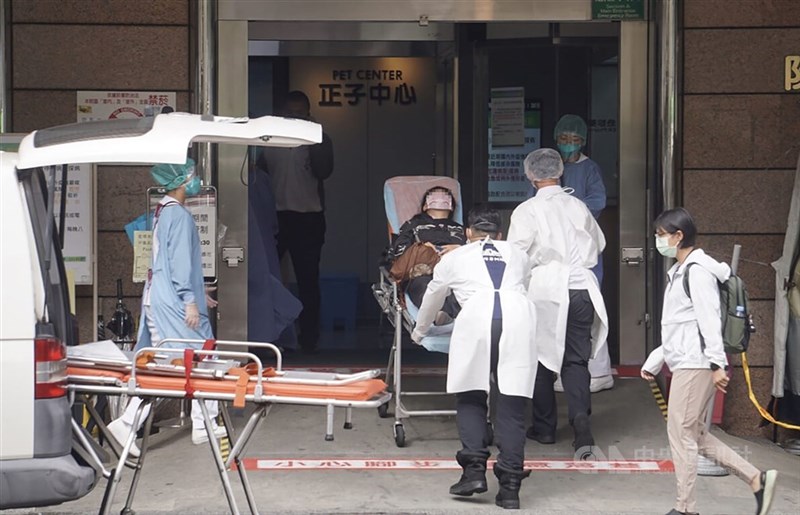
The unions further criticized the lack of auditing mechanisms for data submitted by hospitals and accused the MOHW of repeatedly dismissing concerns raised by frontline nurses.
They urged the ministry to reassess its attitude toward frontline healthcare workers and engage in negotiations on an equal footing in order to rebuild trust.
According to the MOHW's 2024 policy, the three-shift nurse-to-patient target ratios are set at 1:6 for day shifts, 1:9 for evening shifts, and 1:11 for night shifts at medical centers. For regional hospitals, the ratios are 1:7, 1:11, and 1:13 respectively, while for district hospitals they are 1:10, 1:13, and 1:15.
Hospitals that met the standard were eligible for incentive payments, but the ministry had no legal basis to impose penalties for noncompliance until the law amendments cleared the legislative floor on Friday.
Shih said that day that the proportion of hospitals meeting the ratios rose from below 50 percent in the first half of 2025 to around 70 percent in the second half of the year.

The MOHW introduced the nurse-to-patient ratios following longstanding calls from nurses to address excessive workloads and staffing shortages, a situation that many believed to have led nurses to leave their jobs.
According to Legislator Chiu Hui-ju (邱慧洳), Taiwan has about 300,000 licensed nurses, but only around 190,000 are currently in service.
Meanwhile, Hsieh Ching-hsiang (謝景祥), superintendent of Yangming Hospital, told reporters on Friday that the medical sector is concerned the nursing workforce cannot be increased in a short period of time, so it called for a "grace period" before the amended law takes effect.
- Society
DPP township council candidate dies after collapsing on stage
09/23/2026 11:52 AM - Science & Tech
Taiwan part of WorldSkills Competition opening ceremony in China
09/23/2026 10:53 AM - Business
U.S. dollar down in Taipei trading
09/23/2026 10:17 AM - Society
Taiwan headline news
09/23/2026 10:05 AM - Business
Taiwan shares open higher
09/23/2026 09:15 AM