Taiwan team finds breakthrough way to revive cancer-fighting immune cells
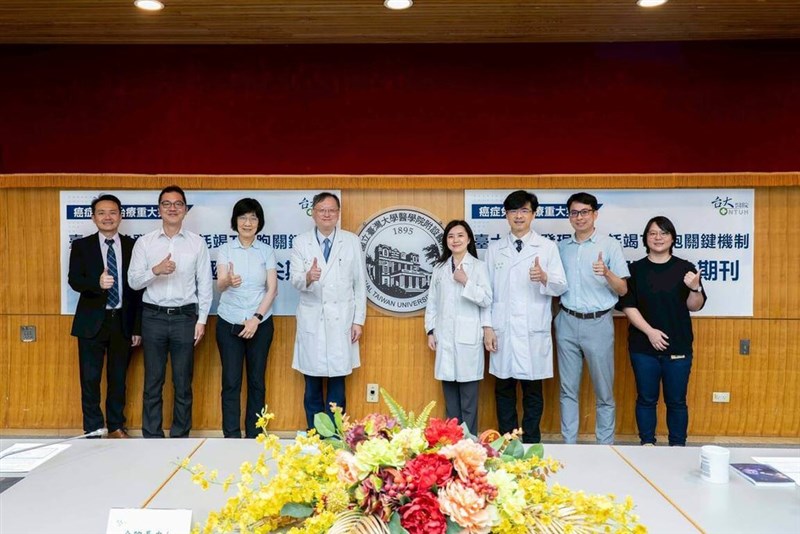
Taipei, June 16 (CNA) A Taiwanese research team has discovered a novel strategy to revive worn-out immune cells in cancer patients, offering a breakthrough for people who have become resistant to current immunotherapy treatments, researchers said Tuesday.
At a press event, the research team led by Tsai Hsing-chen (蔡幸真), deputy director of the Center for Frontier Medicine at National Taiwan University Hospital (NTUH), unveiled the findings of their study, which was published in Nature Immunology on May 12.
The team's statement said that while modern immunotherapy has revolutionized cancer treatment by waking up frontline immune cells (T cells) burned out by long-term tumor exposure, a significant number of patients still fail to respond or build up resistance.
Recharging these permanently exhausted T cells has become one of the biggest challenges in oncology -- one that the NTUH team set out to tackle directly.
To address this gap, the team screened a massive library of drugs on exhausted T cells taken from lung cancer patients and identified that a specific class of epigenetic drugs, called BET inhibitors, can rejuvenate these cells to enable them to fight cancer more effectively, the statement noted.
Speaking to CNA by phone, Tsai said animal tests on lung cancer and melanoma demonstrated that both direct BET inhibitor therapy and infusing BET-inhibitor-treated T cells back into the body significantly suppressed tumor growth and extended survival.
BET inhibitors wake up permanently burned-out immune cells by forcing them to produce polyamines, including spermidine, which are natural compounds essential for cellular growth, energy metabolism, and immune activation, the statement noted.
According to Tsai, this is the first time scientists have combined gene-switching and metabolism reprogramming to control the fate of exhausted immune cells.
The approach may apply to a broad range of solid tumors that exhibit limited responses to current immunotherapies and may also be combined with immune checkpoint inhibitor therapy and other cell-based treatments to enhance therapeutic efficacy, the team said.
The NTUH team comprises researchers from the National Taiwan University College of Medicine and Academia Sinica, according to the statement.
- Business
CPC to leave domestic gasoline, diesel prices unchanged next week
09/19/2026 07:47 PM - Science & Tech
U.S. research funding cuts hurt scientific progress: Tang Prize laureates
09/19/2026 07:39 PM - Sports
Taiwan's Huang, Zhang carry flag at Asian Games opening ceremony
09/19/2026 07:28 PM - Politics
Anduril founder says he discussed Taiwan arms sale with Trump
09/19/2026 07:19 PM - Culture
Find pivotal moments that shape history: Tang Prize Sinology laureate
09/19/2026 07:02 PM