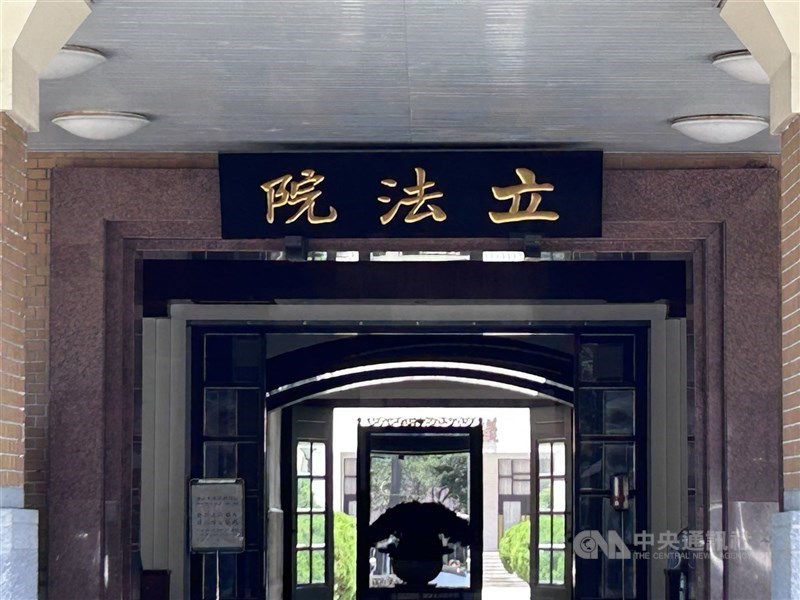
Taipei, Aug. 21 (CNA) Opposition lawmakers voted Friday to fast-track a motion condemning Premier Cho Jung-tai (卓榮泰) following his refusal to countersign a youth savings legislation recently passed by the Legislature, alongside other bills.
The motion, proposed by the smaller opposition Taiwan People's Party (TPP), accused the Democratic Progressive Party (DPP) administration of "repeatedly abusing authority under the Constitution" to invalidate legislation passed by the Legislature.
"Not only does this exceed official authority and disrupt the separation of powers, but it also treats the Legislature with complete disregard," the proposal read.
With the support from the main opposition Kuomintang (KMT), the proposal skipped committee review and moved directly to a second reading, setting up a potential vote in as soon as a month.
Under current legal system, a legislative motion to censure the premier is symbolic only, with no binding force or statutory authority.
Cho announced Monday he will not countersign the Special Act on Taiwan Future Accounts, a bill creating government-funded accounts for minors under the age of 18, and an amendment to the Cable Radio and Television Act, passed by the opposition-controlled legislation.
Article 37 of the Constitution of the Republic of China stipulates that laws passed by the Legislature must be countersigned by the premier before the president can formally promulgate them.
The opposition argues that this authority serves as a check on presidential power, not on the Legislature, and that the premier should request a re-vote if the government does not support a law.
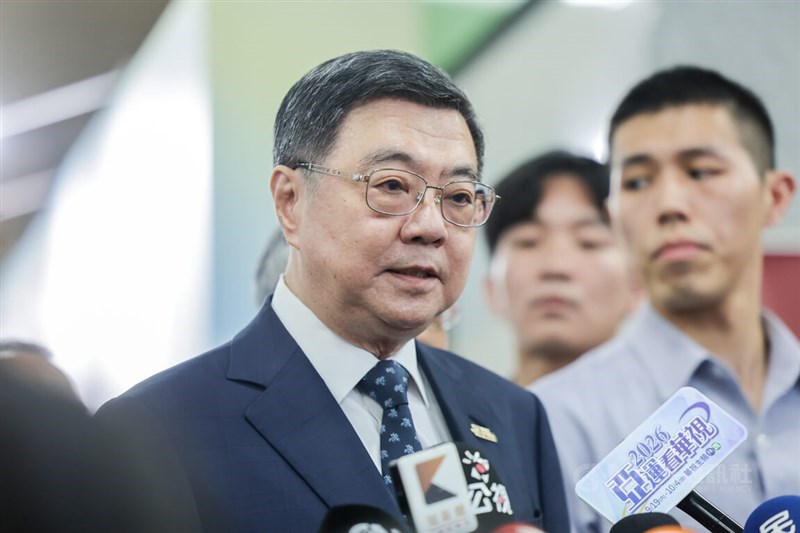
No premier had ever taken such action to block a law passed by the Legislature before December 2025 when Cho first declined to countersign the Act Governing the Allocation of Government Revenues and Expenditures.
Since then, Cho has refused to sign legislation seven times, including amendments to legislative governance rules.
Legislative Speaker Han Kuo-yu (韓國瑜) slammed Cho on Thursday for "weaponizing" his countersign authority, calling the move a complete mistake.
Noting that Taiwan registered fewer than 50,000 newborns in the first half of the year, Han said that Cho's refusal to countersign the bill would greatly undermine relief efforts.
Responding to Han, Executive Yuan Secretary-General Xavier Chang (張惇涵) said Friday that Article 37 of the Constitution requires Cho to take action to "uphold the constitutional order."
The Executive Yuan refused to countersign the bill on constitutional and equity grounds, contending that the measure encroaches on its constitutional authority to manage policies and the national budget, that allowing corporate sponsorship of the accounts could widen the wealth gap, and that vague tax exemptions violate the principle of taxation by law, according to its statement.
Under the opposition‑backed youth saving accounts, minors under 18 would receive NT$60,000 (US$1,887) each year in two accounts, with newborns also granted an initial NT$60,000, equaling NT$1.14 million by age 18 -- a total that applies strictly to newborns.
In May 2026, the DPP government announced a plan to be implemented in 2027 through administrative measures rather than legislation, providing a monthly NT$5,000 "growth subsidy" for every child under 18, or NT$1.08 million in total over 18 years.
Both proposals share the core goal of establishing a long-term financial foundation for children by age 18, despite differences in fund management and withdrawal rules.
- Society
Seasonal winds to bring cooler weather across parts of Taiwan
10/03/2026 07:26 PM - Politics
Local election campaigns heat up across Taiwan
10/03/2026 06:56 PM - Politics
Taiwan confirms its patrol vessels monitoring Chinese ships near Philippines
10/03/2026 06:46 PM - Business
CPC to leave domestic gasoline, diesel prices unchanged next week
10/03/2026 05:48 PM - Science & Tech
Taiwan, U.K. sign science, technology deal covering 3 areas
10/03/2026 04:26 PM