INTERVIEW/Taiwan, democracies must build resilience against China, Russia: Scholar
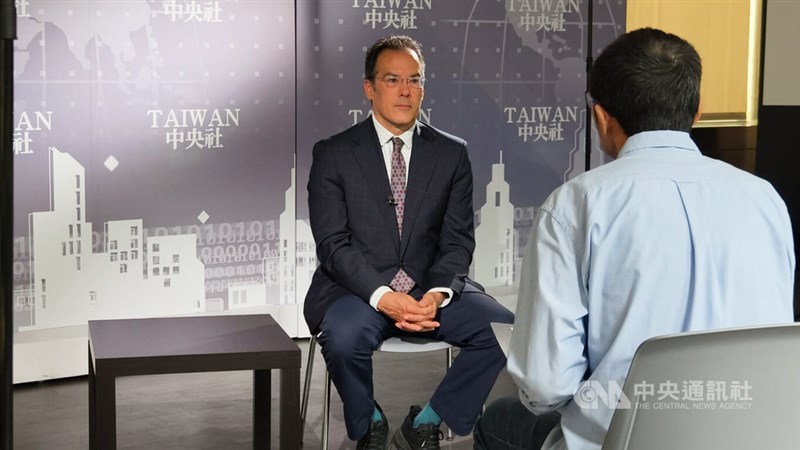
Taipei, Sept. 21 (CNA) Taiwan and other democracies must strengthen their resilience against the "sharp power" wielded by authoritarian regimes such as China and Russia to defend their shared democratic values, a visiting American scholar said Monday.
Christopher Walker, vice president of the Washington-based Center for European Policy Analysis (CEPA), told CNA in an interview that China has been seeking "to reshape norms, move the center of political gravity," and that Taiwan faces the greatest challenges.
But Taiwan is not alone, Walker said. The United States, Europe and other parts of Asia face similar challenges from China and must respond collectively to the "sharp power" wielded by China and Russia, he said.
Walker contrasted "sharp power" with "soft power," which seeks to attract or openly persuade others.
Sharp power, he said, involves "political censorship, monopolization of ideas, and otherwise seeking to control agendas in the way that the Chinese Communist Party (CCP) does."
"It's a very dangerous form of influence," he warned.
Walker said China and Russia use such tactics against democracies because they know democratic societies are vulnerable precisely because "they're open and pluralistic and free."
Asked by CNA how democracies could better defend themselves, Walker said open societies must first work to reduce divisions within their societies.
Democracies such as Taiwan and the U.S. need to reduce polarization and "minimize this as much as we can to recognize that it's in our shared interest to confront the larger threat which is coming from the PRC," he said, using the abbreviation for the People's Republic of China.
Walker also said the openness, pluralism, and freedom of democratic societies could be an advantage in responding to threats from autocracies.
"I would argue, to one of democracy's advantages, which is that we can rely on our entire pluralistic societies to respond if we're able to organize ourselves, whereas the autocracies rely on the state for everything."
"And if we are able to adapt within democracies, we can prevail, but this will require intentional and sustained strategies to respond to the authoritarian threat," he added.
Walker is visiting Taiwan mainly to speak at the second Resilient Taiwan for Sustainable Democracy International Forum, held Saturday.
The Presidential Office hosted the forum for the second consecutive year to promote the concept of whole-of-society resilience and assess Taiwan's preparedness amid threats from China, according to a press release issued last week.
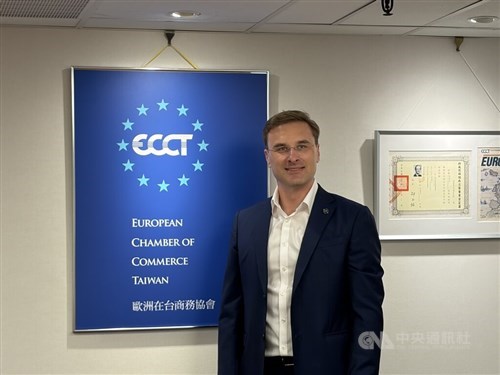
![New ECCT chair urges greater agility in Taiwan's software, energy sectors]() New ECCT chair urges greater agility in Taiwan's software, energy sectorsTaiwan is known for its strength in hardware manufacturing, but Frank Grunert, the new chairperson of the European Chamber of Commerce Taiwan (ECCT), sees considerable potential in software as well.10/10/2026 12:36 PM
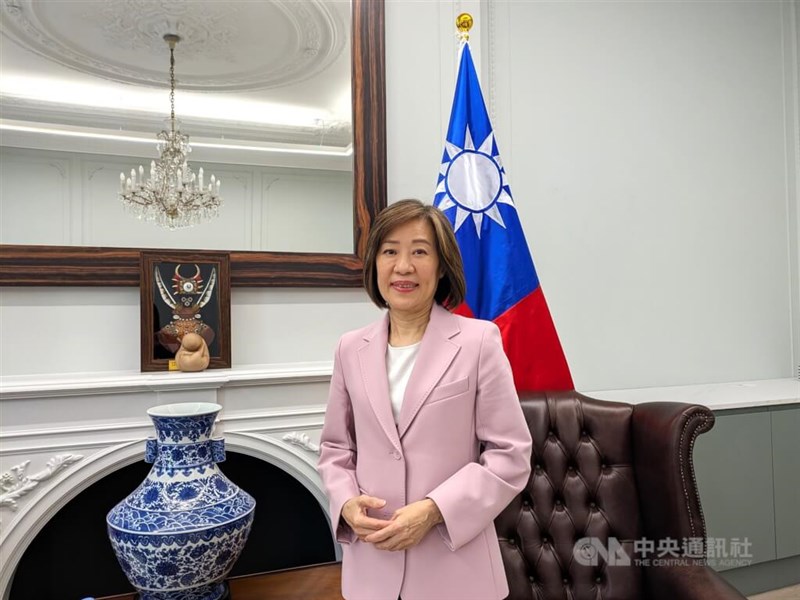
New ECCT chair urges greater agility in Taiwan's software, energy sectorsTaiwan is known for its strength in hardware manufacturing, but Frank Grunert, the new chairperson of the European Chamber of Commerce Taiwan (ECCT), sees considerable potential in software as well.10/10/2026 12:36 PM![Strategic partnership key to Taiwan-U.K. cooperation: Deputy economics minister]() Strategic partnership key to Taiwan-U.K. cooperation: Deputy economics ministerTaiwan's Deputy Minister of Economic Affairs Cynthia Kiang (江文若), who has just concluded an annual economic and trade dialogue with her U.K. counterpart in London, said Friday that establishing a strategic partnership is key to bilateral cooperation.10/03/2026 01:53 PM
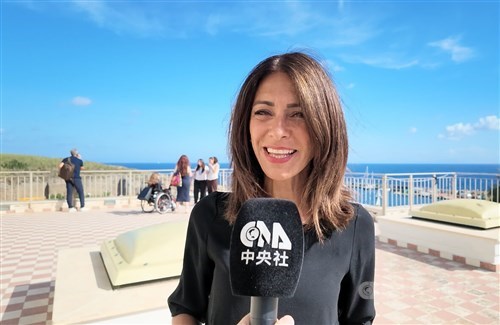
Strategic partnership key to Taiwan-U.K. cooperation: Deputy economics ministerTaiwan's Deputy Minister of Economic Affairs Cynthia Kiang (江文若), who has just concluded an annual economic and trade dialogue with her U.K. counterpart in London, said Friday that establishing a strategic partnership is key to bilateral cooperation.10/03/2026 01:53 PM![European Parliament vice president praises Hsiao as 'role model' for women]() European Parliament vice president praises Hsiao as 'role model' for womenEuropean Parliament Vice President Pina Picierno on Saturday praised Taiwanese Vice President Hsiao Bi-khim (蕭美琴) as a role model for freedom-loving women around the world and told CNA that she would soon begin planning a trip to Taipei after accepting Hsiao's invitation to visit.09/13/2026 01:08 PM
European Parliament vice president praises Hsiao as 'role model' for womenEuropean Parliament Vice President Pina Picierno on Saturday praised Taiwanese Vice President Hsiao Bi-khim (蕭美琴) as a role model for freedom-loving women around the world and told CNA that she would soon begin planning a trip to Taipei after accepting Hsiao's invitation to visit.09/13/2026 01:08 PM
- Politics
Shen holds 1st Taipei campaign motorcade; Chiang urges debate coordination
10/11/2026 08:39 PM - Society
Firefighters work to extinguish Miaoli trash dump fire
10/11/2026 07:58 PM - Politics
Lai's National Day speech steady, avoided provoking Beijing: Scholar
10/11/2026 06:53 PM - Society
Songshan: The ups and downs of Taipei's 'other airport'
10/11/2026 06:36 PM - Society
Philippines opens largest OFW service center in Taipei, eyes expansion
10/11/2026 06:11 PM