INTERVIEW/VP Hsiao flags funding, oversight gaps in opposition drone bills
Taipei, Aug. 26 (CNA) Vice President Hsiao Bi-khim (蕭美琴) has questioned key elements of military drone procurement bills sponsored by opposition lawmakers, saying the omissions would hurt the industry and Taiwan's preparedness.
Fourteen variations of the bill are expected to be put to a vote in the opposition-controlled Legislature by the end of this month after cross-caucus talks broke down last week.
● Taiwan eyeing global drone role via partnerships: Vice President Hsiao
At the center of the debate are two questions: how the procurement of drones should be funded and which agency should be in charge of the project.
Among the main proposals to be voting on, the Cabinet has earmarked NT$210 billion in a special budget running from August 2026 through the end of 2031, while the main opposition Kuomintang (KMT) has earmarked NT$240 billion, to be drawn from the general budget over six years, with an annual spending cap of NT$40 billion.
Cap problems
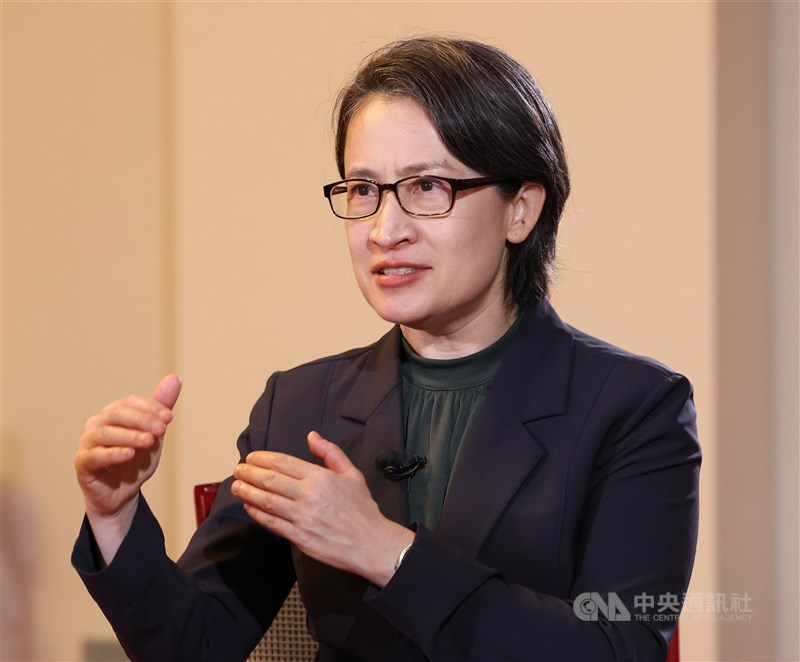
In an interview with CNA on Aug. 21, Hsiao said the NT$40 billion annual spending cap could leave the Ministry of National Defense's drone procurement plans underfunded, as payments vary over the course of a contract and are bound to balloon during peak delivery periods.
The NT$40 billion cap, therefore, could restrict payments.
"On this point, we should respect the Ministry of National Defense's force-building schedule and requirements," Hsiao said.
The KMT, meanwhile, has highlighted the larger overall amount proposed in its bill, arguing that the annual spending cap would require expenditure to be reviewed each year, thereby strengthening oversight and reducing the risk of corruption.
Another sticking point between the Cabinet and opposition parties is which agency should be the bill's competent authority.
Who will be in charge?
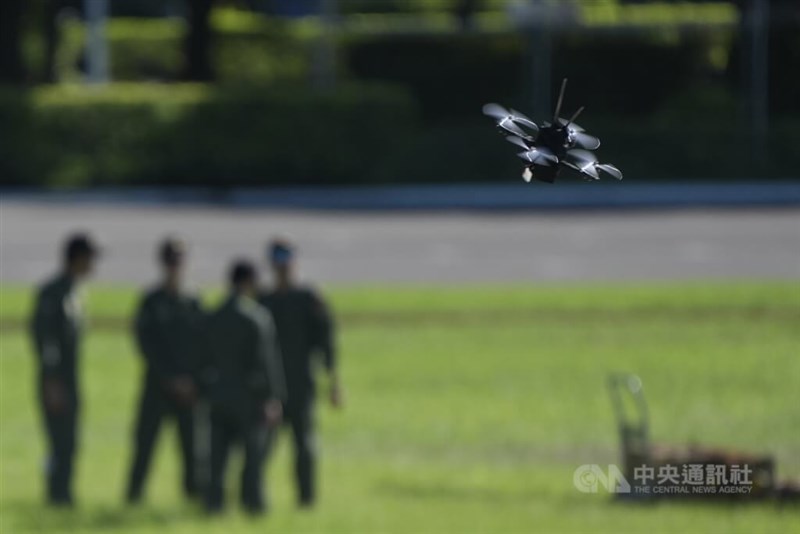
The Cabinet's proposal has designated the Ministry of National Defense (MND) as the competent authority.
The KMT and the smaller opposition Taiwan People's Party, meanwhile, designated the Ministry of Economic Affairs as the competent authority in their proposals.
The opposition parties have argued that supporting drone manufacturers, importing key technologies, conducting cybersecurity reviews and planning drone testing sites fall within the economic ministry's remit.
According to Hsiao, however, the MND should oversee the bill's implementation, as no agency knows Taiwan's defense needs better.
"Only the MND can determine what it needs: types, models, specifications and functions of the drones required," she said.
Strategically significant
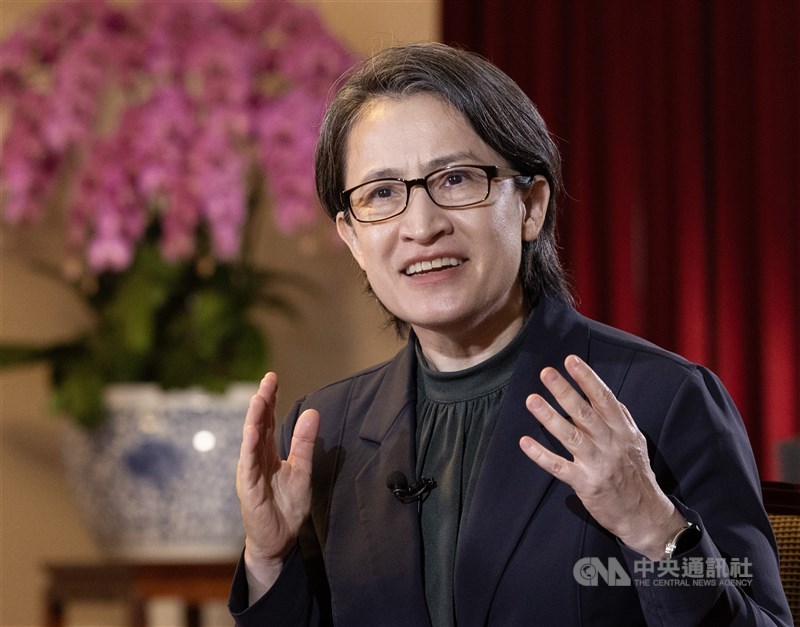
Beyond filling a critical defense need, how the bills are handled will also have strategic significance, Hsiao argued, saying that other countries are watching to see whether Taiwan is determined to defend itself when faced with threats, pressure and harassment from China.
"I have received many foreign guests in this room," Hsiao said. "Many of them asked, 'Are the Taiwanese people committed to defending themselves?'"
Hsiao said Russian President Vladimir Putin may have miscalculated when he decided to invade Ukraine, likely because he was overconfident and believed he could quickly capture Ukraine.
"We therefore cannot allow the regime in Beijing to miscalculate Taiwan's determination to defend itself," she said.
Under the Cabinet's proposal, the bill would fund 1,446 coastal reconnaissance drones, 208,200 coastal attack drones and 1,320 small suicide unmanned surface vessels, as requested by the MND.
Asked why the MND identified those drones for local production rather than source them from abroad, Hsiao said they fit Taiwan's "island defense" and "multi-domain denial" strategies.
In addition, she said, their "high demand" will help develop the local drone industry, equipping it with the capabilities needed for serial production, such as automation, which can help bring down unit costs and make Taiwan's drones more competitive internationally.
"The industry needs to be able to see a future," she said.
"When the government makes large-scale purchases and helps build these capabilities, international orders and competitiveness will naturally follow."
![Strategic partnership key to Taiwan-U.K. cooperation: Deputy economics minister]() Strategic partnership key to Taiwan-U.K. cooperation: Deputy economics ministerTaiwan's Deputy Minister of Economic Affairs Cynthia Kiang (江文若), who has just concluded an annual economic and trade dialogue with her U.K. counterpart in London, said Friday that establishing a strategic partnership is key to bilateral cooperation.10/03/2026 01:53 PM
Strategic partnership key to Taiwan-U.K. cooperation: Deputy economics ministerTaiwan's Deputy Minister of Economic Affairs Cynthia Kiang (江文若), who has just concluded an annual economic and trade dialogue with her U.K. counterpart in London, said Friday that establishing a strategic partnership is key to bilateral cooperation.10/03/2026 01:53 PM![Taiwan, democracies must build resilience against China, Russia: Scholar]() Taiwan, democracies must build resilience against China, Russia: ScholarTaiwan and other democracies must strengthen their resilience against the "sharp power" wielded by authoritarian regimes such as China and Russia to defend their shared democratic values, a visiting American scholar said Monday.09/21/2026 04:39 PM
Taiwan, democracies must build resilience against China, Russia: ScholarTaiwan and other democracies must strengthen their resilience against the "sharp power" wielded by authoritarian regimes such as China and Russia to defend their shared democratic values, a visiting American scholar said Monday.09/21/2026 04:39 PM![European Parliament vice president praises Hsiao as 'role model' for women]() European Parliament vice president praises Hsiao as 'role model' for womenEuropean Parliament Vice President Pina Picierno on Saturday praised Taiwanese Vice President Hsiao Bi-khim (蕭美琴) as a role model for freedom-loving women around the world and told CNA that she would soon begin planning a trip to Taipei after accepting Hsiao's invitation to visit.09/13/2026 01:08 PM
European Parliament vice president praises Hsiao as 'role model' for womenEuropean Parliament Vice President Pina Picierno on Saturday praised Taiwanese Vice President Hsiao Bi-khim (蕭美琴) as a role model for freedom-loving women around the world and told CNA that she would soon begin planning a trip to Taipei after accepting Hsiao's invitation to visit.09/13/2026 01:08 PM
- Politics
New THSRC trains may pave way for family cars, senior citizen cards
10/06/2026 09:00 PM - Politics
Shen, Chiang open to debate over drug policy in Taipei mayoral race
10/06/2026 08:41 PM - Society
10 indicted for reselling restricted chips to Hong Kong for China
10/06/2026 08:26 PM - Society
Kuai Kuai workers end 5-day strike with relocation compensation deal
10/06/2026 07:46 PM - Politics
Foreign minister opens Phoenix office, 14th U.S. diplomatic post
10/06/2026 06:55 PM